


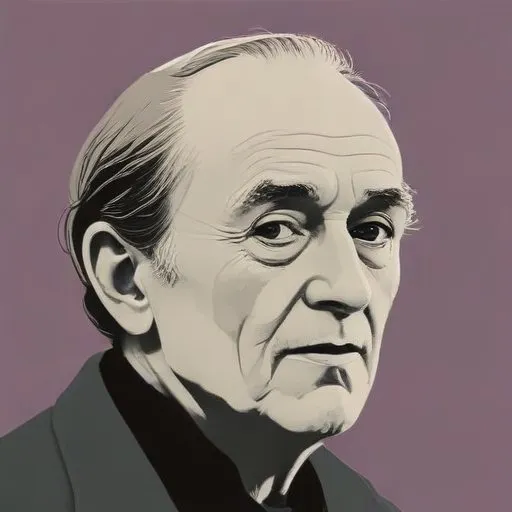
A celebrated poet and translator, known for his lyrical and introspective works that explore themes of nature, identity, and the human condition.
Stanley Kunitz is renowned as one of the most celebrated American poets of the 20th century, having twice held the esteemed position of Poet Laureate Consultant in Poetry to the Library of Congress. His profound and introspective works have left an indelible mark on the literary world, exploring themes of identity, mortality, and the human condition.
Born on July 29, 1905, in Worcester, Massachusetts, Kunitz grew up in a tumultuous household, shaped by the struggles of his Russian Jewish immigrant family. His father's suicide, just six weeks before his birth, had a profound impact on Kunitz's life and writing, as he often grappled with the complexities of grief, loss, and paternal absence.
Kunitz's literary journey spanned over eight decades, during which he published numerous collections of poetry, including The Testing-Tree, The Wellfleet Shore, and Passing Through. His work is characterized by its lyricism, depth, and introspection, often delving into the realms of mythology, history, and personal experience. In 1958, he co-founded The Poetry Workshop, a journal dedicated to showcasing contemporary American poetry.
Kunitz's contributions to literature were recognized with numerous awards and honors, including the Pulitzer Prize for Poetry in 1959, the National Medal of Arts in 1993, and the Bollingen Prize in American Poetry in 1987. His appointment as Poet Laureate Consultant in Poetry to the Library of Congress in 1974 and again in 2000 solidified his position as a literary giant.
Kunitz's poetry and essays often explored existential and philosophical themes, touching on the human condition, the nature of identity, and the role of the poet in society. He believed in the transformative power of poetry, advocating for its ability to bring people together and foster empathy and understanding.
Kunitz's work has had a profound impact on modern American poetry, inspiring generations of writers, including notable poets such as Mary Oliver, Mark Doty, and Marie Howe. His legacy extends beyond the literary world, as his poetry has been widely taught in schools and universities, shaping the way we think about language, identity, and the human experience.
Kunitz's life was marked by significant events that shaped his writing and worldview. His experiences as a young man, working as a butcher's assistant and later as a reporter, instilled in him a strong sense of empathy and connection to the human experience. His later years were marked by a sense of introspection and contemplation, as he continued to write and teach until his passing on May 14, 2006, at the age of 100.
Kunitz's remarkable life and work have left an enduring legacy, cementing his position as one of the greatest American poets of the 20th century. His poetry and essays provide a window into the hopes, fears, and aspirations of a nation, offering a profound exploration of the human condition.
As we reflect on Kunitz's remarkable journey, we are reminded of the transformative power of poetry to capture the essence of our shared humanity, to illuminate the complexities of the human experience, and to inspire future generations of writers and thinkers.
Born in 1874
Pulitzer Prize-winning poet and playwright celebrated for rural New England-inspired works that explore human nature, morality, and the American experience.
Born in 1888
A renowned poet, playwright, and critic who reshaped modern poetry with works like "The Waste Land" and "Old Possum's Book of Practical Cats", influencing literature and art with their unique style.
Born in 1885
A pioneering modernist poet and critic who transformed 20th-century literature with innovative styles and provocative ideas, shaping the course of modern poetry.
Born in 1879
A modernist master of language and imagination, crafting innovative, symbolic poetry that explores the human experience and the relationship between reality and the individual's perception of it.
Born in 1883
A physician-turned-writer, known for his modernist poetry and short stories that explored the everyday lives of ordinary people, often using imagery and experimental styles. His work blurred the lines between poetry and prose, creating a unique literary voice.
99 Years Old
A celebrated poet of the New York School, known for his surreal, dreamlike, and often humorous poetry that explores the human condition and the nature of language. His work is characterized by its complexity, wit, and playfulness.
Born in 1926
A prominent figure in the New York School of poets, known for his spontaneous, conversational style and poems that capture the essence of urban life and the human experience.
Born in 1926
A leading figure of the Beat Generation, known for his poetry that explores themes of nonconformity, free expression, and social justice. His iconic poem "Howl" is a classic of American literature.
