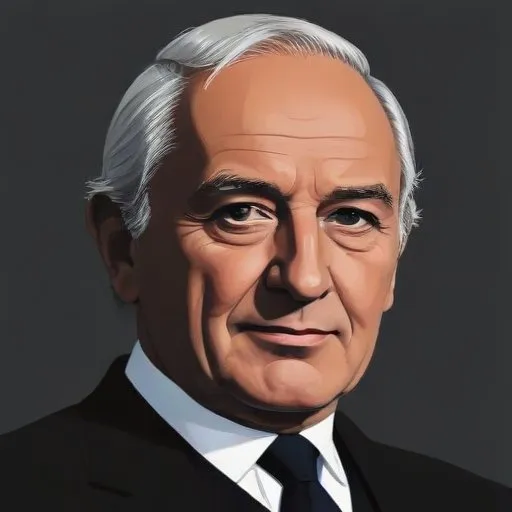
Sir William Hall-Jones: The Unassuming Administrator Who Led New Zealand
A Brief but Significant Tenure as Prime Minister
Sir
William Hall-Jones is best known for his short but notable stint as the 16th Prime Minister of New Zealand, serving from June 1906 to August 1906. During this period, he acted as the interim Prime Minister following the death of
Richard Seddon and until the return of
Joseph Ward from overseas.
A Life of Public Service
Born on January 16, 1851, in Folkestone, Kent, England, Hall-Jones immigrated to New Zealand in 1873 and settled in Dunedin. He began his career as a carpenter and later became a successful builder in Timaru. However, it was his passion for local politics that drove him to serve on the Timaru Borough Council from 1884 to 1886 and again from 1890 to 1892.
From Councilor to Member of Parliament
Hall-Jones' entry into national politics was triggered by the death of Richard Turnbull, which led to a by-election in the Timaru electorate. Despite initial reluctance, Hall-Jones accepted the nomination and won the election on August 18, 1890. He went on to represent Timaru in the House of Representatives until his resignation in October 1908.
An Independent Thinker and Dedicated Administrator
Hall-Jones was known for his independent thinking and moderate, progressive views, which aligned him with prominent politicians such as
John Ballance, Sir
George Grey, and John McKenzie. He joined the Liberal caucus and became the party whip alongside Westby Perceval in 1891. In 1896, he was appointed as a cabinet minister and was tasked with improving the main trunk rail line between Auckland and Wellington.
A Reputation for Excellence
Richard Seddon, the then Prime Minister, praised Hall-Jones as "the best administrator I have in my Cabinet." This endorsement was a testament to Hall-Jones' exceptional organizational skills and dedication to public service.
High Commissioner to the United Kingdom
From 1908 to 1912, Hall-Jones served as New Zealand's High Commissioner to the United Kingdom. This appointment marked a significant milestone in his career, as he became the first New Zealander to hold this position.
A Legacy of Quiet Efficiency
Sir William Hall-Jones' life and career were marked by a dedication to public service, a passion for administration, and a willingness to serve. Although his tenure as Prime Minister was brief, his impact on New Zealand's political landscape was significant, earning him a reputation as one of the country's most effective and unassuming administrators.
Timeline of Key Events
- January 16, 1851: Born in Folkestone, Kent, England
- 1873: Immigrated to New Zealand and settled in Dunedin
- 1884-1886, 1890-1892: Served on the Timaru Borough Council
- August 18, 1890: Won the by-election in the Timaru electorate and became a Member of Parliament
- 1896: Appointed as a cabinet minister
- June-August 1906: Served as the 16th Prime Minister of New Zealand
- 1908-1912: Served as New Zealand's High Commissioner to the United Kingdom
- June 19, 1936: Passed away
By examining the life and career of Sir William Hall-Jones, we are reminded of the importance of dedication, hard work, and a passion for public service. His legacy serves as a testament to the power of quiet efficiency and effective administration.
FAQ
What is William Hall-Jones significance in New Zealand history?
William Hall-Jones was the 16th Prime Minister of New Zealand, serving from 1906 to 1908. He played a crucial role in shaping the countrys early development and was a key figure in the Liberal Party.
What were William Hall-Jones main reforms as Prime Minister?
William Hall-Jones implemented several significant reforms during his time as Prime Minister, including the introduction of old-age pensions, workers compensation, and reforms to the countrys electoral system.
What was William Hall-Jones early life like?
William Hall-Jones was born in 1851 in England. He emigrated to New Zealand in 1873 and became involved in politics, eventually becoming a Member of Parliament in 1890.
How did William Hall-Jones become Prime Minister of New Zealand?
William Hall-Jones became Prime Minister of New Zealand in 1906, after the death of the previous Prime Minister, Richard Seddon. He led the country until 1908, when he retired due to health reasons.
What is William Hall-Jones legacy in New Zealand?
William Hall-Jones is remembered as a significant figure in New Zealands early development. His reforms and policies helped shape the countrys social and economic landscape, and his legacy continues to be celebrated in New Zealand today.