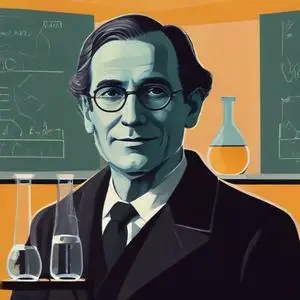
Friedrich Bergius: The Pioneer of Synthetic Fuel
A Legacy in High-Pressure Chemistry
Friedrich Bergius, a German chemist, is renowned for his groundbreaking work in developing the Bergius process, a method for producing synthetic fuel from coal. This innovative process, which earned him the Nobel Prize in Chemistry in 1931, has had a profound impact on the chemical industry and beyond.
Early Life and Education
Born on October 11, 1884, in Breslau, Germany (now Wrocław, Poland), Bergius was drawn to the world of chemistry from an early age. Before embarking on his academic journey, he spent six months working at the Friedrich Wilhelms steel works in Mülheim, an experience that laid the foundation for his future research.
Bergius pursued his studies at the University of Breslau in 1903, subsequently earning his PhD in chemistry from the University of Leipzig in 1907 under the supervision of Arthur Rudolf Hantzsch. His thesis, which explored sulfuric acid as a solvent, showcased his early interest in chemical reactions and processes.
The Bergius Process: A Breakthrough in Synthetic Fuel
During his habilitation, Bergius developed techniques for high-pressure and high-temperature chemistry of carbon-containing substrates, leading to a patent for the Bergius process in 1913. This pioneering method produced liquid hydrocarbons, used as synthetic fuel, by hydrogenating lignite (brown coal). Notably, Bergius's process predated the more widely known Fischer-Tropsch process.
Theodor Goldschmidt, a German industrialist, invited Bergius to build an industrial plant at his factory, Th. Goldschmidt AG, in 1914. Although the production of synthetic fuel began only in 1919, after World War I, the Bergius process had already sparked a new era in chemical synthesis.
A Career Marked by Collaborations and Controversies
Bergius's work was not without controversies. During World War II, he worked with IG Farben, a German chemical conglomerate, which led to questions about his citizenship after the war. Ultimately, he fled to Argentina, where he served as an adviser to the Ministry of Industry.
Despite the controversies, Bergius's contributions to chemical high-pressure methods, as recognized by the Nobel Prize committee, remain unparalleled. His collaborations with prominent chemists, including
Fritz Haber and
Carl Bosch, facilitated the development of the Haber-Bosch process.
Legacy and Impact
Friedrich Bergius's work has had a lasting impact on the chemical industry, energy production, and modern society as a whole. His pioneering spirit and innovative approach to chemical synthesis paved the way for future generations of chemists and researchers.
As we reflect on Bergius's life and achievements, we are reminded of the power of human ingenuity and the importance of fundamental research in shaping our world. His legacy serves as a testament to the boundless potential of science and innovation to transform our understanding of the world and improve our lives.
Timeline of Key Events
- 1884: Born on October 11th in Breslau, Germany (now Wrocław, Poland)
- 1903: Began studies at the University of Breslau
- 1907: Earned PhD in chemistry from the University of Leipzig
- 1909: Worked with Fritz Haber and Carl Bosch at the University of Karlsruhe
- 1913: Patented the Bergius process for producing synthetic fuel from coal
- 1914: Invited to build an industrial plant at Th. Goldschmidt AG
- 1919: Began production of synthetic fuel at Th. Goldschmidt AG
- 1931: Awarded the Nobel Prize in Chemistry with Carl Bosch
- 1949: Passed away on March 30th
By examining the life and achievements of Friedrich Bergius, we gain insight into the intricate dance between science, innovation, and society. His remarkable contributions to the field of chemistry continue to inspire and influence generations of researchers, entrepreneurs, and individuals around the world.
FAQ
What did Friedrich Bergius win the Nobel Prize for?
Friedrich Bergius was awarded the Nobel Prize in Chemistry in 1931 for his work on the discovery of high-pressure hydrogenation, a process that allows for the conversion of coal into synthetic fuels.
What was Friedrich Bergiuss contribution to the development of synthetic fuels?
Friedrich Bergius made significant contributions to the development of synthetic fuels through his work on high-pressure hydrogenation. His discovery enabled the production of fuels from coal, which was a critical innovation in the early 20th century.
What was Friedrich Bergiuss role in the German chemical industry?
Friedrich Bergius was a prominent figure in the German chemical industry, and his work on synthetic fuels helped to establish Germany as a leader in the field. He was also a professor at the University of Heidelberg and conducted research at the Kaiser Wilhelm Institute for Coal Research.
What was Friedrich Bergiuss approach to scientific research?
Friedrich Bergiuss approach to scientific research was characterized by a strong emphasis on experimentation and collaboration. He worked closely with other scientists and engineers to develop and refine his discoveries.
What is Friedrich Bergiuss legacy in the field of chemistry?
Friedrich Bergiuss legacy in chemistry is that of a pioneer in the development of synthetic fuels. His work paved the way for the development of modern fuels and continues to influence research in the field.