


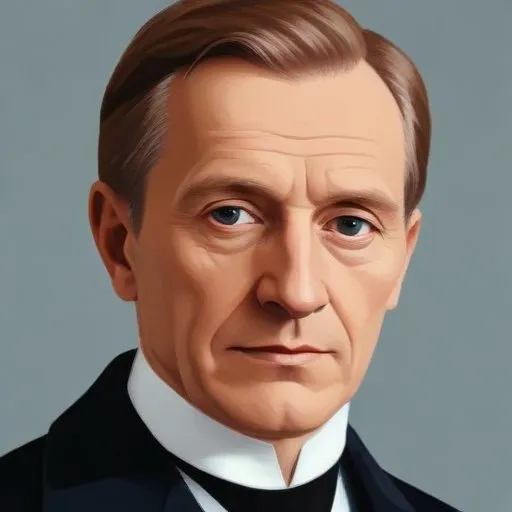
Estonian physician, philologist, and academic who contributed to the development of the Estonian language and literature, and was a key figure in the Estonian national awakening
Friedrich Robert Faehlmann was a multifaceted Estonian writer, medical doctor, and philologist who made significant contributions to the fields of literature, medicine, and linguistics in the 19th century. He is best known for his role as a cofounder of the Learned Estonian Society and his efforts to promote Estonian culture and language.
Faehlmann was born on December 31, 1798, in Ao Manor, Kreis Jerwen, to the family of the manor's manager. He pursued higher education at the University of Dorpat, where he graduated from the medical department in 1825. Two years later, he earned his M.D. degree and began working as a physician in Dorpat.
Faehlmann's literary career was marked by his interest in Estonian folklore and language. He recorded several tales and published his story "Koit ja Hmarik" (Dawn and Dusk) in 1840. His work in this field helped to bring attention to the Estonian national epic, "Kalevipoeg," which has since become a cornerstone of Estonian literature.
Faehlmann's linguistic expertise led to significant contributions to the study of the Estonian language. He published several works on the subject, including "Versuch einer neuen Anordnung der Conjunctionen in der estnischen Sprache" (Attempt at a New Arrangement of Conjunctions in the Estonian Language) in 1842 and "Ueber die Declination der estnischen Nomina" (On the Declension of Estonian Nouns) in 1844.
In addition to his literary and philological pursuits, Faehlmann maintained a successful medical career. He worked as a physician in Dorpat and published his M.D. dissertation, "Observationes inflammationum occultiorum" (Observations on Hidden Inflammations), in 1827. He also wrote about public health issues, such as the 1846 article "Die Ruhrepidemie in Dorpat im Herbst" (The Cholera Epidemic in Dorpat in the Autumn).
Faehlmann's legacy extends beyond his literary and philological contributions. He was a cofounder and chairman of the Learned Estonian Society, which played a crucial role in promoting Estonian culture and language. In 1930, a bronze bust of Faehlmann was installed in Tartu, and in 1998, the Estonian Post issued a postmark in commemoration of the 200th anniversary of his birth.
Faehlmann's life was cut short by tuberculosis, which he succumbed to on April 22, 1850, in Dorpat. Despite his untimely death, his contributions to Estonian literature, language, and culture continue to be celebrated and recognized.
Born in 1803
Estonian physician and author who collected and published Estonian folklore, including the national epic "Kalevipoeg", which helped to establish Estonian as a literary language.
Born in 1839
A pioneering Estonian scholar who collected and studied folk songs, myths, and legends, preserving the country's cultural heritage. He's also credited with developing the Estonian language and orthography.
Born in 1798
Estonian physician, philologist, and academic who contributed to the development of the Estonian language and literature, and was a key figure in the Estonian national awakening
Born in 1868
Estonian linguist and diplomat who contributed significantly to the development of Estonian language and literature, and served as a cultural ambassador between Estonia and other European countries.
Born in 1890
A celebrated Estonian literary figure, known for his poignant poetry and novels that explored the human condition, love, and the Estonian identity.
