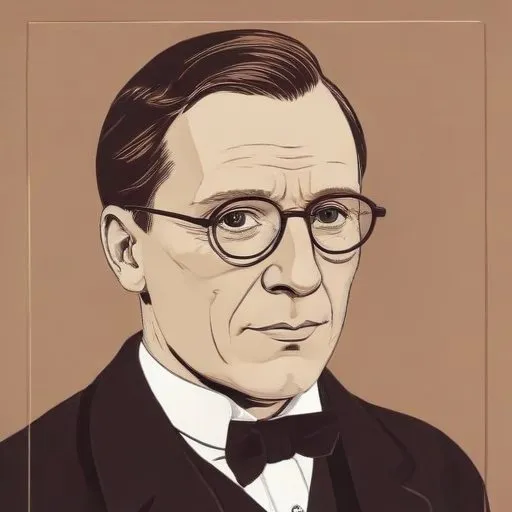
Friedrich Reinhold Kreutzwald

Friedrich Reinhold Kreutzwald

Friedrich Reinhold Kreutzwald was born on December 26th, 1803

Full Name: Friedrich Reinhold Kreutzwald
Place of Birth: Jõhvi, Estonia
Nationality: Estonian
Profession: Physician and Author
Born: December 26, 1803
Died: August 25, 1882
Notable Works: Kalevipoeg
University: University of Tartu

Estonian physician and author who collected and published Estonian folklore, including the national epic "Kalevipoeg", which helped to establish Estonian as a literary language.

Written by: Cassandra Blake Cassandra Blake

Friedrich Reinhold Kreutzwald: The Father of Estonian National Literature

A Life Dedicated to Preserving Estonian Culture

Friedrich Reinhold Kreutzwald is hailed as the father of Estonian national literature, and his magnum opus, the epic poem Kalevipoeg, remains an iconic symbol of Estonian cultural identity. This remarkable individual not only conjured a sense of national pride but also contributed substantially to the preservation and promotion of Estonian folklore.

Early Life and Education

Born on December 26, 1803, in the Jõmper estate, Governorate of Estonia, Russian Empire (present-day Jõper, Lääne-Viru County), Kreutzwald's humble beginnings as the son of serfs could not have predicted the influential role he would play in shaping Estonian literature. After liberation from serfdom in 1815, Kreutzwald's family enabled him to pursue education, which led him to graduate from the secondary school in Dorpat (present-day Tartu) in 1820. He then worked as an elementary school teacher before eventually earning a degree in medicine from the Imperial University of Dorpat in 1833.

A Multifaceted Career

Kreutzwald's profession as a municipal physician in Võru (then Werro) from 1833 to 1877 did not deter him from his passion for literature and folklore. He was an active member of numerous scientific societies across Europe and received honorary doctorates from various universities. His literary endeavors include a range of moralistic folk books, translated into German, such as Plague of Wine (1840), The World and Some Things One Can Find in It (1848-1849), Reynard the Fox (1850), and Wise Men of Gotham (1857).

Kalevipoeg: The National Epic

Kreutzwald's crowning achievement, Kalevipoeg, is an epic poem that has become synonymous with Estonian national identity. The work, based on material gathered by his friend Friedrich Robert Faehlmann, tells the story of Kalevipoeg, a mythological hero, and explores themes of national pride, struggle, and triumph. Kalevipoeg has been hailed as the first original Estonian book, solidifying Kreutzwald's status as the father of Estonian national literature.

Other Literary Contributions

In addition to Kalevipoeg, Kreutzwald composed various other works inspired by Estonian folklore, including Old Estonian Fairy-Tales (1866), collections of verses, and the poem Lembitu (1885), published posthumously. These works not only demonstrate Kreutzwald's mastery of storytelling but also underscore his dedication to preserving and promoting Estonian cultural heritage.

Legacy and Impact

Friedrich Reinhold Kreutzwald's remarkable life and literary achievements have left an indelible mark on Estonian culture. As a pioneer of the national awakening, he inspired a generation of young Estonian-speaking intellectuals to take pride in their cultural identity. His contributions to Estonian literature have cemented his place as a national hero, and his legacy continues to inspire generations to come.

Personal Life

Kreutzwald married Marie Elisabeth Saedler in 1833, the same year he graduated from the Faculty of Medicine. His personal life was marked by a strong sense of dedication to his work and his nation.

Friedrich Reinhold Kreutzwald's remarkable life, marked by his literary achievements, devotion to preserving Estonian culture, and dedication to his nation, continues to inspire generations. As the father of Estonian national literature, his legacy remains an integral part of Estonian identity.

Timeline
1803
Born in Jõhvi
Friedrich Reinhold Kreutzwald was born in Jõhvi, Estonia, on December 26, 1803.
1827
Studies Medicine
Kreutzwald studies medicine at the University of Tartu, where he earns a degree in 1833.
1838
Becomes Physician
Kreutzwald becomes a physician in Võru, Estonia, where he works for over 30 years.
1853
Publishes Folk Poetry
Kreutzwald publishes a collection of Estonian folk poetry, which helps to promote Estonian national identity.
1882
Dies in Võru
Friedrich Reinhold Kreutzwald dies in Võru on August 25, 1882, at the age of 78.
Friedrich Reinhold Kreutzwald

Friedrich Reinhold Kreutzwald Quiz

What was Friedrich Reinhold Kreutzwald's profession?

Score: 0/5
FAQ
What was Friedrich Reinhold Kreutzwalds role in Estonian literature?
Friedrich Reinhold Kreutzwald was an Estonian physician and author who played a key role in shaping Estonian literature. He wrote several works on Estonian history and culture.
How did Friedrich Reinhold Kreutzwald contribute to the development of Estonian identity?
Friedrich Reinhold Kreutzwalds writings helped shape Estonian national identity and promote the countrys cultural heritage. He believed in the importance of preserving Estonian folklore and traditions.
What is Friedrich Reinhold Kreutzwalds connection to the Estonian nationalist movement?
Friedrich Reinhold Kreutzwald was a key figure in the Estonian nationalist movement, which sought to promote Estonian language and culture. He believed in the importance of independence and self-determination for Estonia.
What were Friedrich Reinhold Kreutzwalds views on education?
Friedrich Reinhold Kreutzwald believed in the importance of education and was a strong advocate for the establishment of schools and universities in Estonia. He believed that education was essential for the development of Estonian society.
What is Friedrich Reinhold Kreutzwalds legacy in modern Estonian literature?
Friedrich Reinhold Kreutzwalds legacy in modern Estonian literature is that of a pioneering figure who helped shape the countrys literary identity. His writings continue to be celebrated and studied today.

Related People:

Friedrich Robert Faehlmann

Born in 1798

Estonian physician, philologist, and academic who contributed to the development of the Estonian language and literature, and was a key figure in the Estonian national awakening

Kristjan Jaak Peterson

Born in 1801

Estonia's national poet, known for his romantic and patriotic verses that inspired a national awakening, and is considered the founder of Estonian literature.

Miina Härma

Born in 1864

Estonian organist, composer, and conductor who pioneered women's roles in music, particularly in sacred music, and founded the Estonian Composers' Union. Known for her contributions to Estonian musical heritage.

Ferdinand Johann Wiedemann

Born in 1805

A German-Swedish linguist and botanist who studied and documented the languages and flora of Siberia and Central Asia, making significant contributions to the fields of linguistics and botany.

Jakob Hurt

Born in 1839

A pioneering Estonian scholar who collected and studied folk songs, myths, and legends, preserving the country's cultural heritage. He's also credited with developing the Estonian language and orthography.

Oskar Kallas

Born in 1868

Estonian linguist and diplomat who contributed significantly to the development of Estonian language and literature, and served as a cultural ambassador between Estonia and other European countries.