


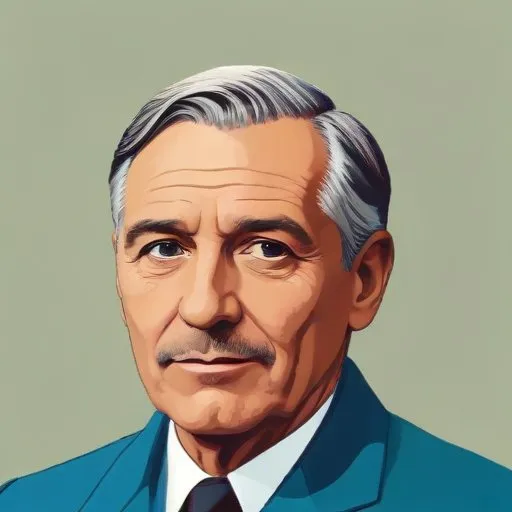
A German-Swedish linguist and botanist who studied and documented the languages and flora of Siberia and Central Asia, making significant contributions to the fields of linguistics and botany.
Ferdinand Johann Wiedemann is renowned for his groundbreaking research on Uralic languages, particularly Estonian, and his contributions to the field of botany. His most notable achievements include the publication of the esteemed Estonian-German dictionary, Ehstnisch-deutsches Wörterbuch, which remained the most comprehensive dictionary of Estonian words for an extended period.
Wiedemann's linguistic research focused primarily on Uralic languages, with a special emphasis on Estonian. His magnum opus, Ehstnisch-deutsches Wörterbuch, published in 1869, is a testament to his dedication and expertise in the field. This dictionary not only showcased his mastery of the Estonian language but also facilitated communication between Estonian and German speakers.
In addition to his linguistic endeavors, Wiedemann was an accomplished botanist. His botanical explorations and research contributed significantly to the understanding of Estonia's flora.
Ferdinand Johann Wiedemann's work has had a profound impact on the study of Uralic languages and Estonian linguistics. His dictionary remains an essential resource for scholars and linguists to this day. Moreover, his botanical research has helped shape our understanding of Estonia's natural environment.
Wiedemann's contributions have paved the way for future generations of linguists and botanists. His work has facilitated cross-cultural communication and promoted a deeper understanding of Estonia's unique cultural heritage.
Wiedemann passed away on December 29, 1887, in Saint Petersburg, leaving behind a legacy of academic excellence and groundbreaking research. His life's work continues to inspire and educate scholars and enthusiasts alike.
Ferdinand Johann Wiedemann's remarkable achievements in linguistics and botany have cemented his place in the annals of history, ensuring that his contributions will remain a vital part of Estonia's cultural and scientific heritage for generations to come.
Born in 1762
A German philosopher and academic who developed the concept of German idealism, emphasizing the role of the individual and the nation in shaping reality. He's known for his influence on German philosophy and the development of existentialism.
Born in 1767
A leading figure in the German Romantic movement, he was a poet, translator, and critic who played a key role in shaping the country's literary scene. His translations of Shakespeare's works into German are still widely read today.
Born in 1724
Developed influential philosophical frameworks, such as the Critique of Pure Reason, that shaped modern Western thought on ethics, morality, and human understanding.
Born in 1749
A German literary giant who penned iconic works like "Faust" and "The Sorrows of Young Werther", shaping the Romantic movement and influencing countless writers.
Born in 1770
A German philosopher and academic who developed a comprehensive and systematic philosophy that emphasized the unity of all things and the dialectical process of thesis, antithesis, and synthesis. His ideas have had a profound impact on modern thought, influencing fields such as philosophy, politics, and art.
Born in 1788
A pessimistic philosopher who wrote about the human condition, emphasizing the struggles and sufferings of life, and is famous for his concept of the "will to life".
