


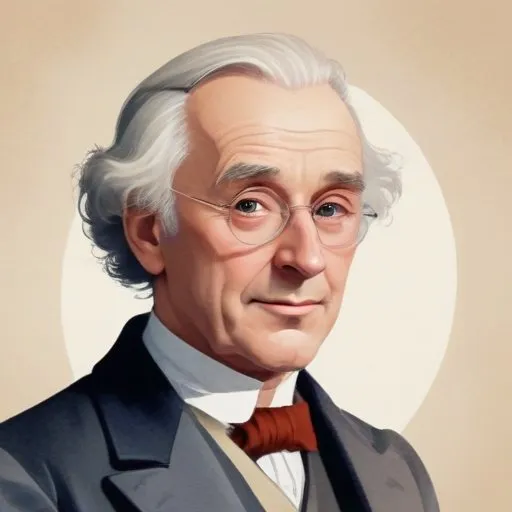
Developed groundbreaking theories in fluid dynamics and turbulence, and made significant contributions to the understanding of shock waves and explosions.
Sir Geoffrey Ingram Taylor, a renowned British physicist and mathematician, is celebrated for his groundbreaking contributions to fluid dynamics and wave theory. His work has had a profound impact on our understanding of the natural world, and his legacy continues to inspire scientists and researchers to this day.
Taylor was born on March 7, 1886, in St. Johns Wood, London, to a family of artists and mathematicians. His father, Edward Ingram Taylor, was an artist, while his mother, Margaret Boole, came from a family of mathematicians. Taylor's aunt, Alicia Boole Stott, was a renowned mathematician, and his grandfather was the famous George Boole.
From a young age, Taylor was fascinated by science, and he was particularly inspired by the Royal Institution Christmas Lectures. He went on to study mathematics and physics at Trinity College, Cambridge, from 1905 to 1908, where he won several scholarships and prizes.
Taylor's career was marked by a series of groundbreaking contributions to the field of physics. His first paper, published while he was still an undergraduate, demonstrated the interference of visible light using a novel experiment involving paint rollers and sticky tape.
One of Taylor's most significant contributions was his work on fluid dynamics. He was the first to describe the phenomenon of turbulent flow, and his work in this area has had a profound impact on our understanding of fluid motion. His research also explored the behavior of waves, and he made significant contributions to the development of wave theory.
Taylor's work has had a lasting impact on the field of physics. His research on fluid dynamics and wave theory has influenced generations of scientists and engineers, and his legacy continues to inspire new discoveries and innovations.
In recognition of his contributions, Taylor was awarded numerous honors and awards, including the Royal Medal and the Copley Medal. He was also elected a Fellow of the Royal Society and a Foreign Honorary Member of the American Academy of Arts and Sciences.
Taylor's work was driven by a deep passion for understanding the natural world. He believed in the power of science to uncover the secrets of the universe, and he was committed to advancing our knowledge of the physical world.
Throughout his career, Taylor was guided by a strong sense of curiosity and a desire to push the boundaries of human knowledge. His work continues to inspire scientists and researchers to this day, and his legacy serves as a testament to the power of human ingenuity and curiosity.
"The only way to do great work is to love what you do." - Sir Geoffrey Ingram Taylor
This quote captures the essence of Taylor's approach to science and his passion for discovery. His love of science drove him to make groundbreaking contributions to the field, and his legacy continues to inspire new generations of scientists and researchers.
Born in 1879
A brilliant physicist who developed the theory of relativity and is considered one of the most influential scientists of the 20th century, known for his groundbreaking work in physics and mathematics.
84 Years Old
A brilliant mind who unraveled the mysteries of black holes and the universe, making complex physics accessible to all through bestselling books.
Born in 1918
A brilliant physicist and engineer who pioneered quantum mechanics and famously explained complex concepts in simple terms, making science accessible to all.
Born in 1902
A brilliant mind who formulated the Dirac equation, a fundamental concept in quantum mechanics, and predicted the existence of antimatter. His work revolutionized our understanding of the universe.
Born in 1901
A pioneer in quantum mechanics, he formulated the uncertainty principle, which revolutionized our understanding of the atomic world. His groundbreaking work reshaped modern physics.
Born in 1885
A pioneer in quantum mechanics, he introduced the concept of wave-particle duality, revolutionizing our understanding of atomic structure. His philosophical approach to science also explored the nature of reality and human understanding.
Born in 1831
Developed groundbreaking theories that unified electricity and magnetism, and predicted the existence of radio waves, revolutionizing our understanding of the physical world.
