


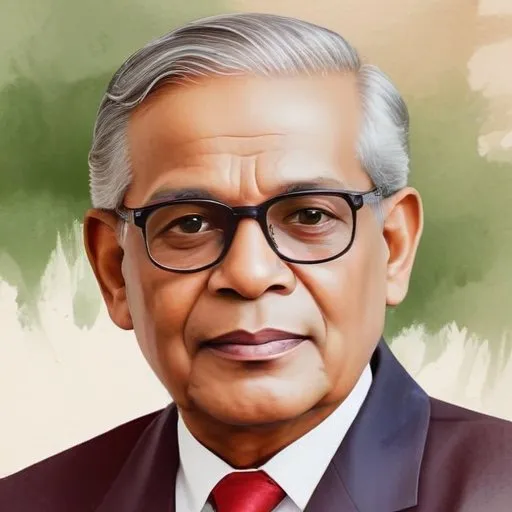
A renowned economist and diplomat who played a crucial role in shaping international trade policies and served as the Secretary-General of the United Nations Conference on Trade and Development (UNCTAD). He was a key figure in promoting economic development and cooperation among nations.
Gamani Corea, a renowned Sri Lankan economist, civil servant, and diplomat, was best known for his exceptional leadership as the Secretary-General of the United Nations Conference on Trade and Development (UNCTAD) and Under-Secretary-General of the United Nations from 1974 to 1984.
Corea's educational background is impressive, to say the least. He attended the Royal College in Colombo, followed by higher education at the University of Ceylon in 1944. He then pursued his studies at Corpus Christi College, Cambridge, and Nuffield College, Oxford, from 1945 to 1952. He earned two Bachelor's and Master's degrees from both the University of Oxford and the University of Cambridge, and later, a DPhil from Oxford. He also received honorary doctorates from the University of Nice, University of Colombo, and University of Sri Jayewardenepura.
Corea's remarkable career spanned multiple roles and organizations. He began as a Research Officer at the Central Bank of Ceylon, followed by his stint as an economist and later, the Director of Planning Secretariat of the Government of Ceylon from 1952 to 1960. He simultaneously served as the Secretary, National Planning Council. From 1960 to 1964, he was the Director of Economic Research at the Central Bank and in 1965, he was appointed the Permanent Secretary of the Ministry of Planning and Economic Affairs of the Government of Ceylon.
In 1974, he became the Under-Secretary-General of the United Nations, a position he held until 1984. During this period, he played a pivotal role in shaping the UN's economic development policies, earning him widespread recognition and respect. He was also Ceylon's Ambassador to the EEC, Belgium, Luxembourg, and the Netherlands, and the Senior Deputy Governor of the Central Bank of Ceylon.
Corea was a strong advocate for sustainable economic development, trade, and investment. He believed in the importance of bridging the gap between developed and developing countries, promoting international cooperation, and fostering economic growth through trade and investment. He was a proponent of the "New International Economic Order" and worked tirelessly to promote the interests of developing nations within the UN framework.
Corea's contributions to the United Nations and the global economy have had a lasting impact on modern society. His work on trade, development, and economic cooperation has influenced policies and shaped the global economic landscape. He played a key role in promoting South-South cooperation and helped to establish the Global System of Trade Preferences among Developing Countries (GSTP).
Corea's exceptional service and contributions were recognized with numerous awards and honors. He was awarded the Deshamanya, the highest national honor in Sri Lanka, and received honorary doctorates from several universities. His legacy continues to inspire future generations of economists, diplomats, and development professionals.
Gamani Corea's remarkable career, spanning over four decades, has left an indelible mark on the global economy, international relations, and the United Nations. His tireless efforts to promote economic development, trade, and investment have inspired countless individuals and nations. As a testament to his legacy, UNCTAD's Gamani Corea Memorial Award was established in 2014 to recognize outstanding contributions to the field of international trade and development.
In conclusion, Gamani Corea's extraordinary life and career serve as a beacon of inspiration for anyone passionate about economics, diplomacy, and development. His contributions to the United Nations, Sri Lanka, and the global community will continue to shape the future of international relations and economic development.
92 Years Old
A renowned economist and philosopher who has made significant contributions to welfare economics, social choice theory, and development economics, and is known for his work on poverty, famine, and human development.
83 Years Old
A Nobel Prize-winning economist and academic who has made significant contributions to the field of economics, particularly in the areas of information economics and globalization.
Born in 1915
A renowned economist and academic who made significant contributions to the field of economics, particularly in the areas of macroeconomics and international trade. He was awarded the Nobel Prize in Economics in 1970.
Born in 1912
A Nobel Prize-winning economist who championed free market capitalism and limited government intervention, known for his advocacy of laissez-faire economics and influential writings on monetary policy.
Born in 1883
A pioneering economist who revolutionized modern economic theory with his groundbreaking ideas on government intervention and fiscal policy, shaping global economic policies.
Born in 1897
A Canadian leader who served as Prime Minister and won the Nobel Peace Prize for resolving the Suez Canal Crisis, known for his diplomatic efforts and peacekeeping initiatives.
Born in 1889
India's first Prime Minister, a key figure in the country's struggle for independence from British rule, and a champion of democracy and secularism. He played a crucial role in shaping modern India's government and economy.
Born in 1917
The first female Prime Minister of India, serving from 1966 to 1977 and again from 1980 until her assassination in 1984, known for her strong leadership and economic reforms.
