


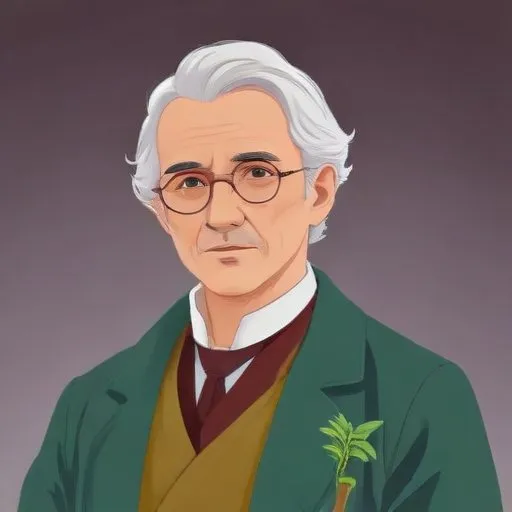
A 16th-century Swiss botanist, physician, and academic who cataloged over 6,000 plant species, laying the foundation for modern botanical taxonomy. His work, "Pinax Theatri Botanici", remains a seminal reference in the field.
Gaspard Bauhin, a Swiss botanist, left an indelible mark on the field of botany with his monumental work, Pinax theatri botanici, published in 1623. This exhaustive tome described thousands of plant species, laying the groundwork for the development of modern botanical classification systems.
Born on January 17, 1560, in Basel, Switzerland, Gaspard was the son of Jean Bauhin, a French physician who had converted to Protestantism. This led to the family's relocation to Basel, where Gaspard would pursue his education. He studied in various European cities, including Padua, Bologna, Montpellier, Paris, and Tübingen, before earning his medical doctorate at the University of Basel in 1581.
Bauhin's academic pursuits led to a succession of prestigious appointments, including the Greek professorship at the University of Basel (1582), the chair of anatomy and botany (1588), and eventually, the position of city physician (Stadtarzt). He was elected rector of the University of Basel not once, but three times (1592, 1611, and 1619), making him a revered figure in the academic community.
Pinax theatri botanici, or Illustrated Exposition of Plants, is Bauhin's magnum opus. This comprehensive work describes approximately 6,000 plant species, many of which were previously unknown. Although the classification system employed by Bauhin was not revolutionary, his detailed descriptions of genera and species remain unparalleled. The significance of this work lies in its meticulous documentation, which laid the foundation for later botanical advancements.
The Bauhin brothers, Gaspard and Jean, were honored by the renowned Swedish botanist Carolus Linnaeus, who named the genus Bauhinia in their tribute. This distinction acknowledges the brothers' substantial contributions to the field of botany. Bauhin's legacy extends beyond his written work, as his teachings and mentorship inspired future generations of botanists.
Gaspard Bauhin's life's work has had a profound impact on the development of botany, anatomy, and medicine. His meticulous documentation and classification of plant species have inspired generations of scientists, earning him a place among the most influential botanists in history. As we continue to explore and understand the natural world, Bauhin's contributions remain a testament to the power of human curiosity and intellectual pursuit.
Born in 1516
A 16th-century Renaissance polymath who cataloged and described thousands of plants and animals, laying the foundations for modern taxonomy and zoology.
Born in 1522
A 16th-century Renaissance scholar who cataloged and described numerous plant and bird species, laying the foundation for modern taxonomy and ornithology. His work remains a valuable resource for scientists today.
Born in 1533
A 16th-century physician and scholar who wrote extensively on medicine, philosophy, and literature, and is particularly notable for his work on the concept of melancholy.
