


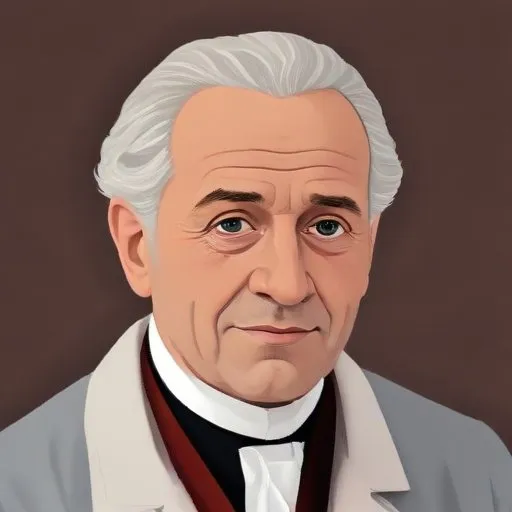
A 16th-century physician and scholar who wrote extensively on medicine, philosophy, and literature, and is particularly notable for his work on the concept of melancholy.
Theodor Zwinger, a Swiss physician and Renaissance humanist scholar, is renowned for his significant contributions to the emerging genres of reference and travel literature. His magnum opus, Theatrum Humanae Vitae, is considered one of the most comprehensive collections of knowledge compiled by a single individual in the early modern period.
Born on August 2, 1533, in Basel, Switzerland, Zwinger was the son of Leonhard Zwinger, a furrier who had become a citizen of Basel in 1526, and Christina Herbster, the sister of Johannes Oporinus Herbster, a famed humanist printer. After his father's death, Christina married the noted humanist Conrad Lycosthenes Wolffhart.
Zwinger's educational pursuits took him to the Universities of Basel, Lyon, and Paris, where he studied with the iconoclastic philosopher Petrus Ramus. He later earned a doctorate in medicine at the University of Padua under the guidance of Bassiano Landi, the successor of Johannes Baptista Montanus.
Zwinger joined the faculty of the University of Basel as a member of the consilium facultatis medicae in 1559. He held successive chairs in Greek (1565), Ethics (1571), and finally theoretical medicine (1580).
Initially hostile to Paracelsus, Zwinger later developed an interest in Paracelsian medical theory, which led to some hostility towards him. Despite this, he associated with prominent Paracelsians such as Thomas Moffet, Petrus Severinus, and Claude Aubery.
Zwinger's most significant contribution is the publication of Theatrum Humanae Vitae, a comprehensive encyclopedia that showcases his vast knowledge and scholarship. The work, published in four editions (1565, 1571, 1586, and 1604), is a testament to his erudition and dedication to collecting and compiling knowledge.
The Theatrum Humanae Vitae is a remarkable achievement, drawing on Zwinger's vast network of scholars, including his stepfather Conrad Lycosthenes, and featuring contributions from prominent figures of the time. The work's impact was significant, influencing later scholars and inspiring the creation of similar compendiums, including the Magnum theatrum vitae humanae (1631) by Lawrence Beyerlinck.
Theodor Zwinger's contributions to the fields of medicine, philosophy, and literature have had a lasting impact on Western intellectual history. His work, particularly the Theatrum Humanae Vitae, has inspired generations of scholars, demonstrating the power of humanist inquiry and the importance of compiling and disseminating knowledge.
Zwinger's legacy extends beyond his written works, as he represents a bridge between the Renaissance humanist tradition and the emerging scientific and philosophical movements of the 16th century. His commitment to scholarship, intellectual curiosity, and dedication to the pursuit of knowledge continue to inspire and influence scholars to this day.
Zwinger's personal life is somewhat shrouded in mystery, but it is known that he maintained close relationships with prominent figures of the time, including his stepfather Conrad Lycosthenes and the philosopher Petrus Ramus.
One notable anecdote is Zwinger's conversion to Catholicism, which occurred towards the end of his life. This change in religious affiliation has been attributed to his association with Catholic scholars and his growing interest in Paracelsian medical theory.
Theodor Zwinger's remarkable life and achievements serve as a testament to the power of humanist inquiry and the importance of compiling and disseminating knowledge. As a physician, philosopher, and scholar, Zwinger's contributions have had a lasting impact on Western intellectual history, inspiring future generations of scholars and thinkers.
Zwinger's legacy serves as a reminder of the significance of interdisciplinary scholarship, the value of intellectual curiosity, and the importance of preserving and sharing knowledge for the benefit of humanity.
Born in 1493
A 16th-century Renaissance figure who merged science, mysticism, and philosophy to pioneer modern medicine, alchemy, and the concept of psychotherapy.
Born in 1501
A 16th-century German physician and botanist who wrote a seminal book on medicinal plants, De Historia Stirpium, which described and illustrated over 400 plant species. His work laid the foundation for modern botany and pharmacology.
Born in 1516
A 16th-century Renaissance polymath who cataloged and described thousands of plants and animals, laying the foundations for modern taxonomy and zoology.
Born in 1514
A pioneering figure in the study of human anatomy, known for performing detailed dissections and creating accurate drawings of the body's inner workings, revolutionizing medical understanding.
Born in 1578
Discovered the circulatory system and described how blood flows through the body, revolutionizing understanding of human physiology.
