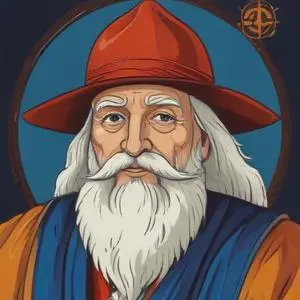
Paracelsus

Paracelsus

Paracelsus was born on November 11th, 1493

Full Name: Theophrastus Philippus Aureolus Bombastus von Hohenheim
Profession: Physician, Alchemist
Place of Birth: Egg, Switzerland
Notable Works: Opus Paramirum
Influenced By: Hermeticism
Died: 1541
Nationality: Swiss-German
Birth: 1493

A 16th-century Renaissance figure who merged science, mysticism, and philosophy to pioneer modern medicine, alchemy, and the concept of psychotherapy.

Timeline
1493
Birth of Paracelsus
Philippus Aureolus Theophrastus Bombastus von Hohenheim, known as Paracelsus, was born in Einsiedeln, Switzerland.
1517
Studied Medicine
Paracelsus studied medicine at the University of Basel, later becoming a prominent physician and alchemist.
1526
Professor of Medicine
Paracelsus became a professor of medicine at the University of Basel, where he taught and developed his theories on medicine and alchemy.
1541
Death of Paracelsus
Paracelsus died on September 24, 1541, in Salzburg, Austria, leaving behind a legacy of influential medical and alchemical writings.
Paracelsus

Paracelsus Quiz

What field of study did Paracelsus pioneer by introducing the concept of observation and experimentation?

Score: 0/5
FAQ
What were the key contributions of Paracelsus to the development of medicine?
Paracelsus made significant contributions to the development of medicine, including his emphasis on observation, experimentation, and the use of chemical remedies, which laid the foundation for modern pharmacology and therapeutic practice.
What was Paracelsus approach to alchemy?
Paracelsus viewed alchemy as a spiritual and philosophical pursuit, seeking to understand the mysteries of nature and the human body, and to develop remedies that would restore balance and harmony to the human organism.
How did Paracelsus ideas influence the development of modern science?
Paracelsus emphasis on empirical observation, experimentation, and the use of chemical remedies influenced the development of modern science, particularly in the fields of chemistry, pharmacology, and medicine.
What was Paracelsus view of the human body and its relationship to the natural world?
Paracelsus viewed the human body as a microcosm of the natural world, seeing parallels between the human organism and the natural environment, and seeking to understand the intricate relationships between the two.
What was the legacy of Paracelsus?
Paracelsus legacy was one of innovation, experimentation, and a profound understanding of the human body and its relationship to the natural world, cementing his place as a pioneer in the development of modern medicine and science.

Related People:

Leonardo da Vinci

Born in 1452

Renaissance mastermind behind iconic works like the Mona Lisa and The Last Supper, who revolutionized art, science, and engineering with his inventive and curious nature.

Galileo Galilei

Born in 1564

Pioneering astronomer, physicist, and mathematician who played a major role in the Scientific Revolution, making key discoveries that challenged Aristotelian views and laid the foundation for modern science.

Johannes Kepler

Born in 1571

A 17th-century trailblazer who discovered the three laws of planetary motion, revolutionizing our understanding of the solar system. He's also credited with being a pioneer in the field of astrology.

Nicolaus Copernicus

Born in 1473

A Renaissance-era mathematician and astronomer who proposed the heliocentric model, where the Sun is at the center of our solar system, revolutionizing our understanding of the universe.

Andreas Vesalius

Born in 1514

A pioneering figure in the study of human anatomy, known for performing detailed dissections and creating accurate drawings of the body's inner workings, revolutionizing medical understanding.

William Harvey

Born in 1578

Discovered the circulatory system and described how blood flows through the body, revolutionizing understanding of human physiology.

Francis Bacon

Born in 1561

A 16th-17th century Renaissance figure who pioneered the scientific method and empiricism, and served as a prominent government official.

René Descartes

Born in 1596

Developed influential philosophical and mathematical concepts, including the famous phrase "I think, therefore I am," and laid the foundation for modern Western philosophy.