


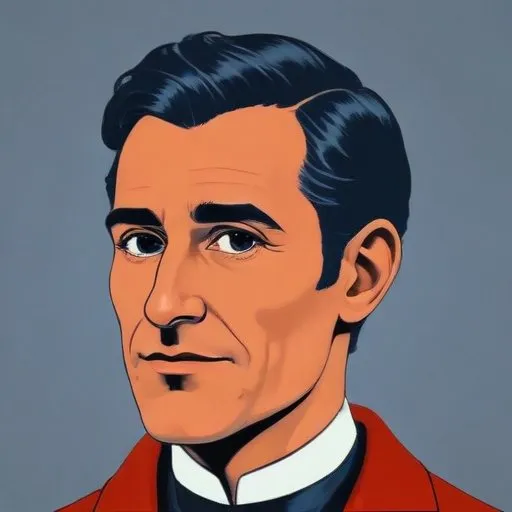
Developed the concept of Coriolis force, a fundamental principle in fluid dynamics and meteorology, describing the apparent deflection of moving objects on Earth due to the Earth's rotation.
Gaspard-Gustave de Coriolis, a French mathematician and mechanical engineer, is renowned for his groundbreaking work on the supplementary forces detected in a rotating frame of reference, which led to the renowned Coriolis effect. His pioneering contributions to the field of mechanics have made him a household name in the scientific community.
Born on May 21, 1792, in Paris, France, Coriolis demonstrated exceptional academic prowess from an early age. He secured the second position in the entrance exam of the École Polytechnique in 1808, paving the way for a promising career in mathematics and science.
Coriolis's most notable achievement is the development of the concept of kinetic energy, which he presented in his 1829 textbook, Calcul de l'Effet des Machines (Calculation of the Effect of Machines). This seminal work introduced the term "travail" (work) for the transfer of energy by a force acting through a distance, and prefixed the factor 1/2 to Leibniz's concept of vis viva, thereby specifying today's kinetic energy.
In the following years, Coriolis expanded his work on kinetic energy and mechanical work to rotating systems. His papers, "Sur le principe des forces vives dans les mouvements relatifs des machines" (On the principle of kinetic energy in the relative motion of machines) and "Sur les équations du mouvement relatif des systèmes de corps" (On the equations of relative motion of a system of bodies), published in 1832 and 1835, respectively, cemented his reputation as a pioneer in the field of mechanics.
Coriolis's work has had a profound impact on our understanding of mechanics and energy transfer. His concept of kinetic energy has become a fundamental principle in physics, engineering, and astronomy. The Coriolis effect, a phenomenon observed in rotating systems, has far-reaching implications in various fields, including meteorology, oceanography, and engineering.
Today, Coriolis is remembered as a visionary scientist who laid the foundation for modern mechanics and energy science. His contributions continue to inspire new generations of scientists, engineers, and researchers, shaping the course of scientific progress.
Coriolis's work embodies a profound understanding of the intricate relationships between energy, motion, and mechanics. His concept of kinetic energy reveals a deep appreciation for the fundamental principles governing the natural world. Through his work, Coriolis demonstrates a commitment to advancing human knowledge and promoting a deeper comprehension of the universe.
The Coriolis effect has significant implications for various aspects of modern society, including weather forecasting, ocean currents, and engineering design. Coriolis's work has also influenced the development of modern technologies, such as wind turbines, hydroelectric power plants, and satellite systems.
As we continue to navigate the complexities of the 21st century, Coriolis's pioneering spirit and groundbreaking contributions serve as a beacon of inspiration, reminding us of the power of human ingenuity and the importance of scientific inquiry.
Born in 1789
Developed rigorous mathematical theories and introduced concepts like convergence and continuity, revolutionizing calculus and paving the way for modern mathematics.
Born in 1749
Developed nebular hypothesis of the origin of the solar system and formulated Laplace's equation, a fundamental concept in mathematics and physics. He's considered the founder of celestial mechanics.
Born in 1736
Developed calculus, number theory, and celestial mechanics, making significant contributions to the fields of mathematics and astronomy.
Born in 1752
Developed the theory of elliptic integrals, and his work on number theory laid the foundation for modern cryptography.
Born in 1774
A French polymath who made significant contributions to the fields of physics, astronomy, and mathematics, particularly in the discovery of chromatic polarization and the Biot-Savart law.
Born in 1781
Developed mathematical tools to analyze probability and statistics, and made significant contributions to the fields of electricity and magnetism.
Born in 1786
A mathematician and politician who made significant contributions to the development of electromagnetism and served as Prime Minister of France, advocating for social reform and education.
Born in 1785
Developed the Dulong-Petit law, which describes the specific heat capacity of elements, and made significant contributions to the fields of thermodynamics and chemistry.
