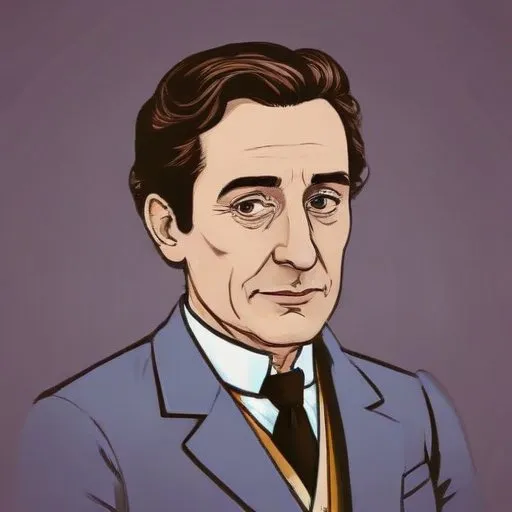
Pierre Louis Dulong: The Pioneering Physicist and Chemist
A Legacy in Thermodynamics and Chemistry
Pierre Louis Dulong, a French physicist and chemist, is renowned for his groundbreaking work in thermodynamics, leading to the development of the Dulong-Petit law, a fundamental principle in understanding the specific heat capacity of gases. His contributions to the field of chemistry, particularly in the discovery of nitrogen trichloride, have had a lasting impact on our understanding of chemical reactions and compounds.
Early Life and Education
Born on February 12, 1785, in Rouen, France, Dulong was orphaned at the tender age of four and was raised by his aunt in Auxerre. He received his secondary education in Auxerre and later at the Lyce
Pierre Corneille in Rouen, before entering the prestigious Ecole Polytechnique in Paris in 1801. However, his studies were initially impeded by poor health, and he later shifted his focus from medicine to science, working under the guidance of renowned chemist Louis-Jacques Thenard.
Career Highlights and Major Works
Dulong's contributions to chemistry are extensive and varied. Some of his notable achievements include:
- Discovery of nitrogen trichloride in 1811, albeit at a great personal cost, losing three fingers and an eye in the process.
- Research on the double decomposition of salts (1811), nitrous acid (1815), and the oxides of phosphorus (1816).
- Investigations into the oxides of nitrogen and catalysis by metals (1823), in collaboration with Thenard.
- Collaborative work with Alexis Petit on the specific heats of gases, culminating in the development of the Dulong-Petit law.
Interdisciplinary Expertise and Collaborations
Dulong's expertise extended beyond chemistry, and he was recognized by his contemporaries in the Royal Society of London as an interdisciplinary expert, commanding a deep understanding of almost every department of physical science. His collaboration with Petit, in particular, was instrumental in shaping our understanding of heat expansion and specific heats.
Influence on Modern Society and Legacy
Dulong's work has had a profound impact on our understanding of thermodynamics and chemistry. His discovery of nitrogen trichloride, although marred by personal tragedy, paved the way for further research into chemical reactions and compounds. The Dulong-Petit law, a testament to his collaborative spirit, remains a fundamental principle in understanding the specific heat capacity of gases.
In conclusion, Pierre Louis Dulong's pioneering work in thermodynamics and chemistry has left an indelible mark on the scientific community. His legacy continues to inspire and inform research in these fields, a tribute to his dedication, perseverance, and collaborative spirit.
FAQ
What was Pierre Louis Dulongs contribution to the field of thermodynamics?
Pierre Louis Dulong was a French physicist and chemist who made significant contributions to the field of thermodynamics, including the discovery of the Dulong-Petit law.
What is the Dulong-Petit law?
The Dulong-Petit law is a fundamental principle in thermodynamics that relates the specific heat capacity of a solid to its atomic weight.
How did Dulongs work influence the development of modern physics?
Dulongs work laid the foundation for later discoveries in thermodynamics, including the development of kinetic theory and the concept of entropy.
What other contributions did Dulong make to science?
Dulong made significant contributions to the fields of chemistry and physics, including the discovery of new compounds and the development of new analytical techniques.
What is Dulongs legacy in the scientific community?
Dulong is recognized as a pioneer in the field of thermodynamics, and his work continues to influence scientific research in the fields of chemistry and physics.