


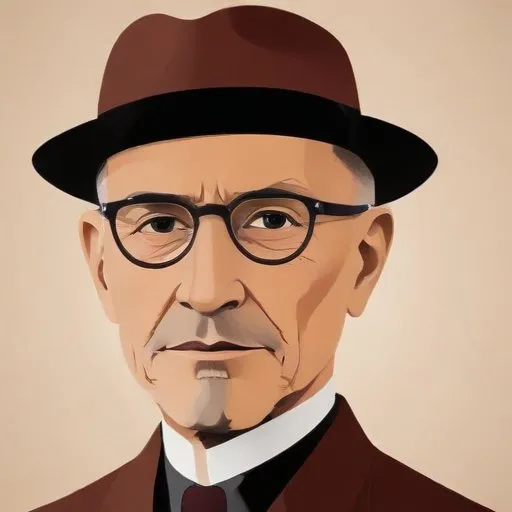
A renowned German sculptor celebrated for his elegant, figurative works that captured the essence of the human form, often blending classical and modernist styles.
German sculptor Georg Kolbe (1877-1947) is renowned for his modern, simplified classical style, reminiscent of Aristide Maillol of France, and is considered the leading figure sculptor of his generation. His artistic mastery is exemplified in his iconic work, Die Tänzerin (The Dancer), which catapulted him to fame in 1912.
Born in Waldheim, Saxony, Kolbe initially trained as a painter in Dresden, Munich, and Paris. However, it was during his stay in Rome at the turn of the century that he discovered his true passion for sculpting under the guidance of Louis Tuaillon.
Kolbe's career was marked by significant milestones, including his membership in the Berliner Sezession in 1905 and his subsequent departure to join the Freie Sezession in 1913. His artistic breakthrough, Die Tänzerin, showcased his unique blend of modernity and classical elegance. This masterpiece solidified his position as a prominent sculptor of his time.
In the 1920s, Kolbe experimented with printmaking, creating 99 prints, primarily literary illustrations. He also collaborated with Lilly Reich and Mies van der Rohe on the Barcelona Pavilion, where his sculpture Alba Dawn was featured.
Kolbe's work had a profound impact on modern art, influencing generations of sculptors to come. His modern, simplified classical style paved the way for a new era of artistic expression. As the last president of the Deutscher Künstlerbund, he dedicated himself to promoting fellow artists who were classified as "degenerate" by the Nazi regime.
In 1919-1920, Kolbe underwent a period of creative introspection, during which he focused on small-scale sculptures and drawings. This phase marked a significant shift in his artistic approach, leading to a more nuanced understanding of his style.
Kolbe's artistic philosophy was rooted in his fascination with Asian faces, as evident in his works featuring Indian novelist Anita Desai's father, D.N. Mazumdar. This fascination reflects his appreciation for diverse cultural influences and his commitment to capturing the essence of human form.
Georg Kolbe's legacy extends beyond his own artistic achievements. He played a significant role in shaping the artistic landscape of his time, and his work continues to inspire contemporary artists. Despite his involvement with the National Socialists during the later years of his life, Kolbe's artistic integrity and commitment to promoting fellow artists remain an integral part of his enduring legacy.
Born in 1840
A French sculptor and illustrator famous for creating iconic, emotionally charged figures that capture the human experience, including the iconic symbol of intellectualism, The Thinker.
Born in 1878
A German-American lawyer and businessman who played a key role in developing the American tobacco industry, particularly with the formation of the American Tobacco Company.
Born in 1861
French sculptor and painter renowned for elegant, curvaceous female forms that blend classical and modernist styles, capturing the essence of femininity and sensuality.
Born in 1881
A pioneering Expressionist sculptor, known for emotive, elongated human figures that convey a sense of angst and vulnerability. His work explored the human condition, often using abstract forms to express intense emotions.
Born in 1869
A Norwegian sculptor who designed the Nobel Peace Prize medal, creating an iconic symbol of international recognition for outstanding contributions to peace and conflict resolution.
