


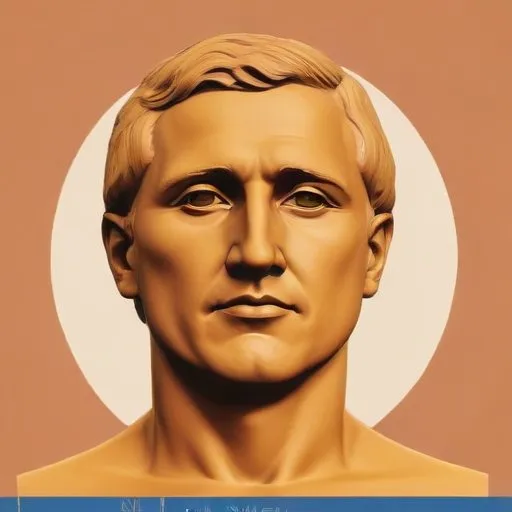
A Norwegian sculptor who designed the Nobel Peace Prize medal, creating an iconic symbol of international recognition for outstanding contributions to peace and conflict resolution.
Gustav Vigeland is renowned for his thought-provoking sculptures that capture the essence of human life, death, and the intricate relationships between men and women. He is most famously associated with the Vigeland Installation in Frogner Park, Oslo, a monumental series of sculptures that has become a symbol of Norway's rich cultural heritage.
Born as Adolf Gustav Thorsen on April 11, 1869, in Mandal, Norway, Vigeland was drawn to art from a young age. His parents, Elesus Thorsen and Anne Aanensdatter, encouraged his creative pursuits, and he spent his early years learning wood carving at a local school in Oslo.
After his father's sudden death, Vigeland returned to Mandal to help his family, but his passion for art never wavered. He later moved back to Oslo, determined to become a professional sculptor, and came under the tutelage of sculptor Brynjulf Bergslien.
Vigeland's big break came when he exhibited his first work, "Hagar and Ishmael," in 1889. The piece received critical acclaim, and he went on to hold his first personal exhibitions in Norway in 1894 and 1896, solidifying his position as a rising star in the art world.
During the early 1890s, Vigeland traveled extensively, visiting Copenhagen, Paris, Berlin, and Florence, where he was exposed to a wide range of artistic styles and influences. His time in Paris, in particular, had a profound impact on his work, as he frequented Auguste Rodin's workshop and experimented with ancient and Renaissance art.
In the early 20th century, Vigeland began working on his magnum opus, the Vigeland Installation, a sprawling complex of over 200 sculptures that would take him more than 30 years to complete. The installation is a deeply personal exploration of human life, death, and the relationships between men and women.
The sculptures, ranging from the iconic "Monolith" to the poignant "Mother and Child," are a testament to Vigeland's unparalleled skill and creativity. The Vigeland Installation has become an integral part of Norway's cultural identity, attracting millions of visitors each year.
Vigeland's contributions to Norwegian art and culture have been recognized with numerous awards and honors, including the prestigious Norwegian National Prize in 1908.
In addition to his work on the Vigeland Installation, Vigeland is also celebrated for designing the Nobel Peace Prize medal, a testament to his versatility and skill as a sculptor.
Gustav Vigeland's impact on Norwegian art and culture is immeasurable. His sculptures continue to inspire generations of artists, and his legacy serves as a reminder of the power of art to capture the human experience.
As a pioneer of Norwegian sculpture, Vigeland's work has paved the way for future generations of artists, cementing his position as one of the most important cultural figures in Norway's history.
Born in 1840
A French sculptor and illustrator famous for creating iconic, emotionally charged figures that capture the human experience, including the iconic symbol of intellectualism, The Thinker.
Born in 1863
A Norwegian painter who created iconic, emotionally charged works that explored the human experience, including the famous piece "The Scream".
Born in 1828
A pioneer of realism in theater, known for plays that probed the human condition, challenging social norms and morals through complex characters and situations.
Born in 1859
A Norwegian literary giant, celebrated for his pioneering works that explored the human condition, nature, and the search for meaning. His writing style, a blend of realism and lyricism, influenced generations of writers.
Born in 1882
A Danish-Norwegian writer who penned epic historical novels, including the Kristin Lavransdatter trilogy, which explores themes of love, faith, and identity in medieval Norway. Her works are celebrated for their rich detail and strong female characters.
Born in 1872
First person to reach the South Pole, leading a Norwegian expedition in 1911, and a pioneer in Arctic and Antarctic exploration.
Born in 1861
A Norwegian pioneer who explored the Arctic, made groundbreaking scientific discoveries, and championed humanitarian causes, earning a Nobel Prize for his efforts. He's most famous for being the first to cross Greenland and his innovative sled designs.
Born in 1857
A Norwegian master of dark, whimsical art, creating eerie landscapes and fantastical creatures that continue to inspire and unsettle to this day.
