


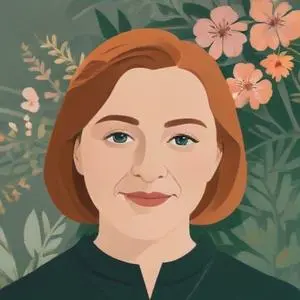
A Danish-Norwegian writer who penned epic historical novels, including the Kristin Lavransdatter trilogy, which explores themes of love, faith, and identity in medieval Norway. Her works are celebrated for their rich detail and strong female characters.
Sigrid Undset, the Danish-born Norwegian novelist, is renowned for her remarkable literary contributions, particularly her epic trilogy, Kristin Lavransdatter, which earned her the prestigious Nobel Prize in Literature in 1928. This sweeping narrative, set in medieval Norway, explores the life of a woman from birth to death, captivating readers with its rich historical detail and poignant characterization.
Born on May 20, 1882, in Kalundborg, Denmark, Sigrid Undset spent her early childhood in Norway after her family moved there when she was just two years old. Growing up in Oslo (then known as Kristiania), Undset's life was marked by tragedy when her father, Ingvald Martin Undset, a Norwegian archaeologist, passed away at the age of 40, leaving the family in a precarious financial situation.
Undset's circumstances led her to abandon hopes of a university education, instead opting for a one-year secretarial course. She secured a position as a secretary with an engineering company in Kristiania at the age of 16, a post she held for 10 years. During this period, Undset began writing and studying, eventually producing her first novel manuscript, a historical novel set in medieval Denmark, by the time she was 22. Although it was initially rejected, Undset persevered, joining the Norwegian Authors Union in 1907 and eventually publishing her first books of historical fiction in 1907.
The trilogy, published between 1920 and 1922, is Undset's most celebrated work, a testament to her mastery of the historical novel genre. The narrative follows the life of Kristin Lavransdatter, a strong-willed and passionate woman, as she navigates the complexities of medieval Norwegian society. This monumental work has been hailed for its meticulous research, evocative prose, and nuanced characterization, cementing Undset's position as a leading figure in Norwegian literature.
In 1940, Undset fled Norway for the United States, driven by her opposition to Nazi Germany and the occupation of Norway. During her exile, she continued to write, advocating for Norway's liberation and contributing to the war effort. Upon the war's end in 1945, Undset returned to Norway, resuming her literary pursuits and assuming a prominent role in the country's post-war cultural landscape.
Sigrid Undset's contributions to Norwegian literature are immeasurable, her work having inspired generations of writers, historians, and scholars. Her commitment to exploring Norway's rich cultural heritage has helped shape the nation's identity, while her literary innovations have elevated the historical novel genre as a whole. Undset's legacy extends beyond the realm of literature, her courage and determination in the face of adversity serving as a powerful inspiration to people around the world.
Sigrid Undset's remarkable life and work continue to captivate audiences, her Nobel Prize-winning trilogy, Kristin Lavransdatter, standing as a testament to her unwavering dedication to her craft and her enduring impact on the world of literature.
Born in 1859
A Norwegian literary giant, celebrated for his pioneering works that explored the human condition, nature, and the search for meaning. His writing style, a blend of realism and lyricism, influenced generations of writers.
Born in 1828
A pioneer of realism in theater, known for plays that probed the human condition, challenging social norms and morals through complex characters and situations.
Born in 1832
A Norwegian-French author and playwright who wrote influential works that explored themes of social justice, morality, and national identity, earning him the Nobel Prize in Literature in 1903.
Born in 1849
A prominent figure in Norwegian literature, known for his realistic and socially conscious plays and novels that critiqued the social conventions of his time.
Born in 1897
A renowned Norwegian literary figure, celebrated for his poignant and evocative writings that explore the human condition, often delving into themes of love, nature, and the complexities of rural life.
Born in 1876
A pioneering Norwegian novelist and educator, known for his epic family sagas that explored the human condition, social change, and the struggle for identity. His works are considered a cornerstone of modern Norwegian literature.
