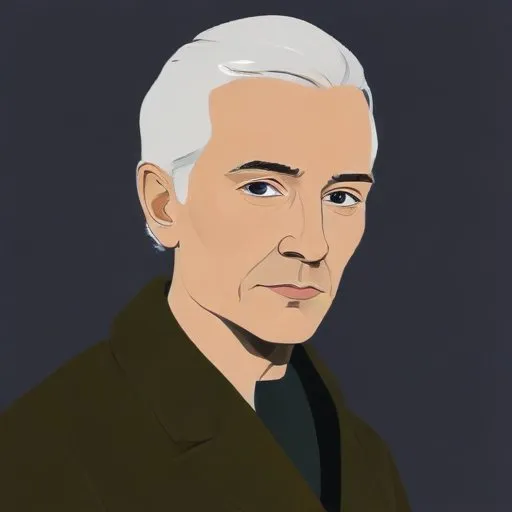
Tarjei Vesaas: Norway's Literary Giant
A Prolific Novelist and Poet
Tarjei Vesaas is widely regarded as one of Norway's most significant writers of the 20th century, and perhaps its most important since World War II. His profound and evocative works of literature have captivated readers for nearly five decades, earning him numerous accolades and recognition globally.
Early Life and Influences
Born on 20 August 1897 in Vinje, Telemark, Norway, Vesaas was the oldest of three sons to Olav Vesaas, a farmer, and Signe ygarden, a teacher. His upbringing on the family farm instilled in him a deep connection with nature, which would later become a recurring theme in his writing. Guilt-ridden by his decision not to take over the family farm, Vesaas sought solace in solitude and nature, laying the groundwork for his future literary explorations.
Awards and Honors
Vesaas' remarkable literary career was marked by numerous awards and honors. Notably, he received the Gyldendal's Endowment in 1943, the Dobloug Prize in 1957, and the Nordic Council's Literature Prize in 1963 for his novel
The Ice Palace. Additionally, he was awarded the Venice Prize in 1953 for
The Winds. His work was recognized on the global stage, with 57 nominations for the Nobel Prize in Literature between 1946 and 1970.
Major Works and Literary Style
Vesaas' debut novel,
Children of Humans (Menneskebonn), was published in 1923, but it was
The Great Cycle (Det store spelet) in 1934 that brought him widespread acclaim. Written in Nynorsk, his work is characterized by simple, terse, and symbolic prose, often exploring themes of death, guilt, angst, and other profound human emotions. His stories typically revolve around simple rural people undergoing intense psychological drama, which critics praise for their immense psychological insight. The Norwegian natural landscape is a prevalent feature in his works, adding depth and complexity to his narratives.
Personal Life and Relationships
Vesaas married writer Halldis Moren Vesaas, daughter of Sven Moren and sister of Sigmund Moren, in 1934, and they had two children, Olav Vesaas and Guri Vesaas. His marriage and family life were marked by a deep connection with nature, which continued to inspire his writing.
Legacy and Impact
Tarjei Vesaas' mastery of the Nynorsk language has contributed significantly to its acceptance as a medium of world-class literature. His work has not only enriched Norwegian literature but has also had a profound impact on the global literary landscape. His influence can be seen in the works of subsequent Norwegian writers, solidifying his position as one of the most important literary figures of the 20th century.
Philosophical Contributions and Beliefs
Vesaas' writing often grappled with existential questions, delving into the human condition, and exploring the complexities of human emotions. His work reflects a deep understanding of human psychology, offering profound insights into the human experience. His writing is not only a testament to his literary prowess but also a reflection of his philosophical inclinations, inviting readers to contemplate the mysteries of human existence.
Historical Context and Comparative Analysis
Vesaas' work must be viewed within the context of Norway's literary landscape during the 20th century. His writing was shaped by the country's cultural and historical heritage, as well as the global literary movements of the time. A comparative analysis of his work with that of contemporaries such as
Knut Hamsun and
Sigrid Undset reveals a unique voice that not only reflected the Norwegian experience but also contributed to its literary identity.
Trivia and Fun Facts
- Tarjei Vesaas was known for his love of nature and often incorporated elements of the Norwegian landscape into his stories.
- He was a prolific writer, publishing novels and poetry across nearly five decades.
- Vesaas' work has been translated into numerous languages, including English, French, German, and Italian.
Tarjei Vesaas' remarkable literary legacy continues to inspire readers and writers alike, cementing his position as one of Norway's most celebrated writers.
FAQ
What is Tarjei Vesaass most famous work?
Tarjei Vesaas is best known for his novel Fuglane, which is considered one of the greatest Norwegian novels of the 20th century. This novel explores the themes of nature, humanity, and the relationship between the two.
What inspired Tarjei Vesaass writing style?
Tarjei Vesaass writing style was heavily influenced by his love for nature and the Norwegian landscape. He drew inspiration from the natural world and the people around him, creating a unique and lyrical writing style.
What awards did Tarjei Vesaas win for his writing?
Tarjei Vesaas won several awards for his writing, including the Norwegian Critics Prize for Literature and the Mads Wiel Nygaards Endowment.
What is the significance of Tarjei Vesaass poetry?
Tarjei Vesaass poetry is significant because it explores themes of love, nature, and the human condition. His poetry is known for its lyricism and its ability to evoke powerful emotions.
How did Tarjei Vesaass work influence Norwegian literature?
Tarjei Vesaass work had a significant influence on Norwegian literature, helping to shape the countrys literary identity and inspiring future generations of writers.