


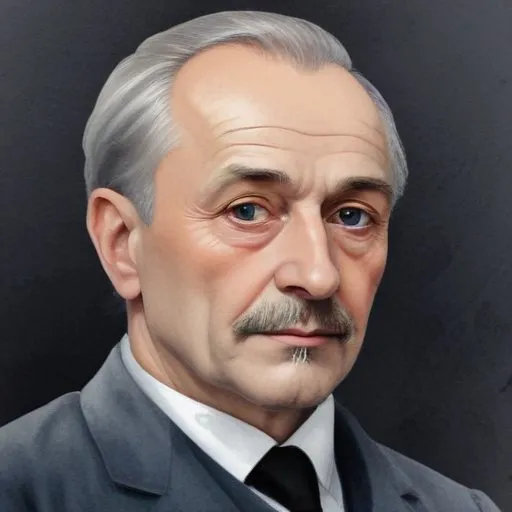
A pioneer in electricity, he conducted groundbreaking research on lightning and invented the first lightning rod, paving the way for modern lightning protection systems.
Georg Wilhelm Richmann, a Russian physicist of Baltic German origin, is renowned for his groundbreaking work in electricity, atmospheric electricity, and calorimetry. His pioneering spirit and innovative experiments led to the establishment of the first general equation for calorimetric calculations, later known as Richmann's law.
Born on July 11, 1711, in Pernau, Livonia (now Estonia), Richmann's life was marked by tragedy from the beginning. His father died of plague before he was born, and his mother remarried soon after. Despite the challenges, Richmann pursued his education with zeal, studying in Reval (now Estonia) before moving to Germany to attend the universities of Halle and Jena.
Richmann spent most of his life as a professor of physics at the University of St. Petersburg, where he became a hub of scientific research. His work on thermodynamics and electrical phenomena led to numerous breakthroughs, earning him widespread recognition. Richmann's law, a fundamental equation in calorimetry, remains a testament to his innovative spirit.
As a versatile individual, Richmann also ventured into translation, rendering Alexander Pope's "Essay on Man" into German from French in 1741. This literary endeavor showcases his multifaceted personality, which extended beyond the realm of science.
Richmann's life came to a dramatic end on August 6, 1753, when he was electrocuted while attempting to quantify the response of an insulated rod to a nearby storm. This freak accident, often referred to as ball lightning, occurred during a meeting of the Academy of Sciences, where Richmann had rushed to capture the event for posterity. His untimely death at the age of 42 was a tragic loss to the scientific community.
Richmann's pioneering work in electricity and calorimetry paved the way for future scientists, influencing the development of these fields. His experimentations on thunderstorm electricity, although cut short by his death, sparked a deeper understanding of atmospheric electrical phenomena.
Today, Richmann is remembered as a trailblazer who pushed the boundaries of human knowledge. His story serves as a beacon, inspiring future generations to pursue scientific inquiry with passion and dedication.
Born in 1711
A Russian polymath who made significant contributions to various fields, including the discovery of the atmosphere of Venus and the development of a comprehensive theory of the Earth's origin. They are also credited with founding Moscow State University.
Born in 1707
Pioneering mathematician and physicist who made immense contributions to fields like calculus, number theory, and optics, shaping the course of modern mathematics and physics.
Born in 1701
A Swedish astronomer, physicist, and mathematician who developed the Celsius temperature scale, still widely used today to measure temperature. He also made significant contributions to astronomy, including the discovery of the aurora borealis.
Born in 1707
Developed the system of binomial nomenclature, which is still used today to classify and name living organisms. This system has had a profound impact on the fields of biology, ecology, and conservation.
Born in 1749
Developed nebular hypothesis of the origin of the solar system and formulated Laplace's equation, a fundamental concept in mathematics and physics. He's considered the founder of celestial mechanics.
Born in 1736
Developed calculus, number theory, and celestial mechanics, making significant contributions to the fields of mathematics and astronomy.
Born in 1717
A French Enlightenment thinker who made significant contributions to mathematics, physics, and philosophy, particularly in the fields of fluid dynamics and the study of vibrating strings. He's also known for his work on the Encyclopedia, a comprehensive reference work that aimed to compile all knowledge of the time.
Born in 1700
This 18th-century polymath is renowned for his groundbreaking work on fluid dynamics, particularly the Bernoulli's Principle, which explains the relationship between pressure and velocity in fluids.
