


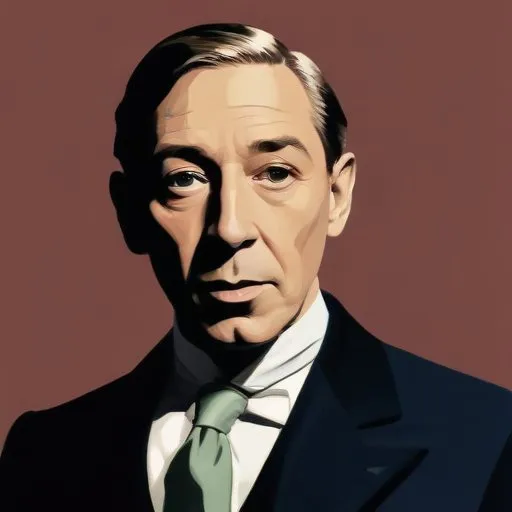
A renowned actor and playwright of the early 20th century, known for his powerful stage presence and versatility in playing a wide range of characters. He was also a pioneer in film, winning the Academy Award for Best Actor in 1930.
George Arliss was a renowned English actor, author, playwright, and filmmaker who made a significant impact in the entertainment industry, particularly in the United States. He is best known for being the first British actor to win an Academy Award for his portrayal of Benjamin Disraeli in the 1929 film Disraeli, as well as being the earliest-born actor to receive the honor.
Born Augustus George Andrews on April 10, 1868, in London, Arliss started his career in the publishing office of his father, William Joseph Arliss Andrews. However, he left at the age of 18 to pursue a career in the theater. He began his theater career in the British provinces in 1887 and eventually made his way to London's West End, playing supporting roles by 1900.
Arliss embarked on a tour of America in 1901 with Mrs. Patrick Campbell's troupe, intending to stay only for the length of the tour. However, he ended up staying in the United States for 20 years, making his Broadway debut in Magda in 1902. He eventually became a star in 1908 with his role in The Devil. His breakthrough came when producer George Tyler commissioned Louis Napoleon Parker to write a play specifically tailored for Arliss, which led to his iconic portrayal of Disraeli in 1911.
Arliss began his film career with The Devil in 1921, followed by Disraeli and four other silent films. His success in films led to him becoming one of the highest-paid actors of his time, with a salary of $50,000 per film. He went on to star in a range of films, including Voltaire (1933), Cardinal Richelieu (1935), The Millionaire (1931), and A Successful Calamity (1932), showcasing his versatility as an actor.
Arliss's Academy Award for Best Actor for his role in Disraeli marked a significant milestone in his career. He was also awarded a star on the Hollywood Walk of Fame in 1960. His legacy in the film industry is still celebrated today, with many regarding him as a pioneer in the art of film acting.
Arliss married Florence Kate Montgomery in 1899, and they remained together until his death in 1946. He was known to his relatives as "Uncle Gus" and was close to his family throughout his life. Arliss passed away on February 5, 1946, at the age of 77, leaving behind a legacy that continues to inspire generations of actors and filmmakers.
Arliss once said, "Theatre is a temple, and the actors are its priests." This quote reflects his passion and dedication to his craft, as well as his commitment to bringing characters to life on stage and screen.
Arliss's contributions to the film industry paved the way for future generations of actors and filmmakers. His success in playing historical figures and characters from literature helped to bring these stories to life and made them more accessible to a wider audience. His legacy continues to inspire new talent and reminds us of the power of storytelling in film.
Arliss's body of work showcases his range and versatility as an actor, from playing historical figures to starring in comedies. His impact on the film industry is still felt today, and his legacy continues to inspire new generations of actors and filmmakers.
Born in 1882
A legendary stage and screen actor of the early 20th century, known for his charismatic performances in Shakespearean roles and iconic films like "Dr. Jekyll and Mr. Hyde".
Born in 1878
A renowned actor and director, known for his iconic roles in films like "It's a Wonderful Life" and "Key Largo", and for being a member of the famous Barrymore family of actors.
Born in 1879
A renowned stage and screen actress, known for her powerful performances and iconic family legacy in the American theater.
Born in 1889
Star of the 1920s and 1930s, known for his rugged, charming on-screen presence and iconic roles in films like "In Old Arizona" and "42nd Street".
Born in 1908
A legendary actress who dominated Hollywood's Golden Age with her powerful performances and iconic roles in films like "All About Eve" and "What Ever Happened to Baby Jane?"
Born in 1909
Swashbuckling actor who starred in classic adventure films, charming audiences with his dashing good looks and charismatic on-screen presence.
Born in 1916
A two-time Academy Award winner, she was a leading lady in Hollywood's Golden Age, starring in films like "Gone with the Wind" and "Rebecca".
Born in 1910
A dashing British actor and war hero, starring in iconic films like "Around the World in 80 Days" and "Separate Tables", earning him an Academy Award.
