


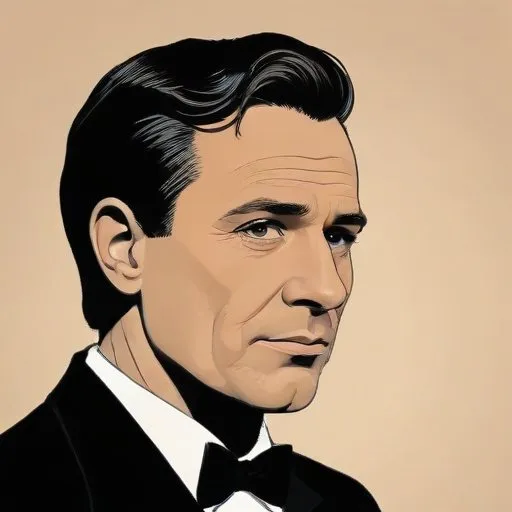
An early Hollywood pioneer, he acted in and directed numerous silent films, earning a star on the Walk of Fame.
George Beranger, also known as Andr Beranger, was a renowned Australian silent film actor and director who made a name for himself in Hollywood during the early 20th century. With a career spanning over three decades, Beranger appeared in more than 140 films, working with notable directors such as Ernst Lubitsch and D. W. Griffith.
Born George Augustus Beringer on March 27, 1893, in Enmore, New South Wales, Australia, Beranger was the youngest of five sons to Caroline Mondientz and Adam Beringer, a German engine fitter. Tragedy struck early when his mother committed suicide when he was just three years old. Beranger left home at the age of 14 and went on to study acting at the College of Elocution and Dramatic Art, founded by Scottish actor Walter Bentley.
In 1912, Beranger emigrated to California, United States, where he reinvented himself, claiming French parentage and a Paris education. He adopted the name George Alexandre Beranger and began working in the silent film industry in Hollywood. Beranger's talent and charisma soon made him a star, with roles in films directed by Lubitsch and Griffith.
Beranger's success in front of the camera led to opportunities behind the lens. Between 1914 and 1924, he directed ten films, solidifying his position as a talented filmmaker. His silent film roles often typecast him as a sophisticated or dandy type, which became his signature persona.
Beranger's personal life was marked by luxury and elegance. He owned a stunning Spanish-style home in Laguna Beach, rented a room at the Hollywood Athletic Club, and maintained an apartment in Paris, France. However, with the advent of sound films and the Great Depression of the 1930s, Beranger's career began to decline. He turned to drafting for the Los Angeles City Council to supplement his income and eventually sold his large properties to move into a modest cottage in Laguna Beach.
George Beranger's contributions to the silent film era are undeniable. He worked tirelessly to bring characters to life on the big screen, earning recognition from his peers and audiences alike. Although his career may have slowed down in the latter years, Beranger's legacy as a pioneering silent film star and director continues to inspire new generations of filmmakers and film enthusiasts.
Today, George Beranger's story serves as a testament to the power of perseverance and creativity in the face of adversity. His dedication to his craft and his passion for storytelling continue to inspire us, reminding us of the magic of the silent film era.
Born in 1889
A pioneer of silent film, he is renowned for his iconic "Little Tramp" character and groundbreaking work in writing, directing, and starring in his own movies.
Born in 1895
A pioneering silent film comedian, known for his deadpan expression and ingenious physical comedy, who wrote, directed, and starred in his own films.
Born in 1893
Pioneering silent film star and stunt master, known for performing daring physical comedy and iconic scenes, such as hanging from a clock tower.
Born in 1887
A silent film star who charmed audiences with his comedic talents, directing and writing skills, and is infamous for a scandal that tarnished his reputation.
Born in 1880
Pioneering filmmaker and comedian who developed the Keystone Kops and introduced Charlie Chaplin to the screen, revolutionizing silent comedy.
Born in 1885
Silent film star and sex symbol of the 1910s, known for her exotic, vampish persona and roles in films like "Cleopatra" and "Salome".
Born in 1892
A pioneering actress, producer, and screenwriter who co-founded United Artists, revolutionizing the film industry with her creative vision and business acumen. She was a silent film star and one of the most popular actresses of her time.
Born in 1875
Pioneering filmmaker behind groundbreaking silent movies, credited with developing innovative camera techniques and narrative storytelling styles.
