


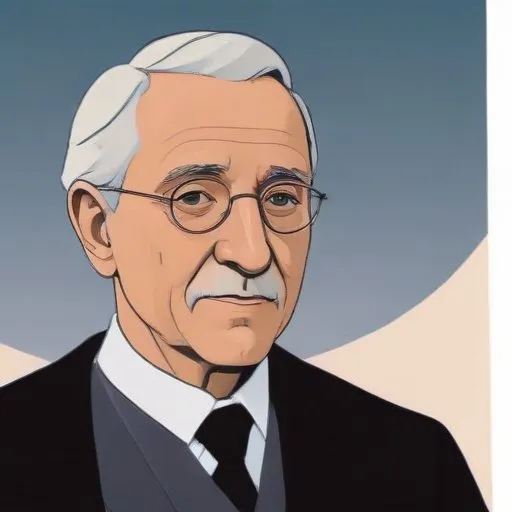
A Canadian philosopher, author, and academic who wrote extensively on metaphysics, epistemology, and the philosophy of mind, making significant contributions to the development of process philosophy.
George Blewett was a Canadian philosopher and theologian renowned for his profound contributions to the fields of moral philosophy, theology, and education. Through his works, he delved into the intricacies of human nature, exploring the intersections of morality, faith, and rational inquiry.
Born on December 9, 1873, in Yarmouth Township, Elgin County, Ontario, George Blewett was the son of William Blewett, a farmer, and Mary Baker. He was raised on a farm near St. Thomas, Ontario, where he developed a strong foundation in morals and values. Blewett's academic pursuits took him to Victoria University in the University of Toronto, where he graduated in 1897. He then pursued further studies at the University of Würzburg in 1899 and eventually earned his Doctor of Philosophy degree in philosophy from Harvard University in 1900.
Blewett's academic career was marked by prestigious appointments, including his position as a lecturer in philosophy at Wesley College, Winnipeg in 1901. He later became the Ryerson Professor of moral philosophy at Victoria University in 1906. Two of his most notable works include The Study of Nature and the Vision of God With Other Essays in Philosophy (1907) and The Christian View of the World (1912), which showcased his expertise in moral philosophy and theology.
Blewett's philosophical contributions were characterized by his emphasis on the importance of moral philosophy in understanding human nature. He believed that morality was intrinsic to human existence and that it played a pivotal role in shaping our perceptions of the world. Through his works, he sought to reconcile faith and reason, exploring the intersections of Christianity and philosophy.
Blewett's life was marked by significant personal milestones, including his marriage and the birth of his children. However, his life was cut short when he drowned while swimming in Go Home Bay, Ontario, on August 15, 1912, likely due to a heart attack. He was buried in the Necropolis Cemetery.
George Blewett's legacy continues to inspire philosophers, theologians, and scholars to this day. His works remain a testament to his commitment to moral philosophy and his innovative approach to reconciling faith and reason. Through his contributions, he has left an indelible mark on the academic community, shaping the course of philosophical inquiry for generations to come.
Though his life was tragically cut short, George Blewett's intellectual legacy continues to inspire and educate, a testament to the power of his ideas and the significance of his contributions to the world of philosophy and theology.
Born in 1921
Developed the concept of "justice as fairness" and argued that a just society should be based on principles that would be agreed upon by rational individuals behind a "veil of ignorance".
88 Years Old
A renowned philosopher who challenged traditional notions of justice, morality, and the role of government, known for his influential book "Anarchy, State, and Utopia".
97 Years Old
A philosopher who challenged modern moral philosophy by arguing that morality is rooted in tradition and community, and that we need to revive the Aristotelian concept of virtues to live a good life.
78 Years Old
Former warlord who led Liberia through a brutal civil war and was later convicted of war crimes and crimes against humanity. He's infamous for his role in fueling regional instability and human rights abuses.
73 Years Old
A renowned Harvard professor and author, known for exploring the intersection of politics, philosophy, and economics, making complex ideas accessible to a broad audience.
89 Years Old
A prominent philosopher and academic who challenged traditional views on consciousness, morality, and the nature of reality, known for his provocative and influential writings on the human experience.
97 Years Old
A prominent thinker who developed the concept of "communicative action" and explored the relationships between power, language, and social structures, influencing modern critical theory and sociology.
95 Years Old
A philosopher who challenged traditional notions of objective truth and knowledge, arguing that they are shaped by language, culture, and social practices. He's known for his critiques of modern philosophy and his concept of "ironism."
