


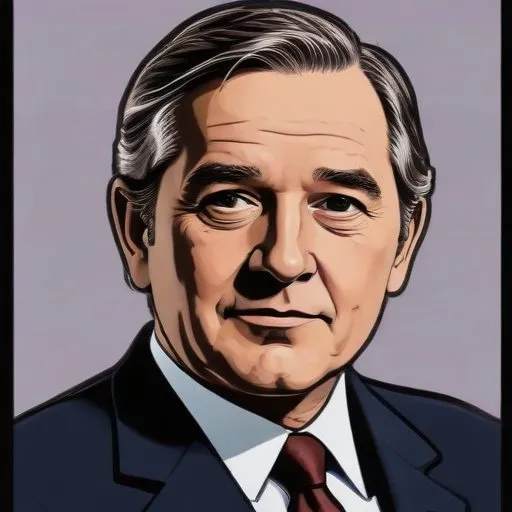
This 19th-century politician served as a U.S. Representative from Ohio and was a strong advocate for the abolition of slavery. He also played a key role in the formation of the Republican Party.
George Bliss was born on January 1, 1813, in Jericho, Vermont, to a family of modest means. He graduated from Granville College, after which he moved to Ohio in 1832 or 1833 to pursue his passion for law. Under the guidance of David Kellogg Cartter, a prominent lawyer of the time, Bliss studied law and was admitted to the bar in 1841.
Bliss's early career was marked by his partnership with Cartter in Akron, Ohio, where he established himself as a shrewd and astute lawyer. His reputation soon earned him the position of Mayor of Akron in 1850. The same year, Governor Reuben Wood appointed Bliss as presiding judge of the eighth judicial district, replacing Benjamin Wade, a position he held until the office was discontinued after a constitutional change.
Bliss's political career was marked by two non-consecutive terms in the United States House of Representatives. He was first elected to the Thirty-third Congress in 1853, defeating Darius Lyman, a Free Soiler. However, he withdrew his nomination for reelection in 1855. Bliss was re-elected to the Thirty-eighth Congress in 1863, but was unsuccessful in his bid for re-election in 1864.
In 1858, Bliss played a pivotal role in the Oberlin-Wellington Rescue case, one of the most significant cases of his career. As principal counsel and attorney, he assisted George Belden, the United States District Attorney for the Northern District of Ohio, in the prosecution of two abolitionists accused of helping a slave escape. Both defendants were found guilty, and Bliss's involvement in the case earned him widespread recognition and acclaim.
George Bliss married Sarah J. Fish of Williamstown, New York, and the couple had one daughter and four sons. After Bliss's death on October 24, 1868, his family moved to Brooklyn, New York. He was buried in Oak Hill Cemetery, Wooster, Ohio.
Bliss was a delegate to the Union National Convention at Philadelphia, Pennsylvania in 1866, a testament to his reputation as a respected politician and jurist of his time.
George Bliss's life and career were shaped by the tumultuous years of the mid-19th century, marked by the struggle for abolition, the Civil War, and the Reconstruction era. His involvement in the Oberlin-Wellington Rescue case and his advocacy for the abolition of slavery cemented his place in American history as a champion of social justice and equality.
Overall, George Bliss's life and legacy serve as a testament to his unwavering commitment to social justice, equality, and the rule of law, making him an enduring figure in American history.
Born in 1858
A pioneering leader who championed progressive reforms, trust-busting, and conservation, earning a Nobel Peace Prize for mediating the Russo-Japanese War. He's also famous for his rugged outdoorsmanship and "big stick" diplomacy.
Born in 1857
The 27th President of the United States was a lawyer and jurist who served as the only person to hold the offices of President and Chief Justice of the United States. He's known for his significant contributions to the country's judicial system.
Born in 1856
The 28th President of the United States, a Nobel Peace Prize winner, and a historian who played a key role in shaping international relations and global governance after World War I. He's most known for his idealistic vision of a League of Nations and his efforts to promote peace and diplomacy.
Born in 1865
The 29th President of the United States, a journalist-turned-politician, led the country through a period of post-war prosperity and scandalous corruption. He's infamous for his administration's numerous scandals and his own extramarital affairs.
Born in 1872
The 30th President of the United States, a lawyer and politician, led the country through a period of economic prosperity and limited government intervention, earning the nickname "Silent Cal" for his frugal and humble nature. He's most known for his minimalist approach to governance and tax cuts.
Born in 1874
The 31st President of the United States was a humanitarian and politician who led the country through the Great Depression and is known for his humanitarian efforts and infrastructure development. He's also infamous for his inability to mitigate the economic crisis.
74 Years Old
Renowned guitarist and songwriter, known for his work with Hall & Oates, Roger Waters, and Bob Dylan, as well as his role as Saturday Night Live's musical director from 1985 to 1995.
Born in 1882
The 99th Mayor of New York City was a progressive leader who transformed the city's infrastructure, education, and social services during the Great Depression. He's known for his innovative approach to urban governance and his iconic airport, LaGuardia Airport.
