


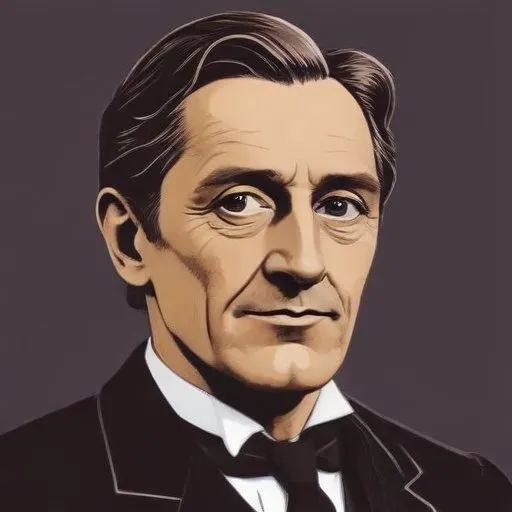
Developed innovative processes for producing chemicals and fuels, particularly in the field of petrochemicals. His work significantly impacted the development of modern industrial chemistry.
George Edward Holbrook is renowned for his groundbreaking contributions to the field of chemical engineering, as well as his instrumental role in shaping the National Academy of Engineering. As a founding member, he left an indelible mark on the organization and paved the way for future generations of engineers.
Born on March 4, 1909, in St. Louis, Missouri, Holbrook's fascination with chemical engineering began at the University of Michigan, where he earned his BS (1931), MS (1932), and Ph.D. (1933). This solid foundation laid the groundwork for his remarkable career.
Holbrook's professional journey began at Du Pont, where he rapidly ascended the ranks. By 1939, he headed new products research at Jackson Laboratory, and in 1943, became its assistant director. His exceptional leadership skills and innovative approach earned him the position of general superintendent of product development at Chambers Works, then the world's largest chemical plant, in 1949.
During his tenure at Du Pont, Holbrook held various positions, including manager of process development for the Organic Chemicals business and assistant director of the Development Department. A brief stint in government service (1943-1945) as deputy director and director of the Chemical, Rubber, and Forest Products Bureau of the National Production Authority further honed his skills.
Holbrook's impressive rise continued as he became assistant general manager of the Organic Chemicals Department (1955) and general manager of the Elastomer Chemicals Department (1957). In 1958, he was promoted to vice president, director, and member of the Executive Committee, cementing his status as a leader in the industry.
Throughout his career, Holbrook served on boards and committees for numerous universities, including the Carnegie Institute of Technology, University of Michigan, and University of Pennsylvania. He was an active member of various prestigious organizations, such as the American Chemical Society, American Physical Society, and Society of Chemical Industry.
Holbrook's contributions to the field of chemical engineering were recognized through several awards and honors. Notably, he served as president of the American Institute of Chemical Engineers in 1958, a testament to his stature in the industry.
Holbrook's work had far-reaching consequences, influencing the development of new products and processes that transformed industries. His dedication to education and leadership inspired future generations of engineers, perpetuating a cycle of innovation and progress.
George Edward Holbrook's remarkable journey serves as a beacon of inspiration, demonstrating the power of dedication, innovation, and leadership. As a pioneer in chemical engineering and a visionary leader, his impact will continue to ripple through the annals of history.
Born in 1854
Founded the company that revolutionized photography by making it accessible and affordable to the masses through innovative film and camera technologies. Known for pioneering the development of roll film and the first point-and-shoot camera.
Born in 1819
Invented the first practical sewing machine, revolutionizing the textile industry and transforming the way clothing was made. This innovation had a profound impact on the Industrial Revolution and daily life.
Born in 1809
Co-founder of International Harvester, a pioneering manufacturer of agricultural machinery, revolutionizing farming with the mechanical reaper, increasing food production and transforming the industry.
Born in 1804
Founded a company that revolutionized agriculture with innovative farming equipment, making farming more efficient and productive. Today, the company is a global leader in agricultural machinery and technology.
Born in 1765
An American engineer revolutionized the cotton industry with a machine that simplified harvesting, making cotton production more efficient and profitable. This innovation had a significant impact on the economy and society.
Born in 1768
Built America's first successful cotton mill, revolutionizing the textile industry and earning the nickname "Father of American Industry".
Born in 1663
A Puritan minister and writer who advocated for the use of inoculation against smallpox and wrote influential books on witchcraft, including "Memorable Providences, Relating to Witchcrafts and Possessions".
Born in 1856
A pioneering engineer who harnessed the power of alternating current (AC) to transform the world's electrical systems, and is credited with developing groundbreaking technologies like radio communication and X-ray imaging.
