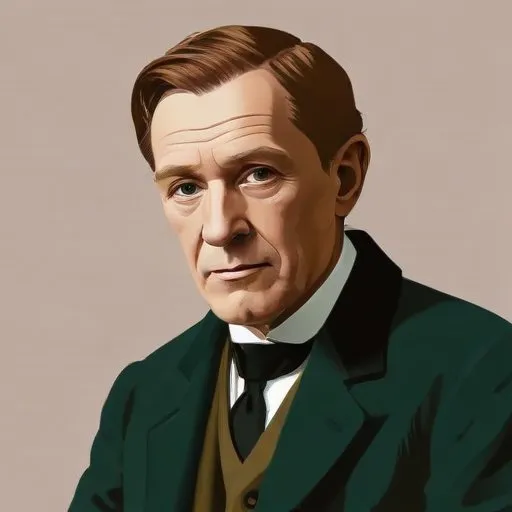
George Edward Hughes: A Pioneering Philosopher and Logician
A Legacy in Modal Logic and Medieval Philosophy
George Edward Hughes, an Irish-born New Zealand philosopher and logician, left an indelible mark on the academic world through his groundbreaking contributions to modal logic and medieval philosophy. His collaborative work with Max Cresswell, "An Introduction to Modal Logic," published in 1968, remains a seminal text in the field, introducing multiple generations of students and researchers to the concept of Kripke semantics.
Early Life and Education
Born on June 8, 1918, in Waterford, Ireland, to English parents George James Hughes and Gertrude Sparks, Hughes' family moved to Scotland in the early 1920s due to the Irish War of Independence. He graduated with First-Class Honors in Philosophy and English, and later in pure Philosophy, from the University of Glasgow. Hughes then pursued further studies at the University of Cambridge, where he was influenced by prominent philosophers such as John Wisdom and
Ludwig Wittgenstein.
Academic Career and Influences
Hughes held various lectureships at the University College of South Wales at Cardiff and the University College of North Wales at Bangor before being appointed as the first Chair in Philosophy at the Victoria University of Wellington in New Zealand in 1951. He remained in this position until his retirement in 1984. During his tenure, he was influenced by J.L. Austin, a leading exponent of ordinary language philosophy, and Arthur Prior, with whom he shared a deep connection.
Teaching Style and Legacy
Hughes was renowned for his exceptional teaching skills, passion for clarity, and uncompromising intellectual honesty. He played a prominent role in academic affairs at Victoria University, earning the respect and admiration of his students and peers alike. His humanity and gentleness have left a lasting impact on the academic community.
Major Works and Contributions
- An Introduction to Modal Logic (1968) - Co-authored with Max Cresswell, this influential textbook has been translated into multiple languages and remains a cornerstone in the field of modal logic.
- Contributions to medieval philosophy, particularly in the areas of ethics and the philosophy of religion.
Awards and Honors
Although Hughes did not receive any specific awards or honors, his contributions to the field of philosophy and logic have been widely recognized and acknowledged by the academic community.
Personal Life and Legacy
Hughes passed away on March 4, 1994, in Wellington, New Zealand, leaving behind a rich legacy in the world of philosophy and logic. His commitment to intellectual honesty, passion for teaching, and groundbreaking contributions continue to inspire future generations of scholars and researchers.
Through his remarkable life's work, George Edward Hughes has cemented his place as a prominent figure in the history of philosophy, and his influence will undoubtedly continue to shape the discipline for years to come.
FAQ
What was George Edward Hughess area of specialization in philosophy?
George Edward Hughes was a logician and philosopher, specializing in the areas of modal logic, epistemology, and metaphysics.
How did George Edward Hughess work on modal logic influence the field of philosophy?
George Edward Hughess research on modal logic helped establish it as a central area of philosophical inquiry, with far-reaching implications for metaphysics, epistemology, and philosophy of language.
What was George Edward Hughess approach to teaching philosophy?
George Edward Hughes was known for his clear, engaging teaching style, which emphasized critical thinking, logical analysis, and philosophical rigor.
How did George Edward Hughess New Zealand roots influence his philosophical perspective?
George Edward Hughess New Zealand upbringing instilled in him a strong sense of social responsibility and a commitment to philosophical inquiry that was grounded in everyday experience.
What was George Edward Hughess legacy in philosophical logic?
George Edward Hughess contributions to philosophical logic are immense, shaping the development of modal logic and influencing generations of philosophers and logicians.