


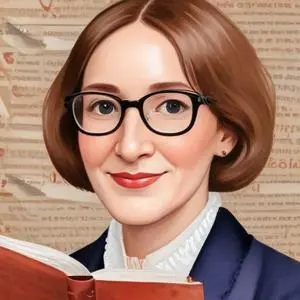
A renowned 19th-century English novelist and poet, celebrated for crafting complex, psychologically nuanced characters and exploring social issues in works like "Middlemarch" and "Silas Marner".
George Eliot, the pen name of Mary Ann Evans, is renowned for her profound and thought-provoking novels that continue to captivate readers with their rich tapestry of characters, settings, and philosophical themes. As one of the leading writers of the Victorian era, she expertly wove together realism, psychological insight, and a deep sense of place, cementing her status as a literary giant.
Born on November 22, 1819, in Nuneaton, Warwickshire, England, Mary Ann Evans defied the societal norms of her time. She lived with George Henry Lewes, a married man, as his conjugal partner from 1854 until his death in 1878, and later married John Cross, a man twenty years her junior, in 1880. These unconventional relationships sparked controversy, but they also fueled her creativity and allowed her to pursue her passion for writing.
George Eliot's novels are a testament to her boundless talent and dedication to her craft. Her seven novels include:
Middlemarch, in particular, is hailed as one of the greatest novels in the English language, with Virginia Woolf praising it as "one of the few English novels written for grown-up people."
George Eliot's writing was deeply influenced by her philosophical outlook on life. She was a staunch advocate for social reform, education, and women's rights. Her novels often explored themes of morality, free will, and the human condition, reflecting her interests in philosophy, particularly the works of Immanuel Kant and Auguste Comte.
George Eliot's impact on modern society extends far beyond the literary world. Her novels have inspired countless adaptations, from film and television to stage productions. Her work has also influenced generations of writers, including Virginia Woolf, D.H. Lawrence, and Martin Amis.
In addition to her literary achievements, George Eliot's life was marked by significant personal milestones:
George Eliot's legacy is a testament to her groundbreaking contribution to English literature. Her novels continue to be widely read and studied, offering a fascinating glimpse into the social, cultural, and intellectual landscape of the Victorian era. As a woman who defied convention and pursued her passion for writing, she serves as a powerful inspiration to generations of readers and writers.
Born in 1812
A renowned author of timeless classics, crafting vivid stories that exposed social injustices and explored the human condition, leaving an indelible mark on literature.
Born in 1840
A renowned author of novels and poetry that explored the human condition, often critiquing social conventions and the role of fate in people's lives.
Born in 1775
A celebrated author of witty, romantic novels of manners that offer insightful commentary on 19th-century English society, particularly the lives of women. Her works remain beloved for their strong female characters, clever dialogue, and nuanced exploration of relationships.
Born in 1816
Author of classic novels like Jane Eyre, exploring themes of love, identity, and social class in 19th-century England. Her works remain beloved for their strong female protagonists and gothic atmosphere.
Born in 1818
Wrote classic novels and poetry that explored the human experience, particularly in the context of love, family, and the natural world.
Born in 1810
A pioneering novelist of the Victorian era, known for her insightful portrayals of social class and women's lives in industrial England, particularly in her novel "North and South".
Born in 1811
Satirical novelist and illustrator of Victorian society, known for his witty and insightful portrayals of the English upper class, particularly in his novel "Vanity Fair".
Born in 1819
A priest, historian, and author who wrote influential novels and historical works, including "The Water-Babies" and "Hypatia", which explored social and theological issues.
