


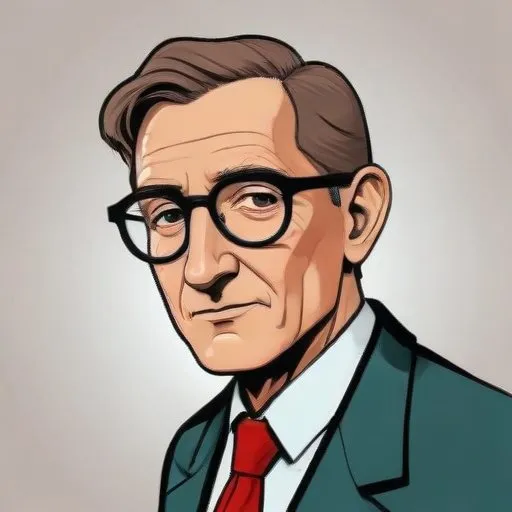
A pioneering anatomist who made significant contributions to the understanding of human body structure, particularly the discovery of the Ent's apophysis, a bony projection on the femur.
George Ent, a true Renaissance man, left an indelible mark on the annals of 17th-century science, earning recognition as a distinguished physician, anatomist, author, and scholar. His multifaceted contributions to the Royal College of Physicians and the scientific community at large cemented his reputation as one of the era's most celebrated figures.
Born on November 6, 1604, in Sandwich, Kent, Ent was the son of Belgian immigrant Josias Ent and his wife Judith. His family's flight from Flanders to escape religious persecution was a precursor to Ent's own pursuit of knowledge and innovation. After attending school in Wallachia and Rotterdam, Ent enrolled in Sidney Sussex College, Cambridge, where he earned his BA in 1627 and MA in 1631. He further honed his skills at the University of Padua, graduating with an MD in 1636.
Ent's association with the Royal College of Physicians began in 1639, when he became a fellow, a position he held throughout his life. His dedication and expertise earned him various roles within the institution, including censor (1645-1669), registrar (1655-1670), and consiliarius (1667-1669 and 1676-1686). The pinnacle of his career came in 1670, when he was elected president of the Royal College of Physicians, a position he held for five years.
Ent's involvement extended beyond the Royal College to the Royal Society, where he was elected an Original Fellow in 1663. This dual affiliation exemplified his commitment to advancing knowledge and promoting collaboration among the scientific elite.
Ent's eloquence in Latin and his mastery of anatomy made him a respected author and lecturer. His inaugural publication, Apologia, showcased his literary prowess, while his anatomy lectures at the Royal College of Physicians attracted even royal attention. In 1665, King Charles II attended one of Ent's lectures, impressed by his expertise, and subsequently knighted him.
On October 10, 1646, Ent married Sarah, daughter of Dr. Othowell Meverell, a former president of the Royal College of Physicians. This union underscored Ent's connections within the scientific community.
Ent's remarkable career, spanning multiple disciplines, left an indelible mark on 17th-century science. His commitment to education, research, and collaboration has inspired generations of scholars and physicians. As a testament to his enduring legacy, Ent remains one of the most revered figures in the history of the Royal College of Physicians.
As a true polymath, George Ent's contributions continue to resonate in the spheres of science, medicine, and academia, a testament to his boundless energy, intellect, and dedication to the pursuit of knowledge.
84 Years Old
A brilliant mind who unraveled the mysteries of black holes and the universe, making complex physics accessible to all through bestselling books.
Born in 1809
Developed the theory of evolution through natural selection, revolutionizing our understanding of life on Earth. This groundbreaking idea transformed the fields of biology, ecology, and beyond.
Born in 1879
A brilliant physicist who developed the theory of relativity and is considered one of the most influential scientists of the 20th century, known for his groundbreaking work in physics and mathematics.
Born in 1867
A pioneering scientist who pioneered radioactivity research, discovering elements polonium and radium, and paving the way for breakthroughs in medicine and energy.
Born in 1885
A pioneer in quantum mechanics, he introduced the concept of wave-particle duality, revolutionizing our understanding of atomic structure. His philosophical approach to science also explored the nature of reality and human understanding.
Born in 1901
A pioneer in quantum mechanics, he formulated the uncertainty principle, which revolutionized our understanding of the atomic world. His groundbreaking work reshaped modern physics.
Born in 1918
A brilliant physicist and engineer who pioneered quantum mechanics and famously explained complex concepts in simple terms, making science accessible to all.
