


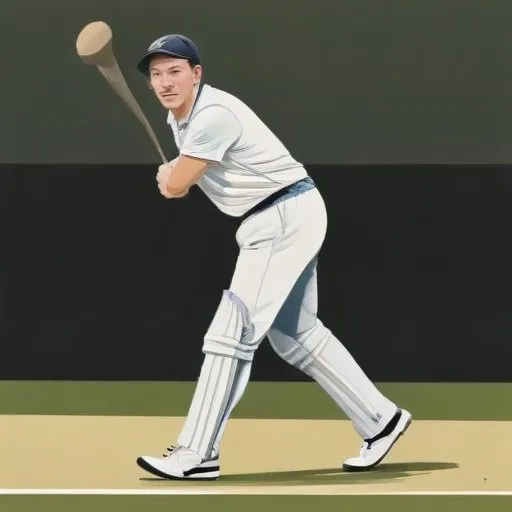
A renowned English cricketer and coach who took 2,442 wickets in first-class cricket, a record that stood for over 80 years. He is also known for his coaching career, guiding teams to several championships.
George Herbert Hirst was a professional English cricketer renowned for his exceptional all-round skills, particularly his left-arm medium-fast bowling and right-handed batting. He played first-class cricket for Yorkshire County Cricket Club between 1891 and 1921, with a further appearance in 1929, and represented England in 24 Test matches between 1897 and 1909.
Hirst was born on September 7, 1871, in Kirkheaton, Yorkshire. He initially gained success for Yorkshire as a bowler who could bat a little, but over the years, his batting improved at the expense of his bowling until he was regarded mainly as a specialist batsman. However, around 1900, he discovered a method to make the ball swing in the air after release, which revolutionized his bowling and made him one of the first bowlers to control the swing of the ball.
Hirst achieved numerous records and milestones throughout his career. He completed the double of 1,000 runs and 100 wickets in an English cricket season 14 times, the second most of any cricketer after his contemporary and teammate Wilfred Rhodes. He scored 36,356 runs and took 2,742 wickets in first-class cricket, and in Tests, he made 790 runs and captured 59 wickets.
Hirst played in all England's home Test series between 1899 and 1909, but his record for England was less impressive than his record for Yorkshire. He may have suffered from playing in Australia, where conditions did not suit him. Despite this, he was one of the Wisden Cricketers of the Year for 1901.
Hirst's legacy extends beyond his impressive statistics. He was a pioneer of swing bowling, and his mastery of this art form influenced generations of cricketers. His ability to adapt and evolve as a bowler, from being primarily a batsman to becoming a formidable swing bowler, is a testament to his dedication and perseverance.
George Hirst passed away on May 10, 1954, but his contributions to the sport of cricket remain unparalleled. He will always be remembered as one of the greatest all-rounders in the history of English cricket.
Born in 1916
A highly skilled batsman and captain of the English cricket team, known for his exceptional technique and leadership during the post-war era.
Born in 1903
A dominant right-handed batsman and successful coach who held multiple records for his impressive cricketing career, including the highest individual Test score for England.
Born in 1894
A renowned opening batsman who dominated cricket in the early 20th century, known for his exceptional defensive skills and record-breaking partnerships.
66 Years Old
A former All Blacks captain and chairman of the New Zealand Rugby Union, known for his leadership and contributions to the sport's governance.
Born in 1873
A legendary fast bowler who took 189 wickets in 27 Test matches at an astonishing average of 16.43, with a unique and unorthodox bowling style.
58 Years Old
Australian comedic genius behind iconic TV shows and films, bringing laughter and joy to audiences with his quirky humor and lovable characters.
Born in 1905
A talented English cricketer who played for Kent County Cricket Club and was known for his impressive bowling skills, taking over 1,000 wickets in his career.
Born in 1904
Notorious fast bowler who terrorized batsmen with his intimidating pace and aggressive style, particularly in the infamous Bodyline series against Australia in 1932-33.
