


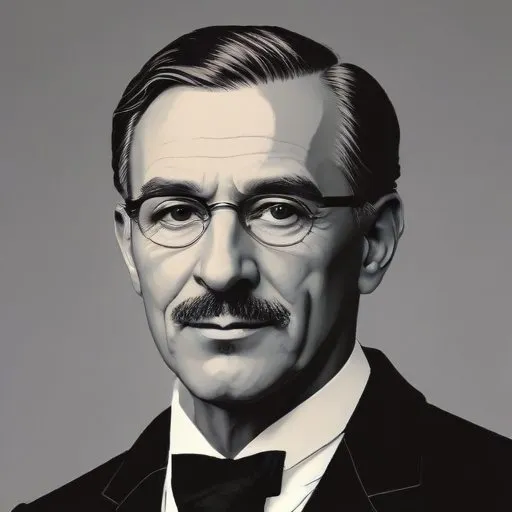
A pioneer in multiple fields, he applied physics to understand biological systems and was an avid mountaineer, making groundbreaking contributions to our understanding of molecular biology and the structure of DNA.
George Irving Bell was a multifaceted individual who made significant contributions to the fields of physics, biology, and mountaineering, leaving an indelible mark on each discipline. As a renowned physicist, biologist, and mountaineer, Bell's work spanned from designing thermonuclear weapons to mapping the human genome, and from scaling towering peaks to developing quantitative models in immunology.
Born on August 4, 1926, Bell received his bachelor's degree in physics from Harvard University in 1947. He then went on to pursue his doctoral studies in theoretical physics with the illustrious Hans Bethe at Cornell University, earning his Ph.D. in 1951.
Immediately after completing his Ph.D., Bell joined the Los Alamos Scientific Laboratory, where he contributed to the development of the first thermonuclear weapon as part of the T Division. His work focused on solving problems of neutron transport, which are crucial in the design and analysis of nuclear reactors. This expertise led to his co-authorship of the seminal book Nuclear Reactor Theory with Samuel Glasstone.
In the 1960s, Bell's interests shifted towards biology, where he developed quantitative models in immunology. He headed the Theoretical Biology and Biophysics group at Los Alamos from 1974 to 1990, and worked on mathematical models in biophysics. His work in this field led to the publication of Theoretical Immunology in 1978 and Computers and DNA in 1989.
In 1988, Bell became the founding director of the Center for Human Genome Studies, which played a pivotal role in the Human Genome Project. Although he served as director for only a year, his contributions to the project paved the way for future breakthroughs in genetic research. Bell remained associated with Los Alamos until 1990, after which he continued to work as an associate of the laboratory until September 1999.
Bell was an accomplished mountaineer, participating in some of the most notable American expeditions of the 1950s and 1960s. His climbing career began during his high school years in the Tetons, and he continued to scale peaks throughout his life. This passion for adventure was mirrored in his approach to scientific inquiry, where he tackled complex problems with boldness and determination.
Throughout his illustrious career, Bell authored over 100 research papers, leaving an enduring legacy in the fields of physics, biology, and biophysics. His work on the Human Genome Project and his contributions to immunology continue to influence modern scientific research. As a mountaineer, Bell's spirit of adventure inspired generations of scientists and explorers. His remarkable journey serves as a testament to the power of human curiosity and the importance of interdisciplinary approaches to problem-solving.
George Irving Bell's remarkable life serves as a beacon of inspiration, demonstrating the boundless potential of human inquiry and the importance of pursuing one's passions, no matter how diverse they may seem.
Born in 1901
A pioneer in nuclear physics, known for leading the team that developed the first nuclear reactor and playing a crucial role in the development of the atomic bomb.
Born in 1904
Leading the development of the atomic bomb during World War II, this brilliant mind made groundbreaking contributions to theoretical physics, pushing the boundaries of human understanding.
Born in 1918
A brilliant physicist and engineer who pioneered quantum mechanics and famously explained complex concepts in simple terms, making science accessible to all.
Born in 1906
A renowned physicist and Nobel laureate who made groundbreaking contributions to our understanding of the universe, particularly in the fields of nuclear physics and astrophysics.
Born in 1902
A Hungarian physicist and mathematician who made groundbreaking contributions to quantum mechanics and nuclear physics, and was awarded the Nobel Prize in Physics in 1963.
Born in 1903
Pioneering mathematician and physicist who developed the concept of the modern computer architecture and made significant contributions to quantum mechanics and game theory. His work laid the foundation for modern computing and artificial intelligence.
Born in 1908
Developed the hydrogen bomb and was a key figure in the development of the US nuclear program, known for his advocacy of nuclear energy and his role in the Cold War.
