George Klein: The Prolific Canadian Inventor
A Legacy of Innovation and Contribution
George Klein, widely regarded as the most productive inventor in Canada in the 20th century, left an indelible mark on various fields with his groundbreaking creations. With a prolific career spanning over four decades, Klein's inventions and innovations continue to shape modern society, earning him a revered place in the annals of Canadian history.
Early Life and Education
Born on August 15, 1904, in Canada, George Klein struggled academically in his early years, but persevered to graduate from the University of Toronto with a degree in Mechanical Engineering. This educational foundation laid the groundwork for his future accomplishments.
Career Highlights and Major Works
Klein's work at the National Research Council of Canada laboratories in Ottawa (1929-1969) resulted in an astonishing array of innovations, including:
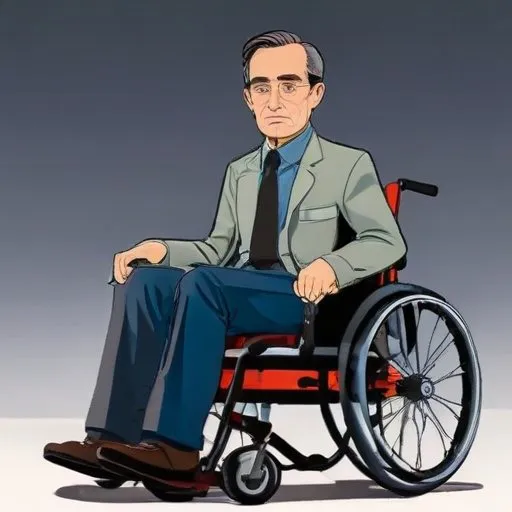
- The development of the first electric wheelchairs for quadriplegics, revolutionizing mobility and independence for the physically challenged.
- The creation of the first microsurgical staple gun, which greatly reduced surgical complications and enhanced patient outcomes.
- The design of the ZEEP nuclear reactor, a precursor to the CANDU reactor, a cornerstone of Canadian nuclear technology.
- The introduction of the international system for classifying groundcover snow, a crucial advance in meteorological research.
- The invention of aircraft skis, which significantly improved the safety and efficiency of air travel.
- The development of the Weasel all-terrain vehicle, a versatile and reliable mode of transportation.
- The design of the STEM antenna for the space program, a critical component in space exploration.
- The creation of the Canadarm, a robotic arm designed for space exploration and satellite maintenance.
Awards and Honors
In recognition of his multifaceted contributions, Klein received numerous accolades, including:
- Officer of the Order of Canada (1968)
- Inductee, Canadian Science and Engineering Hall of Fame (1995)
Personal Milestones and Key Life Events
Throughout his life, Klein's work was characterized by a passion for innovation and a dedication to improving the human experience. His achievements serve as a testament to his perseverance and intellectual curiosity.
Philosophical Contributions and Beliefs
Klein's inventions and innovations were guided by a deep-seated commitment to advancing human knowledge and alleviating suffering. His work embodies the principles of ingenuity, creativity, and a relentless pursuit of excellence.
Historical Context and Legacy
George Klein's contributions have had a profound impact on modern society, influencing fields such as medicine, transportation, and space exploration. His work has inspired generations of inventors, engineers, and scientists, cementing his status as a Canadian icon and a true pioneer in the world of innovation.
FAQ
What was George Kleins most notable invention?
George Kleins most notable invention was the motorized wheelchair, which revolutionized the lives of people with mobility impairments.
What was George Kleins early life like?
George Klein was born in 1904 in Hamilton, Ontario, Canada. He developed an interest in engineering and inventing from an early age and went on to study at the University of Toronto.
What inspired George Klein to invent the motorized wheelchair?
George Klein was inspired to invent the motorized wheelchair after seeing the difficulties faced by veterans returning from World War II with mobility impairments.
What awards did George Klein receive for his invention?
George Klein received several awards for his invention, including the Order of Canada and the Canadian Disability Hall of Fame.
What is George Kleins legacy in the field of assistive technology?
George Kleins legacy in the field of assistive technology is as a pioneering inventor who improved the lives of millions of people with mobility impairments.