


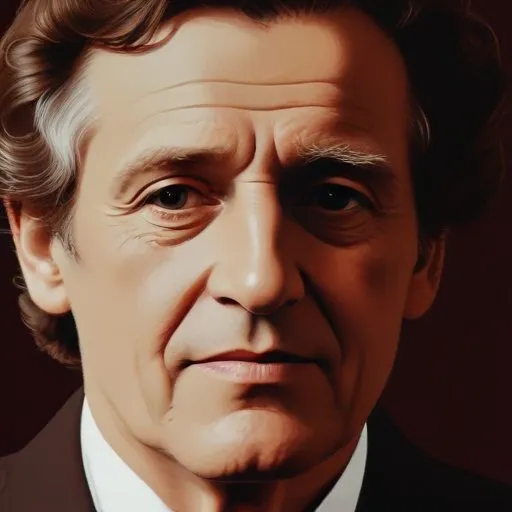
A celebrated writer of novels, short stories, and poetry that often explored the history and culture of the Orkney Islands, where he lived. His work is known for its lyricism and sense of place.
George Mackay Brown, widely regarded as one of the great Scottish poets of the 20th century, left an indelible mark on the literary world with his distinctly Orcadian character and unique voice. Through his poetry, plays, and stories, he captured the essence of the Orkney Islands, where he lived most of his life, and brought the region's rich cultural heritage to the forefront of Scottish literature.
Born on October 17, 1921, in Stromness, Mainland, Orkney, George Mackay Brown was the youngest of six children to John Brown, a tailor and postman, and Mhairi Mackay, a native speaker of the Reay Country dialect of Scottish Gaelic. Growing up in poverty, Brown's early life was marked by hardship and illness, including tuberculosis, which would later shape his writing.
During World War II, Brown's illness prevented him from serving in the army, but it also gave him the time and space to focus on writing. He began working with The Orkney Herald in 1944, writing on Stromness news, and soon became a prolific journalist. Encouraged by Francis Scarfe, a billeted soldier, and later by Ernest Marwick and Robert Rendall, Brown developed his writing skills, eventually publishing his own poetry and stories.
Brown's weekly Island Diary, published in The Orkney Herald between 1945 and 1956, showcased his unique voice and offered a glimpse into island life. Written under the pen name Islandman, the column allowed Brown to explore the intricate web of relationships, traditions, and myths that defined the Orkney Islands.
George Mackay Brown's poetry is characterized by its lyricism, humor, and deep connection to the land and people of the Orkneys. His work has been celebrated for its ability to evoke the spirit of the islands, capturing the subtleties of island life, and exploring the complexities of human relationships. Through his writing, Brown has left an enduring legacy, inspiring generations of writers, poets, and artists.
"The islands are a republic of the imagination, where the living and the dead, the past and the present, are all equally real."
"The sea has its own secret language, which only the islands can understand."
Brown's life was marked by personal struggles, including poverty, illness, and depression. However, his experiences shaped his writing and worldview, allowing him to create works that resonated deeply with audiences.
George Mackay Brown's work has had a significant impact on modern Scottish literature, influencing a range of writers, poets, and artists. His unique voice and perspective have helped to promote a deeper understanding and appreciation of the cultural heritage of the Orkney Islands.
Through his writing, Brown has also contributed to the preservation of Orcadian folklore and traditions, ensuring that the rich cultural legacy of the islands continues to inspire future generations.
Born in 1892
A leading figure in the Scottish Renaissance, he's renowned for his innovative poetry and advocacy for a distinct Scottish language and culture.
Born in 1911
A celebrated poet and educator who explored the intersection of Gaelic culture and modernist poetry, leaving a lasting impact on Scottish literature.
Born in 1920
A Scottish poet and translator celebrated for his innovative and eclectic style, blending traditional forms with modernist experimentation, and renowned for his translations of poetry from over 40 languages.
Born in 1918
A Scottish novelist celebrated for her witty, insightful, and nuanced portrayals of human relationships, morality, and the search for meaning in post-war Britain.
Born in 1873
The 42nd Governor of New York was a prominent figure in American politics, known for being the first Catholic to run for President and a strong advocate for social justice and progressive reforms. He played a significant role in shaping the Democratic Party's platform during the 1920s and 1930s.
