


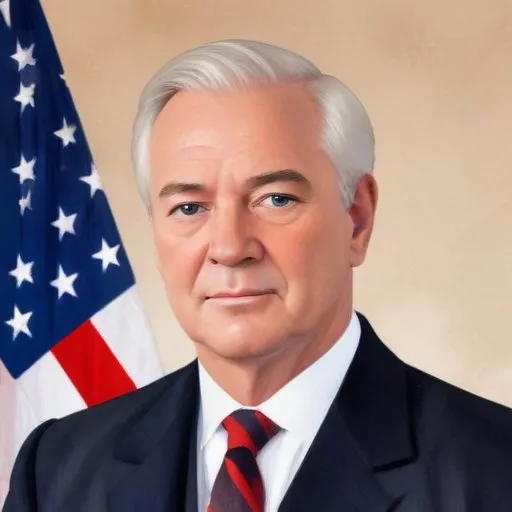
19th Governor of Massachusetts, serving from 1844 to 1845, known for his advocacy of education and infrastructure development.
George Nixon Briggs, a prominent American lawyer and politician, left an indelible mark on the state of Massachusetts, serving as its 19th Governor for seven consecutive terms from 1844 to 1851. During his tenure, Briggs championed the Whig agenda, advocating for temperance and supporting capital punishment, earning him a reputation as a steadfast leader.
Born on April 12, 1796, in Adams, Massachusetts, Briggs was the eleventh of twelve children to Allen Briggs, a blacksmith, and Nancy Brown Briggs, of Huguenot descent. His family relocated to Manchester, Vermont, and later to White Creek, New York, where Briggs received a strong religious upbringing. At the age of 14, he experienced a conversion experience and joined the Baptist faith, an event that would shape his future endeavors.
Briggs studied law in western Massachusetts, where his civic involvement and successful legal practice paved the way for his entry into statewide politics. In 1830, he was elected to the United States House of Representatives, serving for twelve years and supporting the Whig agenda. During his congressional tenure, Briggs sat on the Committee on the Post Office and Post Roads, demonstrating his commitment to public service.
In 1843, Briggs was nominated by the Whigs to run against Democratic Governor Marcus Morton, and he won the election by a landslide. Throughout his seven terms as Governor, Briggs focused on issues such as education, infrastructure, and temperance. Notably, he protested South Carolina's policy of imprisoning free African Americans, showcasing his unwavering commitment to social justice.
Briggs was a devoted husband and father of five children. He passed away on September 12, 1861, at the age of 65, due to an accidental gunshot wound at his home in Pittsfield, Massachusetts.
George N. Briggs' unwavering dedication to public service, social justice, and education has left a lasting impact on the state of Massachusetts. His legacy serves as a testament to the power of steadfast leadership and commitment to the greater good.
George N. Briggs played a significant role in shaping Massachusetts' history during a tumultuous period in American politics. His commitment to social justice and education continues to inspire leaders and citizens alike, cementing his place as one of the most revered Governors in Massachusetts' history.
Born in 1787
The 14th Governor of Massachusetts, a Whig politician who served from 1834 to 1835 and later became a prominent lawyer, is most known for his brief but significant tenure in the state's highest office. He played a key role in shaping Massachusetts' early development and politics.
Born in 1820
The 28th Governor of Massachusetts, serving from 1872 to 1874, is most known for his role in shaping the state's politics and economy during the Reconstruction Era. He was a strong advocate for education and infrastructure development.
Born in 1818
A 19th-century businessman and politician who served as the 30th Governor of Massachusetts, known for his leadership during the American Civil War and post-war reconstruction. He was a strong supporter of education and infrastructure development.
Born in 1818
The 28th United States Secretary of the Treasury played a crucial role in shaping the country's financial policies during the Reconstruction Era, and is particularly notable for his efforts to establish the Department of Justice.
