


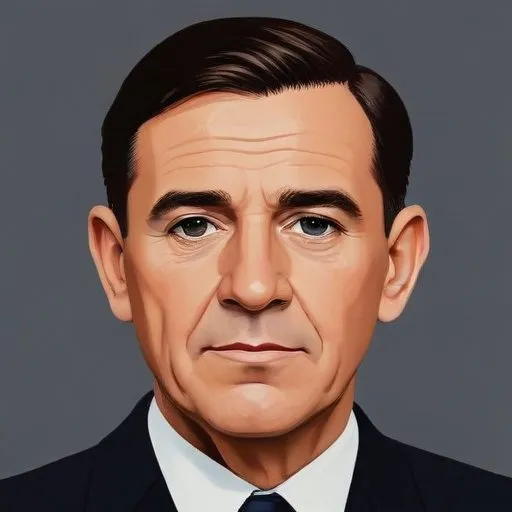
Australian public servant who played a key role in shaping the country's post-war economic development and infrastructure projects. Known for his leadership in various government agencies and contributions to policy-making.
George Gribbon Sutcliffe was a renowned Australian public servant, best known for his significant contributions as a Commissioner of the Commonwealth Public Service Board. Throughout his illustrious career, Sutcliffe demonstrated exceptional leadership skills, earning him recognition as a pioneer in the field of public service.
Sutcliffe was born on 2 February 1895, in Coburg, Melbourne, to Mary Sutcliffe (née Perryman) and John Sutcliffe. At a young age, he demonstrated a keen sense of responsibility, joining the Commonwealth Public Service in the Postmaster-General's Department at just 14 years old.
Sutcliffe's exceptional work ethic and dedication to public service led to his appointment as Secretary of the Department of Shipping and Fuel between April and December 1948. This pivotal role marked the beginning of his ascent to prominence in the Australian public service.
In 1948, Sutcliffe was appointed a Commissioner of the Public Service Board, a position he held until his retirement in 1960. During this tenure, he played a crucial role in shaping the country's public service, driving reforms, and implementing policies that had a lasting impact on the nation.
Sutcliffe's outstanding contributions to public service were recognized with the appointment of Commander of the Order of the British Empire in the 1956 Queen's Birthday Honours.
After retiring from the Public Service Board, Sutcliffe went on to become the Commonwealth Coordinator of the Good Neighbour movement. He passed away on 10 December 1964, in Goulburn, New South Wales, while attending a meeting of the council of the Diocese of Canberra and Goulburn. Sutcliffe was laid to rest in Canberra cemetery, leaving behind a legacy of dedication, leadership, and service to the nation.
George Sutcliffe's remarkable journey is a testament to his unwavering commitment to public service, leadership, and the betterment of society. His contributions continue to inspire future generations of public servants, ensuring his legacy endures.
Born in 1916
The 21st Prime Minister of Australia, a lawyer, and lieutenant who introduced sweeping social and economic reforms, including universal healthcare and free education, and played a significant role in shaping the country's modern identity.
96 Years Old
Leader of the Australian Labor Party who served as Prime Minister from 1983 to 1991, known for his charismatic leadership and economic reforms.
82 Years Old
The 24th Prime Minister of Australia, a Labor Party leader who implemented significant economic reforms, including deregulation and privatization, and is known for his bold and charismatic leadership style.
73 Years Old
A British singer-songwriter and pianist known for his emotive, poetic lyrics and soaring melodies, crafting introspective and atmospheric indie-pop soundscapes.
68 Years Old
The 26th Prime Minister of Australia, a diplomat, and leader who apologized to the Indigenous Australians for past injustices and played a key role in shaping the country's climate change policies.
64 Years Old
The first female Prime Minister of Australia, serving from 2010 to 2013, known for her progressive policies and leadership during a period of significant economic reform.
68 Years Old
The 28th Prime Minister of Australia, a conservative leader who served from 2013 to 2015, known for his tough stance on immigration and climate change skepticism. He's also a Rhodes Scholar and athlete.
71 Years Old
Australian journalist and politician who served as the 29th Prime Minister of Australia, known for his leadership during a tumultuous period in Australian politics and his advocacy for progressive policies.
