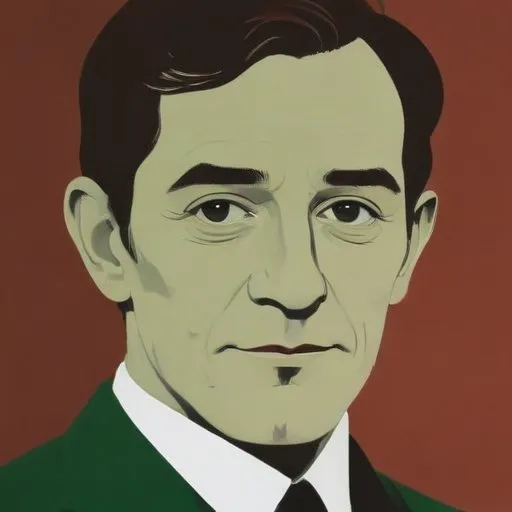
George William Russell: The Visionary Writer and Mystic
A Life of Literary and Artistic Pursuits
George
William Russell, better known by his pseudonym AE, was a multifaceted Irish writer, editor, critic, poet, painter, and Irish nationalist. He was a central figure in the Irish literary revival of the early 20th century, and his work continues to inspire generations of writers, artists, and thinkers.
Early Life and Education
Born on April 10, 1867, in Lurgan, County Armagh, Ireland, Russell was the second son of Thomas Russell and Mary Armstrong. His family relocated to Dublin when he was eleven, where his father worked for a prosperous firm of linen drapers. Russell's education at Rathmines School and the Metropolitan School of Art laid the foundation for his future pursuits in literature and art.
Literary Contributions and Beliefs
Russell's writing career spanned multiple genres, including poetry, fiction, and criticism. His poetry, characterized by its lyricism and mysticism, was heavily influenced by Theosophy, a spiritual movement that emphasized the unity of all existence. His most notable works include
The Interpreters,
The Divine Vision, and
The Candle of Vision. Through his writing, Russell sought to explore the mysteries of the universe, the nature of humanity, and the interconnectedness of all things.
Philosophical Contributions and Beliefs
Russell's philosophical beliefs were deeply rooted in Theosophy, which he saw as a means to access higher states of consciousness and understand the mysteries of the universe. He believed in the concept of the "Universal Self," which posits that individual souls are part of a larger, collective consciousness. This belief is reflected in his writing, which often explores themes of spiritual growth, self-discovery, and the search for meaning.
Career Highlights and Major Works
- The Interpreters (1922) - A collection of poetry that showcases Russell's unique style and explores themes of mysticism and spirituality.
- The Divine Vision (1904) - A philosophical treatise that outlines Russell's beliefs on Theosophy and the nature of the universe.
- The Candle of Vision (1918) - A collection of essays that explore the intersection of art, literature, and spirituality.
Influence on Modern Society
Russell's work had a profound impact on Irish literature and society. He was a key figure in the Irish literary revival, and his writing influenced many notable writers, including W.B. Yeats and
James Joyce. His exploration of Theosophy and mysticism also helped to popularize these concepts in Ireland and beyond.
Personal Milestones and Key Life Events
- 1898: Russell married Violet North, with whom he had two surviving sons, Brian and Diarmuid.
- 1894: He began working for the Irish Agricultural Organisation Society (IAOS), an agricultural cooperative society initiated by Horace Plunkett.
Awards and Honors
Russell's contributions to literature and art were recognized during his lifetime. He was awarded the Gregory Medal in 1932 for his outstanding contributions to Irish literature.
Legacy and Impact
Russell's legacy extends far beyond his own writing and art. He played a crucial role in shaping Irish literature and culture, and his exploration of Theosophy and mysticism continue to inspire spiritual seekers around the world. As a visionary writer and mystic, George William Russell remains an important figure in Irish literary history.
FAQ
What was George William Russells role in the Irish literary revival?
George William Russell was a key figure in the Irish literary revival, using his poetry and writing to explore Irish identity and promote cultural nationalism.
How did George William Russells mystical beliefs influence his work?
George William Russells mystical beliefs had a significant impact on his work, as he often explored themes of spirituality and the supernatural in his writing and art.
What was George William Russells relationship with W.B. Yeats?
George William Russell had a close friendship and literary collaboration with W.B. Yeats, with the two poets influencing and supporting each others work.
What were George William Russells contributions to Irish politics?
George William Russell made significant contributions to Irish politics, serving as a senator and advocating for Irish independence and cultural preservation.
How did George William Russells work reflect his Irish heritage?
George William Russells work reflected his Irish heritage by exploring Irish mythology, folklore, and cultural traditions, and using his writing to promote pride and appreciation for Irish identity.