


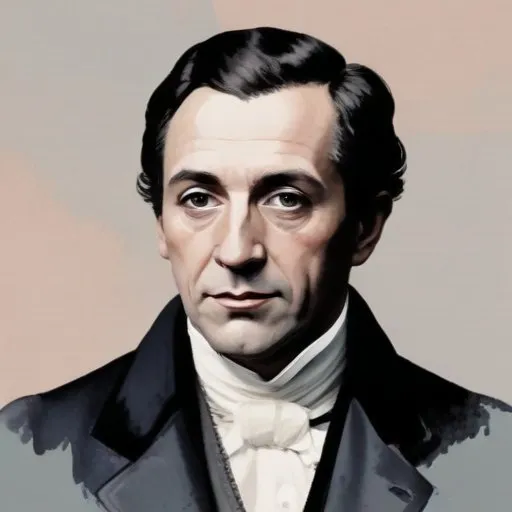
Witty and satirical writer of plays and novels that mocked French bourgeois society, known for his humorous and lighthearted critiques of social norms.
Georges Courteline, born Georges Victor Marcel Moinaux, was a French dramatist and novelist renowned for his biting wit and cynical humor, which he wielded to lampoon the wealthy elite and bloated government bureaucracies of his time. Through his works, he delighted in ridiculing the pretensions of the French upper class, earning him a reputation as one of the most incisive satirists of the late 19th and early 20th centuries.
Courteline was born on June 25, 1858, in Tours, France. His family relocated to Paris shortly after his birth, where he developed a passion for poetry and writing. He was educated in Meaux and later served in the French military before taking a job as a civil servant. However, it was his love of words that ultimately defined his career.
By the 1890s, Courteline had begun writing plays under his pseudonym, and his works quickly gained popularity in the theaters of Montmartre, where he lived. His sharp wit and satirical insights soon made him a leading dramatist, producing numerous plays and novels that continue to delight audiences to this day.
Courteline's contributions to French literature were recognized with several prestigious awards. In 1899, he was awarded the Legion of Honour, and in 1926, he was elected to the Académie Goncourt.
Georges Courteline's impact on French literature and theater is still felt today. His works continue to be performed and adapted, and his influence can be seen in the works of many modern satirists and writers. His sharp wit and ability to skewer the pretensions of the elite have made him a beloved figure in French cultural history.
Courteline passed away on June 25, 1929, his 71st birthday, in Paris. He was interred in the Père Lachaise Cemetery, and the street where he was born in Tours was renamed Rue de Lariche in his honor.
Through his works, Georges Courteline continues to delight and provoke audiences, offering a scathing critique of the excesses of power and privilege. His legacy serves as a reminder of the importance of satire and social commentary in challenging the status quo and promoting social change.
Born in 1821
A pioneering realist novelist who crafted meticulous, psychologically nuanced portrayals of 19th-century French life, particularly in his iconic novel "Madame Bovary".
Born in 1840
A pioneering figure in naturalist literature, known for his influential novels that exposed social ills and championed reform, such as "Germinal" and "Nana".
Born in 1850
A 19th-century French literary mastermind who crafted hauntingly beautiful short stories and novels that probed the human psyche, often with a dark, ironic twist. His works remain widely read and adapted today.
Born in 1840
A 19th-century literary mastermind, celebrated for his vivid depictions of French life and poignant short stories, particularly "The Last Lesson" and "Tartarin of Tarascon".
Born in 1848
A French author and critic who wrote novels that explored the decadent and Symbolist movements, influencing the development of modernist literature.
Born in 1846
A mystical and provocative writer who blended Catholicism with anarchism, creating a unique brand of spiritual and social commentary. His works are a testament to the power of faith and rebellion.
Born in 1866
A French historian, author, and playwright who won the Nobel Prize in Literature in 1915 for his contributions to the ideal of international brotherhood and peace. He's best known for his novel "Jean-Christophe", a 10-volume epic that explores the life of a fictional German musician.
Born in 1844
A French writer and poet who won the Nobel Prize in Literature in 1921, known for his witty and satirical novels that critiqued French society.
