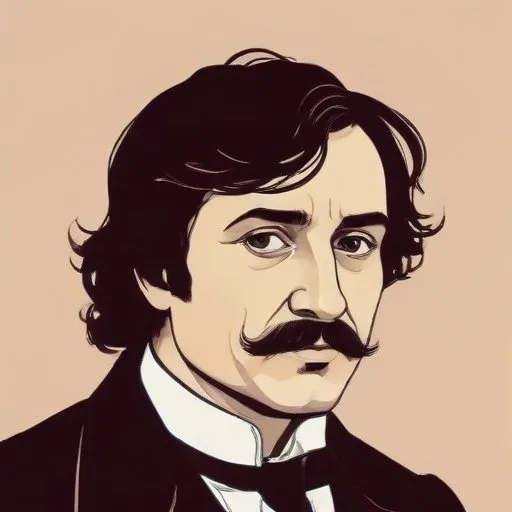
Alphonse Daudet: The Voice of French Literature
A Master of Storytelling
Alphonse Daudet is renowned for his captivating novels that transport readers to the picturesque landscapes of Provence and the streets of Paris. His works, infused with wit, humor, and poignant observations, have left an indelible mark on French literature.
Early Life and Influences
Born on May 13, 1840, in Nîmes, France, Daudet's early life was marked by his family's struggles and his father's misfortunes. His experiences as a schoolteacher in Als, Gard, would later shape his writing, particularly in his novel
Le Petit Chose. In 1857, he abandoned teaching and joined his brother Ernest in Paris, where he began his writing career.
Rise to Literary Prominence
Daudet's early success came with the publication of his poetry collection
Les Amoureuses in 1858. He then wrote for
Le Figaro, where he honed his writing skills under the guidance of Cartier de Villemessant. His plays and literary contributions earned him recognition in literary circles.
A Secretary to the Minister and a Literary Breakthrough
In 1865, Daudet became a secretary to Morny,
Napoleon III's minister. This position allowed him to focus on his writing, leading to the publication of
Lettres de mon moulin in 1866, which won him widespread acclaim. This collection of short stories, written in Clamart, near Paris, and inspired by a windmill in Fontvieille, Provence, showcased his mastery of storytelling.
Major Works and Career Highlights
- Le Petit Chose (1868): A semi-autobiographical novel that tells the story of his early years, marked by struggle and pathos.
- Aventures prodigieuses de Tartarin de Tarascon (1872): A humorous novel that follows the adventures of Tartarin, a eccentric and charming character, and has become a classic of French literature.
- Trente ans de Paris (1887): A novel that explores the changes and transformations of Parisian society during the Second Empire.
Influence on Modern Society and Pop Culture
Daudet's works have inspired numerous adaptations, including films, plays, and TV series. His writing has also influenced many French authors, including Marcel Pagnol and
Jean Giono. His legacy extends to the world of cuisine, as
Lettres de mon moulin has been credited with popularizing Provençal cooking.
Personal Milestones and Relationships
Daudet married Julia Allard, a writer and former actress, in 1867. The couple had three sons, Edme, Léon, and Lucien, all of whom became writers. His personal relationships and experiences greatly influenced his writing, often drawing from his family life and the people he encountered.
Legacy and Cultural Impact
Alphonse Daudet's contributions to French literature are immeasurable. His writing has left a lasting impact on the literary world, and his stories continue to captivate readers to this day. As a master of storytelling, Daudet's works serve as a testament to the power of literature to transport, to inspire, and to reflect the human experience.
FAQ
What were Alphonse Daudets most famous literary works?
Alphonse Daudet was a French author, poet, and playwright, best known for his novels and short stories, including Letters from My Windmill and Tartarin of Tarascon. His writing often explored themes of love, family, and French culture.
How did Alphonse Daudets writing reflect his Provençal heritage?
Daudets work was deeply influenced by his Provençal roots, often incorporating elements of regional folklore and culture. His writing helped to popularize Provençal identity and traditions.
What was Alphonse Daudets role in the French literary circle, Les cénacles?
Daudet was a member of Les cénacles, a prominent French literary circle that included writers like Gustave Flaubert and Charles Baudelaire. This circle encouraged innovative writing and experimentation with form and style.
How did Alphonse Daudets writing style influence future French literature?
Daudets writing style, characterized by simplicity, clarity, and a focus on everyday life, influenced a generation of French writers, including Émile Zola and Guy de Maupassant.
What was Alphonse Daudets personal life like?
Daudet married Julia Allard, a writer and feminist, and had several children. His personal life was marked by struggles with poverty and illness, which he often wrote about in his work.