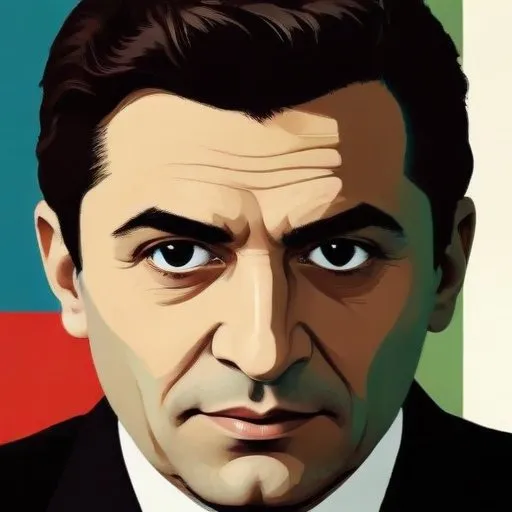
Georgi Dimitrov: The Tenacious Bulgarian Communist Leader
A Defense Against Tyranny
Georgi Dimitrov is best known for his bold refusal to back down against Nazi accusers during the infamous Reichstag fire trial, mounting an eloquent defense that ultimately won him acquittal. This dramatic courtroom victory catapulted him to international prominence, cementing his status as a champion of communist ideals.
Rise to Power
Born on June 18, 1882, in western Bulgaria, Dimitrov began his journey as a printer and trade unionist before being elected to the Bulgarian parliament as a socialist during World War I. His anti-war stance led to brief imprisonment for sedition, but it was merely a precursor to his future endeavors.
Early Years of Activism
In 1919, Dimitrov co-founded the Bulgarian Communist Party and, two years later, joined the executive committee of Profintern in the Soviet Union. His involvement in a failed communist uprising against the government of Aleksandar Tsankov in 1923 forced him into exile.
International Leadership
Dimitrov spent the next six years in the Soviet Union before relocating to Germany in 1929, where he became head of Comintern operations in central Europe. His leadership role continued to grow, and in 1935, he was elected General Secretary of the Communist International, a position he held until 1943.
After 22 years in exile, Dimitrov returned to Bulgaria in 1946 and was elected prime minister of the newly founded People's Republic of Bulgaria. This marked the beginning of his efforts to create a federation of Southern Slavs, which eventually led to the 1947 Bled accord with Josip Broz Tito.
Pivotal Moments and Controversies
While Dimitrov's leadership and diplomatic efforts were instrumental in shaping Bulgaria's communist regime, his tenure was not without controversy. The fallout with Tito over the Macedonian question, as well as disagreements about the future of their proposed federation, ultimately led to the abandonment of their joint project.
Philosophical Contributions and Beliefs
Throughout his life, Dimitrov remained committed to Marxist-Leninist ideology, advocating for a unified, socialist Europe. His refusal to compromise on his principles, even in the face of adversity, earned him both admiration and criticism.
Historical Legacy and Comparative Analysis
Dimitrov's legacy is complex, with some hailing him as a champion of Bulgarian communism and others criticizing his role in suppressing opposition. Nevertheless, his impact on modern Bulgarian politics and society is undeniable. In comparison to contemporaries like Josip Broz Tito, Dimitrov's leadership style was marked by a stronger allegiance to Soviet ideology, which often put him at odds with other Eastern European leaders.
Fun Facts and Trivia
- Dimitrov was known for his exceptional oratory skills, which he showcased during the Reichstag fire trial.
- He was a prolific writer, penning numerous articles and books on Marxist theory and politics.
- In his later years, Dimitrov's health began to decline, and he eventually passed away on July 2, 1949, at the age of 67.
Impact on Modern Society
Georgi Dimitrov's unwavering dedication to his ideals has left an indelible mark on Bulgarian politics and society. While his legacy is contested, his role as a champion of communist principles and his defiance against Nazi tyranny continue to inspire and fascinate to this day.
FAQ
What was Georgi Dimitrovs role in Bulgarian politics?
Georgi Dimitrov was a Bulgarian compositor and politician who served as the 32nd Prime Minister of Bulgaria from 1946 to 1949. He played a key role in the countrys transition from a monarchy to a peoples republic.
What was Georgi Dimitrovs relationship with Joseph Stalin?
Georgi Dimitrov had a close relationship with Joseph Stalin, the Soviet leader. He was a loyal ally and received support from Stalin, which helped him to consolidate power in Bulgaria.
What was the Leipzig Trial and what was Georgi Dimitrovs role?
The Leipzig Trial was a show trial held in 1933 in Leipzig, Germany, where Georgi Dimitrov was accused of arson and high treason. He famously defended himself and was acquitted, earning international recognition as a hero of the left.
What was Georgi Dimitrovs economic policy?
Georgi Dimitrov implemented a socialist economic policy in Bulgaria, which included nationalizing key industries and introducing a planned economy. This policy had significant impacts on the countrys development.
What was Georgi Dimitrovs legacy in Bulgaria?
Georgi Dimitrovs legacy in Bulgaria is that of a leader who transformed the countrys politics and economy. His policies had a lasting impact on Bulgarian society and he remains a significant figure in the countrys history.