


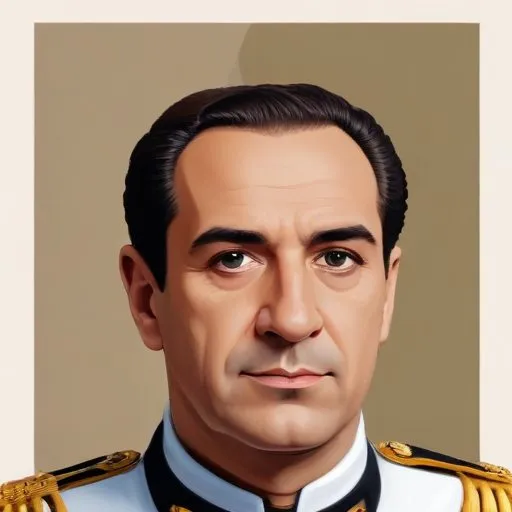
A Greek lieutenant-turned-politician who served as the 173rd Prime Minister of Greece, known for his brief but tumultuous tenure during a period of political and economic crisis.
Georgios Ioannou Rallis, also known as George Rallis, was a prominent Greek conservative politician who served as the Prime Minister of Greece from 1980 to 1981. He is remembered for his significant contributions to Greek politics, particularly during the country's tumultuous post-war era.
Rallis came from a long line of politicians. His ancestors, the noble Rallis family, had been involved in Greek politics for centuries. His paternal grandfather, Dimitrios Rallis, served as Prime Minister of Greece five times, while his maternal grandfather, Georgios Theotokis, was a four-time Prime Minister. This legacy of politics had a profound impact on Rallis, shaping his worldview and instilling in him a deep understanding of the complexities of Greek politics.
Born on December 26, 1918, in the prestigious Kolonaki district of Athens, Rallis was educated at the University of Athens, where he studied law and political sciences. His academic background and family legacy prepared him for a life of public service.
During World War II, Rallis joined the fight against fascist Italy as a cavalry Second Lieutenant of the Reserve. He was recalled to active service during the Greek Civil War of 1946-1949, where he served in the armoured corps. This experience shaped his views on national security and reinforced his commitment to serving his country.
Rallis' political career spanned over four decades, during which he was elected to the Greek Parliament multiple times as a member of the People's Party. He served as a cabinet minister in several governments, including that of Alexander Papagos, and later became a close collaborator of Constantine Karamanlis.
As Prime Minister of Greece from 1980 to 1981, Rallis played a crucial role in shaping the country's post-war era. His tenure was marked by significant reforms, including the country's accession to the European Economic Community (EEC), precursor to the European Union. Although his premiership was short-lived, Rallis' contributions to Greek politics and his commitment to European integration have had a lasting impact on the country.
Rallis' personal life was marked by significant events that shaped his worldview and politics. His father, Ioannis Rallis, was a collaborationist Prime Minister during the German occupation, and his subsequent imprisonment had a profound impact on Georgios. This experience instilled in him a deep understanding of the complexities of Greek politics and the importance of national unity.
Rallis' legacy extends beyond his political career. He played a crucial role in shaping modern Greece, promoting European integration, and fostering a culture of cooperation and understanding. His commitment to public service and his dedication to his country have inspired generations of Greek politicians and citizens alike.
Rallis was a staunch conservative who believed in the importance of traditional values and national unity. His philosophical contributions were shaped by his experiences during World War II and the Greek Civil War, which instilled in him a deep appreciation for the importance of national security and cooperation.
Today, Georgios Rallis is remembered as a statesman who dedicated his life to serving his country and promoting European integration. His legacy serves as a testament to the power of dedication, hard work, and commitment to public service.
Born in 1907
A Greek lawyer and politician who served as President of Greece, known for leading the country's transition from military dictatorship to democracy. He's credited with modernizing Greece and joining the European Union.
Born in 1888
A Greek lawyer, economist, and politician who served as the Prime Minister of Greece from 2009 to 2011, known for his efforts to address the country's debt crisis.
Born in 1919
Greek economist and politician who served as Prime Minister of Greece, known for his socialist policies and efforts to reduce Greece's reliance on foreign capital. He also played a key role in Greece's accession to the European Union.
Born in 1864
A Greek statesman who played a crucial role in shaping modern Greece, leading the country through significant reforms and transformations. He's known for his visionary leadership and diplomatic prowess.
Born in 1871
A Greek general and politician who served as the 130th Prime Minister of Greece, known for his authoritarian regime and opposition to the Axis powers during World War II. He implemented a series of reforms and modernization projects, but also suppressed political opposition and civil liberties.
Born in 1918
Greek lawyer and politician who served as the 178th Prime Minister of Greece, known for his efforts to modernize and liberalize the Greek economy. He played a key role in Greece's accession to the European Union.
