


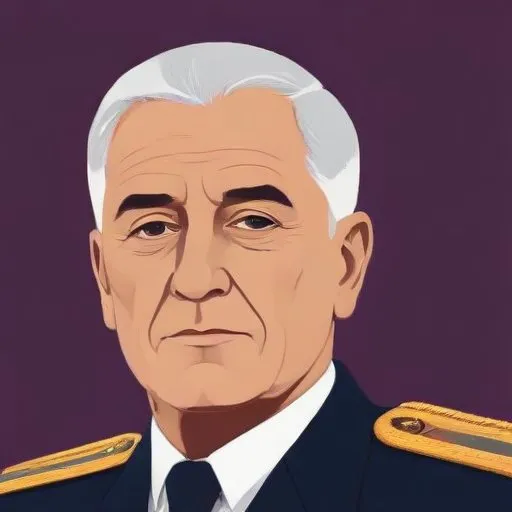
A decorated naval officer who served as the Deputy Chief of Naval Operations for Plans, Policy, and Operations, and is known for his leadership roles in various naval commands and task forces.
Gerald E. Miller, a renowned figure in the United States Navy, is most notably recognized for his exceptional leadership as the commander of the United States Sixth Fleet from October 1971 to June 1973. During his tenure, he skillfully navigated the complexities of naval operations, earning him a distinguished reputation within the armed forces.
Born on July 1, 1919, Gerald E. Miller embarked on a journey that would shape his future in the United States Navy. He graduated from the prestigious United States Naval Academy in 1942, laying the foundation for a successful military career.
Gerald E. Miller's remarkable career has left an indelible mark on the United States Navy. His leadership and strategic prowess have inspired generations of naval officers, cementing his position as a respected figure in military history.
Prior to assuming command of the Sixth Fleet, Miller had an illustrious career, with a series of notable assignments and postings that honed his skills as a seasoned naval officer. These experiences prepared him for the challenges that lay ahead, ultimately allowing him to excel in his role as commander.
Gerald E. Miller's personal life was marked by dedication and sacrifice, as he devoted himself to his country and family. He passed away on November 6, 2014, at his home in Oakton, Virginia, leaving behind a legacy that continues to inspire and motivate.
Miller's career spanned a period of significant global change and upheaval, with the United States Navy playing a critical role in maintaining international security. His leadership during this time was marked by a deep understanding of the complexities of naval operations, as well as a commitment to the principles of military excellence.
Gerald E. Miller's contributions to the United States Navy have had a profound impact on modern society, shaping the course of naval operations and inspiring future generations of military leaders. His legacy serves as a testament to the importance of leadership, dedication, and sacrifice.
Born in 1885
Led the U.S. Pacific Fleet to victory in World War II, playing a crucial role in defeating Japan and ending the war. He was a highly respected and decorated naval leader.
Born in 1886
A highly decorated naval officer who played a crucial role in several key battles in World War II, including the Battle of Midway, and later served as a diplomat.
Born in 1882
A five-star admiral who played a crucial role in the Allied victory in World War II, leading the US Navy to several key victories in the Pacific Theater. He's also known for his bold and unconventional tactics.
Born in 1884
Led the Imperial Japanese Navy during World War II, masterminding the surprise attack on Pearl Harbor, and later became a symbol of Japanese military power and strategy.
Born in 1887
A pioneering naval aviator who played a crucial role in the development of aircraft carriers and led the Fast Carrier Task Force to victory in several World War II battles.
Born in 1886
A highly decorated naval officer who played a crucial role in several key battles in World War II, including the Battle of Midway, and later served as a diplomat.
Born in 1911
A four-star admiral who played a significant role in the Pacific Theater during World War II, later serving as the Commander-in-Chief of the U.S. Pacific Command. He was also the father of Senator John McCain.
