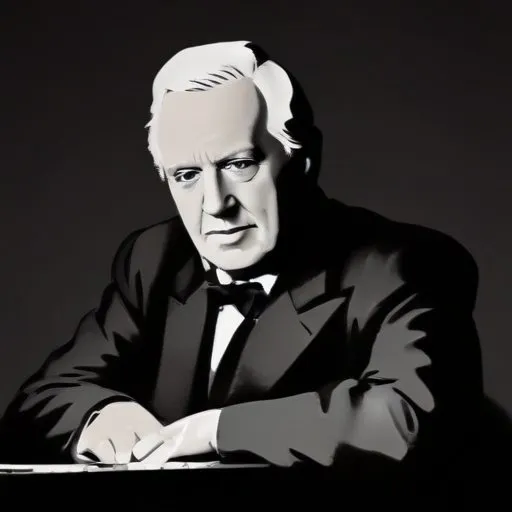
Gerald Moore: The Pianist's Pianist
The Collaborative Genius
Gerald Moore, the renowned English classical pianist, is best known for his illustrious career as a collaborative pianist, partnering with some of the most distinguished musicians of his time. With a career spanning over six decades, Moore's name became synonymous with excellence in accompaniment, working with legends such as
Dietrich Fischer-Dieskau, Elisabeth Schumann, Hans Hotter,
Elisabeth Schwarzkopf,
Victoria de los Ángeles, and Pablo Casals.
A Life of Music and Faith
Born on July 30, 1899, in Watford, Hertfordshire, Moore was the eldest of four children to David Frank Moore, a menswear outfitter, and his wife Chestina. Despite being innately musical, Moore was initially reluctant to pursue music, only discovering his true passion in his mid-twenties. However, his early life was marked by a strong attraction to Anglo-Catholicism, which led him to consider a vocation as a priest.
The Formative Years
Moore's family emigrated to Toronto, Ontario, Canada, when he was just 13, where he began studying piano with Michael Hambourg, a former pupil of
Anton Rubinstein. After Hambourg's passing, Moore accompanied his son, Boris Hambourg, on a 40-engagement tour of western Canada. Upon his return to Toronto, Moore worked as an organist at St. Thomas's Anglican Church and later as a cinema organist, providing musical accompaniment to silent films.
The Perfect Partner
Moore's unique gift for collaboration and his ability to bring out the best in his partners earned him the nickname "the pianist's pianist." His remarkable career saw him working with an impressive roster of artists, recording countless albums, and performing in some of the world's most prestigious concert halls.
Beyond the Stage
Moore's passion for music extended beyond the concert hall. He was an accomplished writer, publishing volumes of memoirs and practical guides to interpreting lieder. He also gave lectures on stage, radio, and television, sharing his insights on music with a wider audience.
Awards and Honors
Moore's contributions to music were recognized with numerous awards and honors, including the Commander of the Order of the British Empire (CBE) in 1954.
Legacy
Gerald Moore's legacy extends far beyond his impressive list of collaborations and accolades. He set a new standard for accompaniment, elevating the role of the pianist to one of equal importance with the soloist. His passion for music and his dedication to his craft have inspired generations of pianists and continues to influence the world of classical music today.
Quotes and Memorable Sayings
- "The accompanist is not a subsidiary, but a full partner in the enterprise."
- "Music is not just a matter of playing the right notes, but of playing them in the right way."
Personal Milestones and Key Life Events
- 1915: Moore embarked on a 40-engagement tour of western Canada with Boris Hambourg.
- 1954: Moore was appointed Commander of the Order of the British Empire (CBE).
- 1987: Moore passed away on March 13, leaving behind a legacy of excellence in music.
Influence on Modern Society
Gerald Moore's impact on modern society extends beyond the world of classical music. His commitment to collaboration and his passion for music have inspired countless individuals to pursue careers in the arts. His legacy serves as a reminder of the importance of partnership and mutual respect in achieving greatness.
FAQ
What was Gerald Moores contribution to classical music?
Gerald Moore was a renowned pianist and accompanist, known for his partnership with soprano Elisabeth Schwarzkopf and his advocacy for the art of song.
What were Gerald Moores collaborations?
Gerald Moore collaborated with many famous singers, including Elisabeth Schwarzkopf, Dietrich Fischer-Dieskau, and Christa Ludwig. He also worked with conductors, such as Herbert von Karajan and Georg Solti.
What was Gerald Moores early life like?
Gerald Moore was born in 1899 in England. He was educated at the Royal College of Music and quickly established himself as a talented pianist.
What was Gerald Moores role in promoting the art of song?
Gerald Moore was a passionate advocate for the art of song, working tirelessly to promote the genre and to support young singers. He wrote several books on the subject, including Am I Too Loud? and Ferryhill Days.
What was Gerald Moores legacy?
Gerald Moore left a lasting legacy as one of the greatest accompanists of the 20th century. He is remembered for his beautiful playing, his dedication to the art of song, and his influence on generations of musicians.