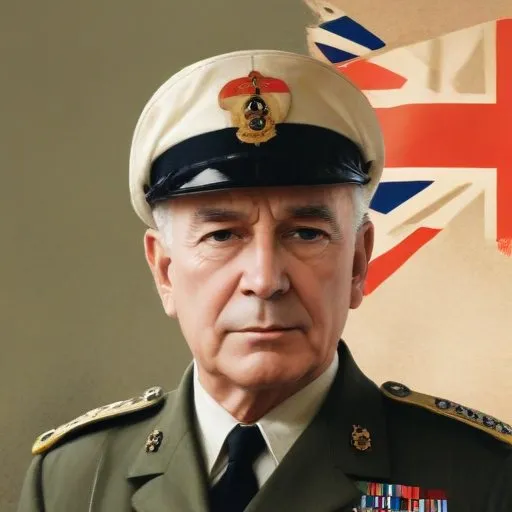
Gerald Templer: The British Army Officer Behind the Malayan Emergency
A Legacy of Controversy and Military Acumen
Gerald Templer, a British Army officer, is best known for his decisive role in defeating the Malayan National Liberation Army (MNLA) during the Malayan Emergency, a period of intense conflict from 1948 to 1960. His unorthodox strategies, which have been both praised and criticized, left an indelible mark on British military history.
Early Life and Education
Born on September 11, 1898, in Colchester, Essex, Templer was the son of Lieutenant Colonel Walter Francis Templer and Mabel Eileen Templer. His Irish descent and military upbringing set the stage for a life of service. He attended Edinburgh Academy in 1904, followed by a preparatory boarding school at Connaught House, Weymouth, from 1909 to 1911.
Rise to Prominence
Templer's military career spanned both World Wars, during which he fought against the Arab Resistance in Palestine. His experience and tactical prowess earned him the position of Chief of the Imperial General Staff, the professional head of the British Army, from 1955 to 1958. As Prime Minister
Anthony Eden's chief military adviser, Templer played a crucial role in shaping Britain's response to the Suez Crisis.
The Malayan Emergency and Hearts and Minds Campaign
Templer's most notable achievement came during the Malayan Emergency, where he implemented a series of strategies to counter the MNLA insurgency. While some historians credit him with a successful "hearts and minds" campaign, others argue that his methods relied too heavily on population control and coercion. Notable tactics included the creation of "New Villages," forced relocation of ethnic minorities, and the use of collective punishment against civilians.
Controversies and Criticisms
Templer's actions in Malaya have been shrouded in controversy. He oversaw and approved policies that led to numerous atrocities, including the use of internment camps, forced conscription, and the hiring of Iban headhunters to decapitate suspected communists. The introduction of Agent Orange, later used in Vietnam, and scorched earth policies to deprive the MNLA of resources have been particularly controversial.
Legacy and Impact
Despite the controversy surrounding his methods, Templer's impact on British military strategy is undeniable. His experiences in Malaya influenced military doctrine and counterinsurgency operations worldwide. Although his strategies were later emulated in Vietnam, they met with limited success. Today, Templer is remembered as a complex figure, whose military acumen and tactical innovations are tempered by the ethical concerns surrounding his actions.
Personal Milestones and Honors
Throughout his life, Templer received numerous honors and accolades, including the Knight Grand Cross of the Order of the Bath (GCB) and the Knight Commander of the Order of the British Empire (KBE). He also founded the United Kingdom's National Army Museum, a testament to his commitment to preserving military heritage.
A Life of Service
Gerald Templer's life was marked by a dedication to service and a relentless pursuit of military excellence. While his methods and legacy remain contested, his impact on British military history is undeniable. As a complex and multifaceted figure, Templer continues to fascinate and inspire historians, military strategists, and enthusiasts alike.
FAQ
What was Gerald Templers role in the Malayan Emergency?
Gerald Templer was a key figure in the Malayan Emergency, serving as the British High Commissioner in Malaya and implementing policies to counter the Malayan Communist Party insurgency.
How did Gerald Templers military background influence his approach to counter-insurgency?
Gerald Templers military background gave him a unique understanding of the principles of counter-insurgency, which he applied in Malaya to great effect, using a combination of military force and economic development to win hearts and minds.
What was Gerald Templers strategy for defeating the Malayan Communist Party?
Gerald Templers strategy for defeating the Malayan Communist Party involved a multi-pronged approach, combining military operations with economic development, social reform, and psychological warfare.
How did Gerald Templers leadership style shape the British response to the Malayan Emergency?
Gerald Templers leadership style, characterized by a combination of firmness, fairness, and pragmatism, helped to shape the British response to the Malayan Emergency, earning him the respect of both British and Malayan leaders.
What is Gerald Templers legacy in military history?
Gerald Templers legacy in military history is one of innovative thinking and effective leadership, with his approach to counter-insurgency influencing military doctrine and practice to this day.