


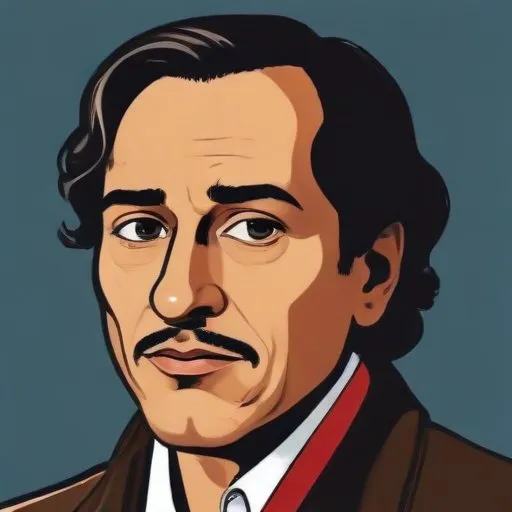
A leading figure in Spanish literature, known for blending traditional forms with modernist experimentation, and influential in shaping 20th-century Spanish poetry .
Gerardo Diego, a renowned Spanish poet, was a trailblazer of the Generation of 27, a group of Spanish poets who revolutionized the country's literary landscape in the early 20th century. With a career spanning over six decades, Diego is celebrated for his innovative and eclectic poetic style, which traversed the boundaries of Vanguardism and classical poetry.
Born on October 3, 1896, in Santander, Spain, Diego studied Philosophy and Humanities at the University of Deusto, Salamanca, and Madrid, where he earned his doctorate. This solid foundation in philosophy and literature laid the groundwork for his future literary pursuits.
In 1919, Diego co-founded the Ultrasta Movement with Juan Larrea, which marked the beginning of his experimentation with avant-garde poetry. His discovery of Chilean poet Vicente Huidobro's Creationist movement further influenced his work, as he became one of the most enthusiastic followers of Creacionismo. This blend of Vanguardist and classical poetic structures characterized Diego's unique style.
Diego's poetic oeuvre is extensive and varied. His debut book, El romancero de la novia (1920), was followed by numerous works that showcased his mastery of different styles. In 1925, he was awarded the National Prize for Literature for his book Versos humanos. He also published the journal Carmen y Lola, a Vanguardist publication, in 1927, and Poesía española contemporánea in 1932.
Throughout his career, Diego taught language and literature at various institutes in Soria, Gijón, Santander, and Madrid. He also acted as a literary and music critic for several newspapers, sharing his expertise with a broader audience.
Gerardo Diego passed away on July 8, 1987, in Madrid, leaving behind a rich legacy that continues to inspire generations of Spanish poets and literature enthusiasts. His innovative style, contributions to the Generation of 27, and commitment to promoting Spanish poetry have solidified his place in the country's literary history.
Gerardo Diego's remarkable life and work serve as a testament to the power of poetry to transcend time and boundaries, leaving an indelible mark on the world of literature.
Born in 1898
A Spanish poet, playwright, and director who explored themes of love, death, and Spanish culture through his works, including the famous play "Blood Wedding".
Born in 1902
A Spanish poet and playwright celebrated for his avant-garde style and powerful anti-fascist writings, which greatly influenced 20th-century Spanish literature.
Born in 1898
A Spanish poet and author, celebrated for his surreal and introspective works that explored the human condition, earning him the Nobel Prize in Literature in 1977.
Born in 1898
A renowned Spanish poet and philologist who made significant contributions to the study of Spanish literature, particularly in the field of Golden Age poetry. He's also known for his own poetry, which explores themes of love, death, and existential crisis.
Born in 1893
A Spanish poet, critic, and academic who explored themes of love, nature, and human existence through lyrical and introspective verse, earning him the Cervantes Prize.
Born in 1910
A 20th-century poet and playwright who explored themes of love, death, and social justice, creating powerful and emotive works that continue to resonate with readers today.
Born in 1875
A leading figure in Spanish literature, known for his innovative and influential poetry that explored themes of love, nature, and the human condition. His works are considered a bridge between modernism and the Generation of '27.
