


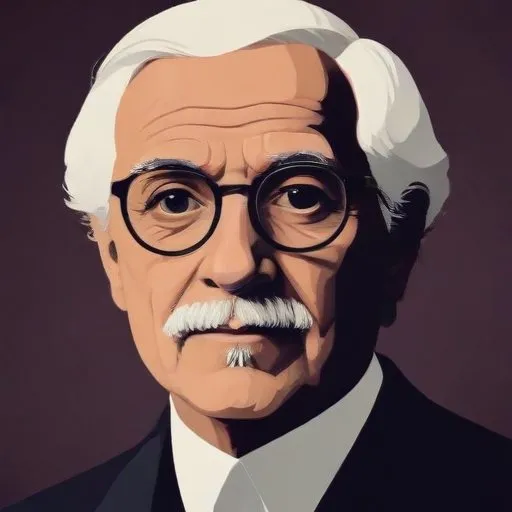
A 16th-century mathematician and physicist who made significant contributions to the study of mechanics, particularly in the fields of statics and dynamics, and is considered a precursor to Galileo and Kepler.
Giambattista Benedetti was a 16th-century Italian mathematician, physicist, and engineer who made groundbreaking contributions to the science of motion, challenging the long-held Aristotelian dogma. His innovative theories on the speed of bodies in free fall and the science of music continue to influence modern physics and mathematics.
Born on August 14, 1530, in Venice, Italy, Benedetti hailed from a family of modest means. His early education focused on classical languages, mathematics, and music. He later pursued advanced studies in mathematics and physics, developing a deep understanding of Aristotelian philosophy.
In his seminal works, Resolutio omnium Euclidis problematum (1553) and Demonstratio proportionum motuum localium (1554), Benedetti proposed a revolutionary new doctrine of the speed of bodies in free fall. Contrary to Aristotelian theory, which posited that the speed of a falling body is directly proportional to its weight and inversely proportional to the density of the medium, Benedetti argued that the speed depends solely on the difference between the specific gravity of the body and that of the medium.
This novel perspective predicted that two objects of the same material but different weights would fall at the same speed, and that objects of different materials in a vacuum would fall at finite, though different, speeds. Benedetti's theory also accounted for the effect of air resistance on falling bodies, recognizing that the resistance is proportional to the cross-sectional area of the object.
It is widely believed that Galileo Galilei, a prominent figure in the Scientific Revolution, drew inspiration from Benedetti's works. Galileo's initial theory of the speed of a freely falling body, as presented in De motu, closely mirrors Benedetti's early ideas. Although Galileo later refined his theory, Benedetti's contributions to the development of modern physics are undeniable.
Benedetti's expertise extended to the construction of sundials and the science of music. His work, Diversarum speculationum mathematicarum et physicarum liber (1585), demonstrates his mastery of mathematical and physical concepts.
Giambattista Benedetti's pioneering work in the 16th century laid the groundwork for modern physics and mathematics. His rejection of Aristotelian dogma paved the way for subsequent scientific breakthroughs, cementing his place as a precursor to the Scientific Revolution.
Benedetti's legacy extends beyond his scientific contributions, as his emphasis on empirical observation and experimentation fostered a culture of critical thinking and intellectual curiosity. As we continue to build upon the foundations of modern science, we honor the innovative spirit and intellectual courage of Giambattista Benedetti.
This article has highlighted the significant contributions of Giambattista Benedetti, an Italian polymath who defied Aristotelian dogma and paved the way for modern physics and mathematics. Through his groundbreaking work, Benedetti demonstrated the power of human ingenuity and intellectual curiosity, inspiring future generations of scientists and thinkers.
Born in 1564
Pioneering astronomer, physicist, and mathematician who played a major role in the Scientific Revolution, making key discoveries that challenged Aristotelian views and laid the foundation for modern science.
Born in 1508
A renowned Renaissance architect and theorist, famous for designing iconic buildings that harmoniously blend classical and modern elements, including a majestic church and a historic theater.
Born in 1548
Renaissance architect who designed numerous buildings in Italy and wrote influential treatises on architecture, particularly "The Idea of a Universal Architecture".
Born in 1537
Renaissance-era mathematician and astronomer who calculated the orbits of comets and developed a new system of astronomy, making significant contributions to the field of trigonometry.
Born in 1598
An Italian priest and astronomer who cataloged over 400 stars and created the first lunar map, accurately depicting the moon's surface features. He also coined the term "mountain" to describe the moon's geological formations.
Born in 1546
A 16th-century astronomer who made precise measurements of the stars and planets, laying the foundation for modern astronomy. His data helped Kepler discover planetary orbits.
Born in 1473
A Renaissance-era mathematician and astronomer who proposed the heliocentric model, where the Sun is at the center of our solar system, revolutionizing our understanding of the universe.
Born in 1571
A 17th-century trailblazer who discovered the three laws of planetary motion, revolutionizing our understanding of the solar system. He's also credited with being a pioneer in the field of astrology.
