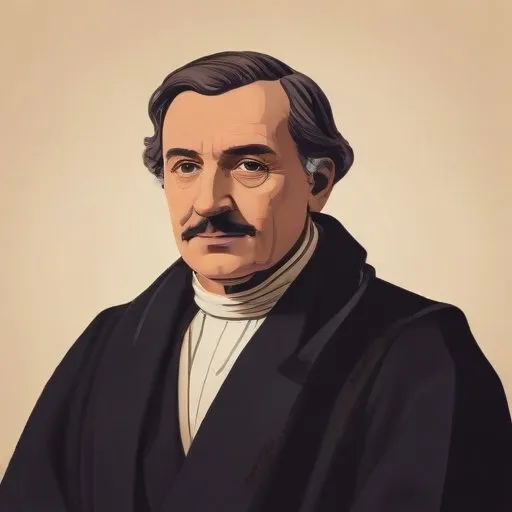
Francesco Barozzi: The Pioneering Mathematician and Astronomer
A Life of Mathematical Contributions
Francesco Barozzi was a renowned Italian mathematician, astronomer, and humanist, known for his significant contributions to the field of mathematics, particularly in the reappraisal of Euclid's geometry. He was a prolific translator of ancient mathematical works, making them accessible to a wider audience, and also authored several original works that showcased his expertise in cosmography and mathematical systems.
Early Life and Education
Barozzi was born on August 9, 1537, on the island of Crete, which was then a Venetian possession. He was the son of Iacopo Barozzi, a Venetian nobleman, and Fiordiligi Dorro. He received his education at Padua and studied mathematics at the University of Padua.
Independent Scholar and Translator
Barozzi's estate on Crete, inherited from his father, provided him with an income of 4,000 ducats, allowing him to live a life of independence and pursue his scholarly interests without the need for academic posts. He used this freedom to translate many ancient mathematical works, including Proclus' edition of Euclid's Elements, as well as works by Hero, Pappus of Alexandria, and Archimedes.
Original Works and Contributions
Barozzi's most notable original work is his
Cosmographia, published in 1585, which he dedicated to the Duke of Urbino. This work concerns the cosmography and mathematical systems of Ptolemy and demonstrates Barozzi's expertise in the field. He also authored
Admirandum illud geometricum problema tredecim modis demonstratum, a treatise on drawing parallel lines, which showcases his skill in geometry.
Correspondence and Collaborations
Barozzi corresponded with many prominent mathematicians of his time, including the German Jesuit
Christopher Clavius. This exchange of ideas and knowledge facilitated the advancement of mathematical understanding in the 16th century.
Legacy and Impact
Francesco Barozzi's contributions to mathematics and astronomy have had a lasting impact on the development of these fields. His translations and original works have influenced generations of scholars and continue to be studied by historians and mathematicians today.
Personal Milestones and Key Life Events
- 1559: Lectured on the De sphaera of Sacrobosco at the University of Padua
- 1560: Published Proclus' edition of Euclid's Elements
- 1585: Published Cosmographia, dedicated to the Duke of Urbino
- 1586: Published Admirandum illud geometricum problema tredecim modis demonstratum
Historical Context and Legacy
Francesco Barozzi lived during a time of great intellectual curiosity and discovery. His work, along with that of his contemporaries, helped shape the course of mathematical and astronomical understanding in the 16th century. Today, Barozzi is recognized as a pioneering figure in the history of mathematics and astronomy.
FAQ
What was Francesco Barozzis area of expertise?
Francesco Barozzi was an expert in mathematics and astronomy, and made significant contributions to these fields.
What is Francesco Barozzis most notable work?
Francesco Barozzis most notable work is his translation of the ancient Greek mathematician Euclids Elements, which introduced Greek mathematics to the Renaissance world.
When did Francesco Barozzi live?
Francesco Barozzi lived from 1537 to 1604, during the Renaissance period.
What university did Francesco Barozzi attend?
Francesco Barozzi attended the University of Padua, where he studied mathematics and philosophy.
What is Francesco Barozzis legacy?
Francesco Barozzis legacy is as a pioneering mathematician and astronomer who helped to revive interest in ancient Greek knowledge during the Renaissance.