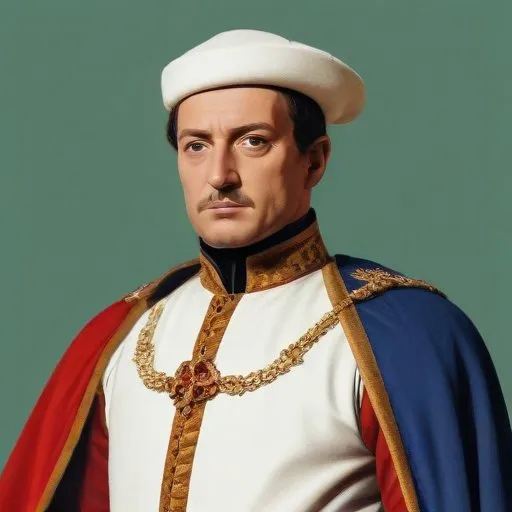
Gian Gastone de Medici, Grand Duke of Tuscany: The Last of a Dying Breed
A Life of Luxury and Decline
Gian Gastone de Medici, the seventh and final Medici Grand Duke of Tuscany, is infamously known for his extravagant lifestyle, corrupt reign, and the decline of the Medici dynasty. As the last of his line, Gian Gastone's life was marred by scandal, excess, and a general disregard for the welfare of his people.
Early Life and Ascension
Born on April 25, 1671, Gian Gastone was the second son of Grand Duke Cosimo III and Marguerite-Louise d'Orléans. His elder brother, Ferdinando, was initially groomed for the throne, but his untimely death in 1713 led to Gian Gastone's ascension. Despite his privileged upbringing, Gian Gastone was never groomed for leadership and spent most of his life indulging in lavish parties, hunting, and womanizing.
A Reign of Excess
Gian Gastone's reign was marked by unchecked extravagance, with the Grand Duke spending lavishly on himself and his favorites, while neglecting the welfare of his people. The Tuscan economy suffered greatly under his rule, with heavy taxation, widespread poverty, and a significant decline in the region's cultural and artistic output.
Personal Milestones and Key Life Events
- 1715: Gian Gastone marries Anna Maria Franziska of Saxe-Lauenburg, a union that would remain childless and loveless.
- 1723: Gian Gastone's mother, Marguerite-Louise, dies, further isolating him from his family and advisors.
- 1731: The Grand Duke's favorite, Giuliano Dami, is assassinated, leading to a period of paranoia and isolation.
Influence on Modern Society
Despite his corrupt reign, Gian Gastone's legacy can be seen in the many artistic and architectural projects he commissioned, including the Palazzo Pitti and the Boboli Gardens. His love of opera and music also led to the establishment of the Teatro della Pergola, one of the oldest opera houses in Europe.
Philosophical Contributions and Beliefs
Gian Gastone's philosophical contributions are limited, but his excessive lifestyle and disregard for his people can be seen as a commentary on the dangers of absolute power and unchecked greed. His reign serves as a cautionary tale on the importance of responsible leadership and the consequences of prioritizing personal indulgence over the greater good.
Historical Context and Legacy
Gian Gastone's reign marked the end of the Medici dynasty, which had dominated Tuscany for over three centuries. His legacy is one of decline, excess, and corruption, serving as a stark contrast to the artistic and cultural achievements of his ancestors. Despite this, his life and reign continue to fascinate historians and scholars, offering a unique glimpse into the decadence and decay of a once-great dynasty.
Trivia and Fun Facts
- Gian Gastone was known for his elaborate costumes and wigs, often wearing women's clothing and makeup.
- The Grand Duke was a prolific collector of art and antiquities, amassing a vast collection that would eventually be sold off to pay his debts.
- Despite his corrupt reign, Gian Gastone was a patron of the arts, commissioning works from artists such as Sebastiano Ricci and Giovanni Battista Foggini.
Conclusion
Gian Gastone de Medici, Grand Duke of Tuscany, remains a fascinating and complex figure, embodying both the excesses and decline of a dying dynasty. His life and reign serve as a cautionary tale on the dangers of unchecked power and the importance of responsible leadership. While his legacy may be tarnished by scandal and corruption, Gian Gastone's impact on the world of art, architecture, and music continues to be felt to this day.
FAQ
What was Gian Gastone de Medicis role in Tuscan politics?
Gian Gastone de Medici, Grand Duke of Tuscany, was the last ruler of the Medici dynasty, governing Tuscany from 1723 to 1737.
What were Gian Gastone de Medicis views on the Medici dynasty?
Gian Gastone de Medici, Grand Duke of Tuscany, struggled to come to terms with the decline of the Medici dynasty, attempting to revive its fortunes through marriages and diplomacy.
How did Gian Gastone de Medicis reign impact the Tuscan economy?
Gian Gastone de Medicis reign was marked by financial difficulties, and he struggled to address the economic decline of Tuscany in the early 18th century.
What was Gian Gastone de Medicis relationship with the Holy Roman Empire?
Gian Gastone de Medici, Grand Duke of Tuscany, maintained complex relationships with the Holy Roman Empire, navigating the complexities of European politics to secure Tuscan independence.
What is Gian Gastone de Medicis legacy in Tuscan history?
Gian Gastone de Medici, Grand Duke of Tuscany, is remembered as the last ruler of the Medici dynasty, marking the end of an era in Tuscan history.