


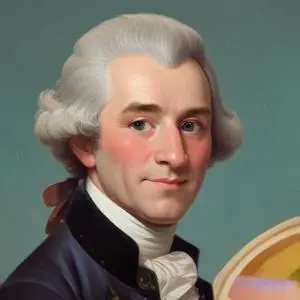
Portraits of American leaders, including the iconic image of George Washington, are this painter's lasting legacy. Their work continues to shape the visual identity of American history.
Gilbert Stuart, the renowned American painter, is widely recognized as one of the most prominent portraitists of his time, effortlessly capturing the essence of America's founding fathers on canvas. His unfinished portrait of George Washington, begun in 1796, remains his most iconic work, with the Athenaeum Portrait being reproduced countless times, appearing on the United States one-dollar bill and various postage stamps.
Born on December 3, 1755, in Saunderstown, Rhode Island, Gilbert Stuart was the third child of Gilbert Stuart, a Scottish immigrant, and Elizabeth Anthony Stuart. His father's profession in the snuff-making industry allowed the family to relocate to Newport, Rhode Island, where Stuart developed his passion for painting.
In 1770, Stuart met Cosmo Alexander, a Scottish artist, who recognized the young artist's potential and encouraged him to pursue his craft. This encounter marked the beginning of Stuart's artistic journey, which would eventually lead him to become one of the most celebrated portraitists of his era.
Stuart's artistic career spanned over four decades, during which he produced an astonishing 1,000 portraits of prominent figures, including the first six Presidents of the United States. His works are characterized by exceptional realism, subtle color palette, and an uncanny ability to capture the subject's personality.
Gilbert Stuart's contributions to American art and culture extend far beyond his remarkable portraits. His work has played a significant role in shaping the country's visual identity, influencing generations of artists, and perpetuating the memory of America's founding fathers.
Stuart's portraits have been reproduced and disseminated widely, making his work an integral part of American iconography. The image of George Washington featured in the Athenaeum Portrait has become synonymous with American history and culture, appearing on currency, postage stamps, and various memorabilia.
Gilbert Stuart's legacy is a testament to his unwavering dedication to his craft, his perseverance in the face of adversity, and his unrelenting passion for capturing the essence of his subjects. His work continues to inspire artists, historians, and enthusiasts alike, offering a glimpse into the lives of America's founding fathers and the tumultuous era in which they lived.
Stuart's portraits are now housed in prominent museums and galleries across the United States and the United Kingdom, including the Metropolitan Museum of Art, the National Gallery of Art, and the National Portrait Gallery. His work remains an integral part of American art history, a poignant reminder of the country's rich cultural heritage.
Gilbert Stuart's contributions to American art and culture have been recognized through numerous awards and honors, including:
Gilbert Stuart's remarkable legacy continues to inspire and captivate art enthusiasts, historians, and the general public, solidifying his position as one of America's most celebrated portraitists.
Born in 1873
The 70th Governor of Connecticut, a prominent military leader and politician, is most known for his service during the American Civil War and his later governance of the state. He played a significant role in shaping Connecticut's history and development.
Born in 1778
A pioneering American painter and curator who played a significant role in promoting art and art education in the early 19th century, particularly through his portraits of prominent figures. He's also known for his efforts in establishing the Pennsylvania Academy of the Fine Arts.
Born in 1844
An American Impressionist painter and educator, she created intimate, tender portraits of women and children, capturing the quiet beauty of everyday life. Her artwork often explored the complexities of motherhood and femininity.
