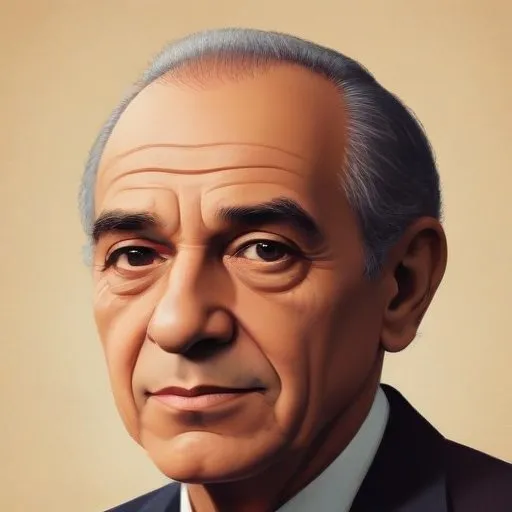
Gilberto Freyre: The Sociologist Behind the Brazilian Cultural Identity
The Mastermind of Social Commentary
Gilberto Freyre is renowned for his groundbreaking work,
Casa-Grande & Senzala, a sociological treatise that delved into the intricacies of Brazilian society, particularly the relationships between masters and slaves during the colonial period. This seminal work, published in 1933, catapulted Freyre to international acclaim, solidifying his position as one of the most important sociologists of the 20th century.
Early Life and Education
Born in Recife, Brazil on March 15, 1900, Freyre's intellectual curiosity was sparked at a young age. He pursued higher education in the United States, studying at Baylor University, Texas, and later at Columbia University, where he earned his master's degree under the guidance of William Sheppard. During his time at Columbia, Freyre was heavily influenced by the teachings of anthropologist
Franz Boas.
Regionalist Movement and Exile
Upon returning to Recife in 1923, Freyre became a key figure in the Brazilian regionalist movement, spearheading a group of writers who sought to highlight the country's cultural identity. However, the 1930 revolution and the rise of Getulio Vargas led to his exile, first in Portugal and then in the United States, where he worked as a visiting professor at Stanford.
Academic and Literary Career
Freyre's literary masterpiece,
Casa-Grande & Senzala, was published in 1933 and received widespread critical acclaim. This work was followed by numerous other publications, including
The Mansions and the Shanties (1936) and
Order and Progress (1959). Freyre's writing style, which blended ethnographic research with literary flair, earned him numerous awards and honors, including the prestigious Prêmio Machado de Assis from the Brazilian Academy of Letters in 1962.
Public Service and Later Life
In addition to his academic pursuits, Freyre served as a congressman in the Brazilian federal Congress from 1946 to 1950. He also held directorial positions at various newspapers, including
A Província and
Diário de Pernambuco. Freyre continued to write and teach until his passing on July 18, 1987, leaving behind a legacy that has shaped the understanding of Brazilian culture and society.
Literary Impact and Legacy
Freyre's work has had a profound impact on Brazilian literature and culture. His unique perspective on the country's social dynamics has influenced generations of writers, scholars, and intellectuals. Today, his works remain essential reading for anyone seeking to understand the complexities of Brazilian society and its cultural heritage.
Awards and Honors
- Prêmio Machado de Assis (1962)
- Elected to the American Philosophical Society (1962)
- Grand Officier de La Légion d'Honneur (France)
- Member of the Lordre des Arts et Lettres (France)
- Multiple honorary degrees from universities worldwide
Conclusion
Gilberto Freyre's remarkable life and work continue to inspire and inform our understanding of Brazilian culture and society. Through his groundbreaking research and literary masterpieces, Freyre has left an indelible mark on the academic community and beyond. His legacy serves as a testament to the power of intellectual curiosity and dedication to uncovering the complexities of human experience.
FAQ
What was Gilberto Freyres contribution to Brazilian sociology?
Gilberto Freyre was a Brazilian sociologist who made significant contributions to the field of sociology, particularly in the area of race relations and cultural identity. His work challenged prevailing views of Brazilian society and helped to promote a more nuanced understanding of the countrys complex cultural heritage.
What was Gilberto Freyres theory of Lusotropicalism?
Gilberto Freyres theory of Lusotropicalism posited that Portuguese colonization had a unique impact on the cultural and social development of Brazil, distinct from other colonized regions. He argued that the Portuguese had a more tolerant and adaptive approach to colonization, which led to the blending of cultures and the creation of a unique Brazilian identity.
What was Gilberto Freyres influence on Brazilian intellectual life?
Gilberto Freyre was a towering figure in Brazilian intellectual life, influencing generations of scholars, writers, and thinkers. His work helped to shape the countrys cultural identity and promote a deeper understanding of its complex history and society.
What was Gilberto Freyres education and training?
Gilberto Freyre studied law at the University of Recife and later pursued graduate studies in sociology at Columbia University. He was influenced by prominent sociologists of his time and went on to develop his own unique theoretical perspectives.
What was Gilberto Freyres legacy?
Gilberto Freyres legacy is that of a pioneering sociologist who helped to promote a deeper understanding of Brazilian society and culture. His work continues to influence scholars and thinkers today, and his ideas remain relevant to contemporary debates about identity, culture, and social justice.