


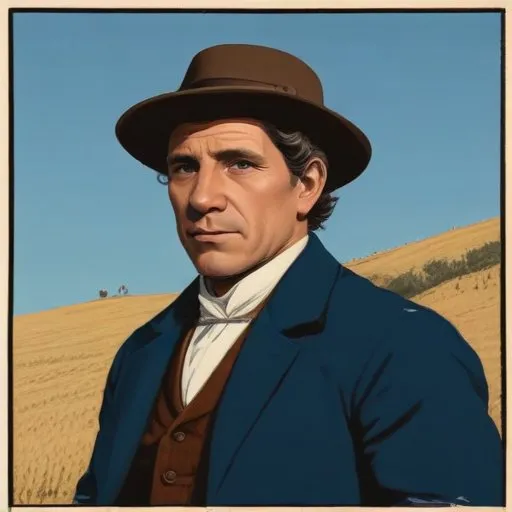
A Symbolist painter who created dreamlike, emotive landscapes and scenes of rural life, often exploring themes of nature, morality, and the human condition.
Giovanni Segantini, a renowned Italian painter, is celebrated for his breathtakingly vivid and emotive depictions of the Alpine landscape. His innovative Divisionist style, infused with Symbolist undertones, elevated him to iconic status in the late 19th century, earning him recognition among Europe's most esteemed artists.
Segantini was born Giovanni Battista Emanuele Maria Segatini on January 15, 1858, in Arco, Trentino, then part of the Austrian Empire. His early life was marked by hardship and loss. His older brother, Lodovico, perished in a fire the year Giovanni was born, and his father, Agostino Segatini, a tradesman, frequently traveled in search of work, leaving his mother, Margarita De Girardi, to care for Giovanni and his older sister, Irene.
In 1865, his mother's health began to decline, and Agostino left Giovanni under Irene's care, only to pass away a year later, leaving the family destitute. Irene, struggling to make ends meet, moved to Milan, where she hoped to find better opportunities.
Segantini's artistic journey began in Milan, where he studied at the Brera Academy. Initially, he focused on Realist painting, but his exposure to the works of French Impressionists and Post-Impressionists inspired him to experiment with Divisionism, a pioneering technique that involved applying small dots of color to create shimmering, luminous effects.
This innovative approach, combined with his deep connection to nature, led to the creation of his signature works: vast, dreamlike landscapes that captured the essence of the Alpine environment. His paintings, such as "The Midday in the Mountains" (1891) and "Alpine Landscape with Rain Effect" (1897), showcased his mastery of light and color, transporting viewers to the rugged, awe-inspiring beauty of the mountains.
Segantini's final years were marked by increasing seclusion, as he settled in the Swiss Alps, where he could fully immerse himself in his art. This period, though marked by relative isolation, saw the creation of some of his most striking works, infusing his paintings with a deep sense of mysticism and symbolism.
His later life was also marked by personal struggles, including a tumultuous relationship with his wife, Luigia Bugatto, and the loss of their two young children. Despite these challenges, Segantini continued to push the boundaries of his art, driven by an unwavering dedication to his craft.
Giovanni Segantini's contributions to the world of art are undeniable. His pioneering use of Divisionism, combined with his profound sensitivity to nature, left an indelible mark on the development of modern art. His work inspired generations of artists, from the Fauvists to the Abstract Expressionists, and continues to captivate audiences today.
In recognition of his achievements, Segantini's paintings are held in the collections of major museums, including the Musée d'Orsay in Paris and the National Gallery in London. His life and art serve as a testament to the transformative power of creativity and the human spirit.
Today, Segantini's legacy extends beyond the art world. His evocative landscapes continue to inspire a sense of wonder and awe, reminding us of the beauty and majesty of the natural world, and the boundless potential of the human imagination.
Born in 1606
A master of light and shadow, this 17th-century artist is renowned for his emotionally charged and deeply human portraits, landscapes, and biblical scenes that continue to captivate art lovers worldwide.
