


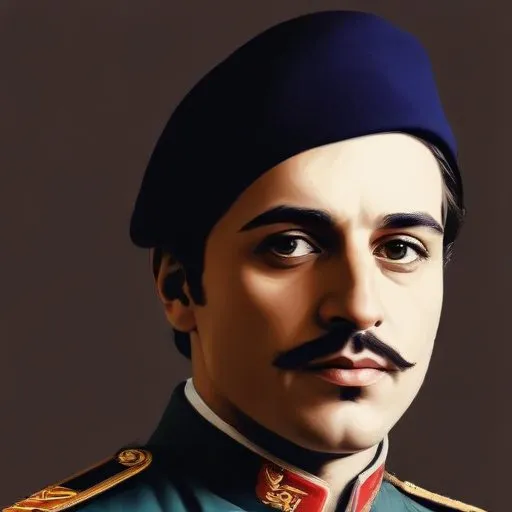
An Italian soldier, poet, and author who fought in the Risorgimento and wrote about his experiences, leaving a lasting impact on Italian literature. His works are still studied and admired today.
Giuseppe Cesare Abba is renowned for his pivotal role in Italy's unification, fighting alongside Giuseppe Garibaldi in the expedition of i Mille and documenting the journey in his seminal work, Da Quarto al Volturno: Noterelle d'uno dei Mille (From Quarto to Volturno: Notes by one of the Thousand). This esteemed writer and patriot played a crucial part in shaping Italy's modern identity, leaving an indelible mark on the nation's history.
Born on October 6, 1838, in Cairo Montenotte, Liguria, Italy, Abba was raised in a time of great turmoil and change. He studied at the Academy of Fine Arts in Genoa before joining the cavalry regiment in Pinerolo in 1859. The following year, he joined Garibaldi's volunteers, participating in the battles that led to the dissolution of the Kingdom of the Two Sicilies.
After his military endeavors, Abba turned to writing, attempting to craft a romantic poem, Arrigo, in five canti. Although this effort was unsuccessful, he persisted, drawing inspiration from Alessandro Manzoni. In 1875, he started working on a historical novel, Le rive della Bormida nel 1794 (The Banks of the Bormida in 1794), but it remained unpublished. His literary breakthrough came when he wrote Noterelle di uno dei Mille (Notes by one of the Thousand), a collection of accounts from his experiences during the 1860 expedition. Initially meant for private circulation, the work was eventually published in 1891, thanks to the encouragement of Giosuè Carducci.
The publication of Da Quarto al Volturno catapulted Abba to fame, earning him recognition as a prominent writer and historian. He went on to become a teacher at the secondary school in Faenza and later, the principal of the technological institute in Brescia. Through his writing and academic pursuits, Abba played a significant role in shaping Italy's understanding of its own history and identity.
Giuseppe Cesare Abba's contributions to Italy's unification and his literary works have left a lasting impact on the nation. His writing provides a unique window into the country's turbulent past, offering valuable insights into the struggles and triumphs of the Risorgimento. As a chronicler of Italy's unification, Abba's work continues to inspire and educate generations, cementing his position as one of the most important figures in Italian history.
Today, Giuseppe Cesare Abba's legacy serves as a testament to his unwavering dedication to Italy's unification and his passion for storytelling. His contributions continue to shape the nation's historical narrative, ensuring his place as a revered figure in Italian history.
Born in 1835
A renowned Italian poet and educator, known for his patriotic and lyrical works that explored themes of Italian identity and unity. He was the first Italian to receive the Nobel Prize in Literature.
Born in 1785
Wrote influential novels that helped shape the modern Italian language and identity, particularly with his iconic work "I Promessi Sposi" (The Betrothed).
Born in 1855
A renowned Italian poet and classical scholar, he's celebrated for his lyrical and symbolic poetry, as well as his groundbreaking work in classical philology.
Born in 1844
King of Italy from 1878 to 1900, known for unifying Italy and establishing the modern Italian state. He played a key role in Italian politics and foreign policy during his reign.
Born in 1807
Led a military campaign to unify Italy, becoming a national hero and symbol of Italian independence. He's also known for his charisma and unconventional style.
