


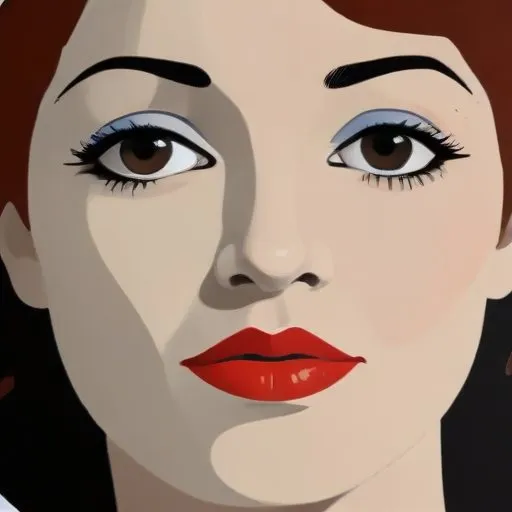
An American modernist painter, she created vibrant, abstracted still-life compositions that explored color and form, influencing the development of American modern art.
Gladys Rockmore Davis, an American artist born on May 11, 1901, is renowned for her exceptional talent in both commercial and fine arts. Her remarkable work in pastels and oils has earned her a reputation as one of the most skilled artists of her time, with a focus on capturing the beauty of children, nudes, and still lifes.
Davis was born in New York City to David William Rockmore and Jeanette Richman Rockmore. Her family moved to Canada when she was nine years old, where she developed a passion for art. Despite her parents' lack of artistic inclinations, they encouraged her talent and sent her to Saturday classes at the California School of Fine Arts.
At the age of sixteen, Davis enrolled in the Art Institute of Chicago, where she studied under the guidance of John Norton and George Bellows. She credited Norton with teaching her to observe and truly see, and praised the institute's teaching and museum, which allowed her to compare her work with that of the masters.
After graduating in 1920, Davis worked as an artist in advertising and fashion for eleven years. Her exceptional talent eventually led her to abandon commercial art and focus on creative painting. Her work in pastels and oils quickly gained recognition, with art critics praising her unique style and skill.
Davis's subjects often featured children, nudes, and still lifes, but she also explored other themes, including ballet dancers, liberated Paris, and scenes of Spain. Her work was characterized by its emotional depth and captivating use of color.
Davis's personal life was marked by her marriage to Floyd Davis, a well-known artist, and the birth of her son, Noel Rockmore, who would also become a prominent artist. Her family was deeply involved in the art world, and their collective talent had a profound impact on American art.
Davis's legacy extended beyond her own work, as she inspired a new generation of artists to explore the world of fine arts. Her contribution to the art world earned her the title of "the ten-year wonder of United States art," a testament to her remarkable talent and dedication to her craft.
Davis's work continues to inspire artists today, with her unique style and emotional depth influencing contemporary art. Her legacy extends beyond the art world, as her exploration of the human form and everyday life has had a lasting impact on popular culture.
As a pioneering female artist, Davis paved the way for future generations of women in the art world. Her remarkable talent, dedication, and perseverance serve as an inspiration to artists and art enthusiasts alike.
Born in 1844
An American Impressionist painter and educator, she created intimate, tender portraits of women and children, capturing the quiet beauty of everyday life. Her artwork often explored the complexities of motherhood and femininity.
Born in 1887
Pioneering American modernist artist famous for bold, colorful depictions of enlarged flowers, landscapes, and abstract compositions that explored new ways of representing the American Southwest. Her innovative style and independence inspired generations of artists.
Born in 1907
A Mexican artist who created vibrant, emotional, and often unsettling paintings that explored her own experiences with physical and emotional pain, as well as her cultural heritage.
Born in 1871
A pioneering artist and writer who explored the indigenous cultures of the Pacific Northwest, capturing their stories and landscapes through vibrant paintings and poignant writings.
Born in 1895
Documented the lives of those affected by the Great Depression and the Dust Bowl through powerful, poignant photographs that humanized the struggles of the era. Captured iconic images that shaped the national conversation around poverty and social justice.
Born in 1904
Pioneering photographer and journalist who captured iconic images of the Great Depression and World War II, and was the first woman to fly on a combat mission.
Born in 1923
A pioneering photographer who captured intimate, often unsettling portraits of marginalized individuals, revealing the beauty in the unconventional and challenging societal norms.
Born in 1841
A pioneering Impressionist artist, capturing intimate, everyday moments of women's lives in delicate, dreamy paintings. Her works often blurred the lines between domesticity and artistry.
