


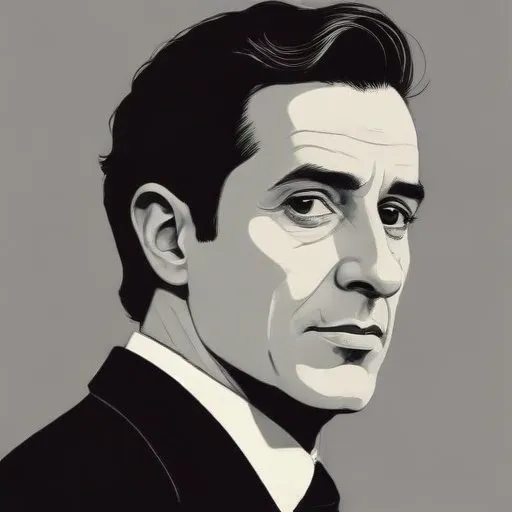
A Spanish journalist, author, and playwright who explored the intersection of fiction and reality in his works, often incorporating elements of fantasy and mythology. He's most known for his innovative and influential literary style.
Gonzalo Torrente Ballester, a renowned Spanish writer, is best known for his association with the Generation of 36 movement, a group of influential writers who shaped the literary landscape of Spain during the tumultuous period of the Spanish Civil War. His novels, essays, and plays are a testament to his prolific writing career, which spanned over five decades.
Born on June 13, 1910, in Serantes, Ferrol, Galicia, Torrente Ballester received his primary education in his hometown. He later attended the universities of Santiago de Compostela and Oviedo, where he honed his writing skills and developed a passion for literature.
In 1936, Torrente Ballester traveled to Paris to write his doctoral thesis, but the outbreak of the Spanish Civil War forced him to return to Spain. He joined the Falange, a fascist political party, under the guidance of a trusted priest. His father's words, "Don't you know that many of your friends have been shot," echoed in his mind as he witnessed the atrocities of the war.
Torrente Ballester's first novel, Javier Mario, was published in 1943, marking the beginning of a successful writing career. He continued to publish novels, earning critical acclaim and prestigious awards, including the Cervantes Prize in 1985. Despite his association with the Falange, he gradually distanced himself from the party, eventually becoming a vocal critic of their ideology.
In 1939, Torrente Ballester returned to Santiago to take up a university post, but his increasing criticism of the government led to his expulsion from his teaching position in 1962. He joined protests in support of striking Asturian miners, further straining his relationship with the authorities. The 1960s saw him facing numerous problems with government censors, leading him to accept a post at the University at Albany, State University of New York in 1966.
Torrente Ballester's literary contributions were recognized with numerous awards and honors, including:
Torrente Ballester's literary legacy extends beyond his writing. He played a significant role in shaping Spanish literature, inspiring future generations of writers. His critiques of authority and his unwavering commitment to artistic expression have made him a visionary in the world of literature.
Today, his works continue to be celebrated for their depth, complexity, and social commentary, cementing his place as one of the most important Spanish writers of the 20th century.
Born in 1916
A Spanish writer and politician who won the Nobel Prize in Literature in 1989 for his innovative and influential literary style, which explored the human condition and Spanish culture.
Born in 1898
A Spanish poet and author, celebrated for his surreal and introspective works that explored the human condition, earning him the Nobel Prize in Literature in 1977.
Born in 1898
A renowned Spanish poet and philologist who made significant contributions to the study of Spanish literature, particularly in the field of Golden Age poetry. He's also known for his own poetry, which explores themes of love, death, and existential crisis.
Born in 1902
A Spanish poet and playwright celebrated for his avant-garde style and powerful anti-fascist writings, which greatly influenced 20th-century Spanish literature.
Born in 1904
A Chilean poet and diplomat who wrote passionate and evocative poetry that explored love, politics, and the human condition, and was awarded the Nobel Prize in Literature in 1971.
Born in 1899
A visionary writer who crafted intricate, philosophical tales that blurred reality and fantasy, influencing generations of authors and thinkers. 82
Born in 1914
A pioneering figure in magical realism, blending fantastical elements with everyday life in his novels and short stories, exploring the human condition and social commentary.
Born in 1864
A Spanish philosopher and author who explored the human condition, faith, and the search for meaning in life, creating influential works that continue to resonate with readers today.
